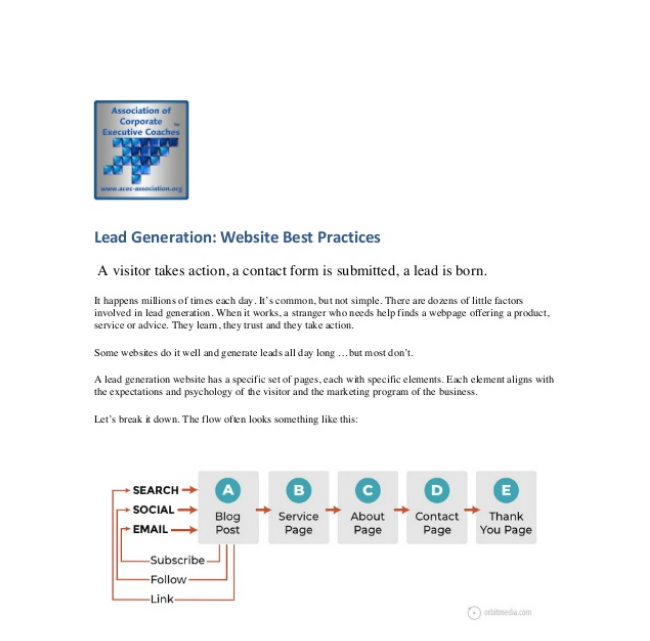
Lead Generation: How to defined! from CB Bowman, CEO Master Corporate Executive Coach
Category: Blog
-

Defy Gravity
How to break from convention and lead in an ambiguous business world
by Susan Gilell-Stuy, Executive Coach, Trusted Leadership Advisor and Host of “Lead With IT“ podcast
A reliance on conventional wisdom limits your ability to act in an ambiguous business world. A new generation of employees has redefined their expectations for top leaders and global organizations. And I’m going to tell you something your employees won’t: if you aren’t meeting their needs, they’ve already decided to jump ship and find a new team or company that will.
Their lack of loyalty is a sign of your neglect. It’s a clear message that you can’t continue to tackle today’s challenges and opportunities with yesterday’s approach. You’ve got to change or lose them.
It’s time you defy the gravitational pull for doing for what’s conventional: after all the only other option is staying stuck in the past.
Here are 4 ways you can defy gravity:
Raise the Bar for Everyone
Everyone you add to the team should raise the bar for everyone else. That includes you. Only hire people you could see yourself working for one day. The goal is to constantly boost the talent pool, create ongoing intellectual diversity, and learn from each team member’s knowledge and ability.
Give Up “Kitchen Sink” Meetings
Stop holding catch-all weekly team meetings. Instead, switch to meetings driven by subject matter. For example: Mondays are project meetings, Wednesdays are budget meetings, and so on. Invite only the key players to keep things simple. A focused meeting makes for quicker and better decision-making.
Think Big and Let Them Call the Cadence
As the leader, paint the big picture for your team. Share with them where you’re heading, tell them that you expect them to get there the quickest way possible, and assure them that you’ll clear the speed bumps if need be. Then step back and let your trusted team members call the cadence, approach, and path they’re going to take to get there.
Kill the Annual Review
Only one thing matters when it comes to connecting with your people: putting them first. Spend more time focused on them and less time worrying about technical aspects of the business. Don’t wait for an annual review to share what you’re thinking; coach and develop them in real-time. Your investment in them will pay big dividends over the long-term.
Once you’ve chosen to defy gravity and finish your transformational journey the organization and those around you have no option but to transform too. Fostering real change in those you lead and the organization itself makes you an unstoppable force as a leader.
Susan Gilell-Stuy, Executive Coach, Trusted Leaderhip Advisor and Host of “Lead With IT” podcast
-
The Surprising Value of Being Unattached
 Some people are naturally blessed with the powers of persuasion. Maybe you’ve seen them in action. They ask and they receive, and they make it look effortless, painless—even fun. For the rest of us, trying to persuade someone can be a maddening experience, and one that is definitely not fun. Maybe we’re trying to make a sale, recruit a partner or get the support we need to pursue a new idea—whatever our goal, and no matter our tactics, the other person stays resolute in “no.” We can push, beg and even manipulate, but he won’t budge. It soon becomes clear that if we keep pushing we might make things worse.
In those moments, if we can step back and stop pushing, the situation is more likely to work out in our favor—perhaps with a result perhaps better than the one we sought. It seems counterintuitive, but something happens when we stop trying to force an outcome. And if we understand why this happens, we can use it to get the results we want.
This is not a new idea. In the 14th century Japan it was shibui, while in 16th century Italy, it was called sprezzatura. Chinese Daoists call it wu-wei, and Hindu philosophers know it as ahamkara.
In the North America, we think of it simply as cool. And if we remember anything we learned in junior high, it was that life was infinitely better for the people who were cool.
It’s All About Attachment
In New Age circles, people sometimes speak of a concept called attachment—which means when we’re caught up in something, we get attached to it. That’s when we lose sight of the big picture. We get tunnel vision on the outcome we want, so we don’t notice all that’s happening
around us. We are blind to what’s really going on, and we are equally incapable of seeing the situation from another person’s perspective.This is when the Law of Attraction kicks in, according to New Age Thought. When we’re attached to the outcome, we’re afraid that the thing we want won’t happen. We become attached to that negative thought pattern and then, under the Law of Attraction, we begin attracting more of that negativity. In other words, we begin to imagine the person saying no to us, and eventually he really does say “no.”
In the Western paradigm—inherited from the thinking of Dr. Sigmund Freud—we end up clinging to our egos. This ego-centered way of related to the world (and to ourselves) traps us in behaviour patterns that don’t meet our needs but which, maddeningly, are hard to see in the moment.
Effortlessness + Effectiveness = Success
All of this happens because we’re merely repeating old patterns. We’re like a car that’s stuck in the mud. The harder we try, the more we spin our wheels and make our situation worse.
Over years of repetition, we have unintentionally trained ourselves to react this way. Just like an athlete who uses repetition to instill muscle memory, we’ve trained our mind to immediately apply that approach. When we become frustrated or desperate, we instinctively revert to these ways. It’s an unconscious, knee-jerk response. If we want to avoid it, we have to consciously change how we react.
Early Chinese philosophers believed the ideal state of being was when a person was not actively thinking and was not exerting effort. They believed that this is the state in which the person is most able to achieve his goals.
But retraining yourself so that you can get to that state most definitely requires conscious effort.
The first step is simply to be aware of your patterns. Catch yourself in that moment; try to talk yourself out of pushing harder. And it’s a paradox, but trying too hard to stop trying too hard is not going to help you break the habit. Mencius, a Chinese philosopher in the fourth century B.C., advocated an approach similar to gardening: Do the planting and monitor the progress, but mostly just sit back and let the plants grow.
Mencius’ approach isn’t much different from what New Age thought leaders call “the mindset of the witness.” They argue that, when we find ourselves caught up in these frustrating ineffective patterns, we should try to think like a witness. Because a witness is watching the event, not participating and not invested in the outcome.
Consider the detective shows you’ve watched on TV: A witness comes in and impassively tells the detective what she saw. She wasn’t harmed by the crime and wasn’t involved in the action. She simply watched it all go down. Taking on the mindset of the witness means not getting emotionally engaged in what is taking place.
As the witness, we notice what is happening but have no expectations about what will happen. We may intend a certain result, but we are not attached to it.
Still not convinced? Think about insomnia. The harder you try to fall asleep, the less likely it is to happen. Stop trying and…zzz.
Non-attachment feels unnatural to us in the West. It’s a hard practice to follow. From birth, we’re trained to desire, act and expect positive results, and we’re taught that the harder we work, the greater our reward. It feels strange to let go of an outcome in order to succeed. It’s especially difficult to practice in the moment, when we are trying to persuade someone and our stress levels begin to rise.
But, by consciously practicing a more passive approach, we can establish new patterns and get our cars unstuck from the mud. We can train ourselves to let go. Whether we call it sprezzatura, shibui, wu-wei, ahamkara or just cool, we’ll be able to remove the tension from the interaction, tension that is keeping the other person from saying “yes.” With that tension gone, we may find ourselves getting a bigger “yes” than the one we imagined.
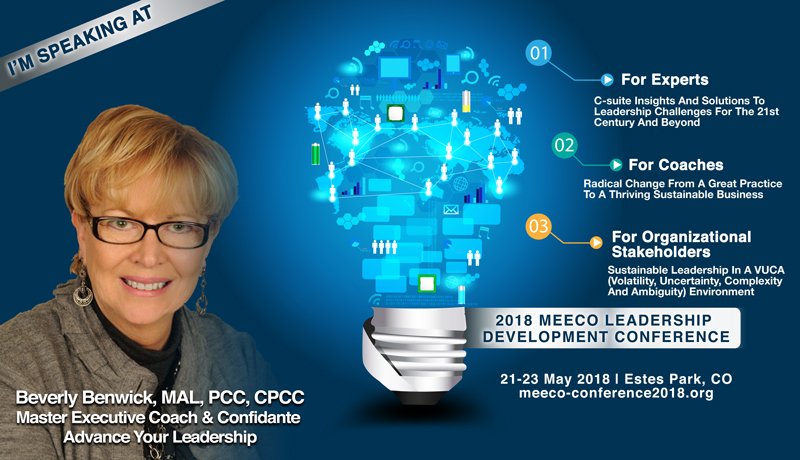
AUTHOR: Beverly Benwick
ABOUT BEVERLY: https://acec.mgmcsolutions.com/directory/bev-benwick-mal-pcc-cpcc/
CONTACT INFORMATION:
Ste. 30, 6488 – 168th Street
Surrey, BC V3S 8Z1 CanadaTEL: 604.576.4970
TOLL FREE: 1.866.95COACH or 1.866.952.6224
E-MAIL: bev@advanceyourleadership.com
WEBSITE: http://advanceyourleadership.com/
LINKEDIN: www.linkedin.com/in/bevbenwick
FACEBOOK: www.facebook.com/advanceyourleadership -
CB Bowman, Founder of The Association of Corporate Executive Coaches and The MEECO Leadership Development Institute Speaks Out
CB Bowman the Founder and CEO of the Association of Corporate Executive Coaches™ and the MEECO Leadership Development Institute™ SPEAKS UP AND SPEAK OUT AGAINST “ROI” of coaching, AGAINST current coaching business models, she speaks out FOR protecting a coaches intellectual property, ABOUT the new breed of millennium coaches, and more!
-

IKEA Just Released a Brilliant Ad That May Make You Do Something You’ve Never Done Before
This is ingenious. But not for everyone. A true example of thinking out of the box marketing. How out of the box can you market your coaching services?
By Chris Matyszczyk
Owner, Howard Raucous LLC@ChrisMatyszczykIt’s compulsory, if you’re IKEA, to have something of an absurdist sense of life. I suspect the proliferation of Scandinavian noir detective novels has only made the necessity more acute.
Who, though, can’t admire the sheer free-spiritedness that spawned the meatball restaurant and furniture store’s latest ad? It’s for the company’s Sundvik crib. How can you make an ad for a crib even remotely exciting?
Why, ask readers to pee on it.
No, this isn’t an encouragement to mass debasement and defacement of magazines. It’s just a makeshift pregnancy test. Now, being a wise marketer, IKEA knows that just asking women to urinate on a magazine ad won’t necessarily make them do it. Especially if they’re reading Amelia magazine — where the ad is running — on a train or at the dentist’s office. Although, I suppose it’s cheaper peeing on a magazine you’ve already bought, rather than buying a pregnancy test.
Still, there’s an incentive.
If you pee on the ad and discover you’re pregnant, the Sundvik crib is yours for half the price. And your day will likely have taken a rather unexpected direction. I do worry, though, about what happens next. Are you then supposed to take the pee-soaked ad into your IKEA store to obtain your discount?
Won’t that be a touch messy?
-
A Case For MCEC: Master-Level Corporate Executive Coaching Certification
WRITTEN BY ACEC (Association of Corporate Executive Coaches) Member:
Dr. Terry H. Hildebrandt, MCC, MCEC
-
ACEC’s Symbol of Humility
Inukshuk, pronounced in-ook-shook, are stone monuments erected in the image of humans. One of their purposes was to communicate direction in the harsh and desolate Arctic. As such, they were a tool for survival, and symbolic of the unselfish acts of a nomadic people – the Inuit – who built them as signposts to make the way easier and safer for those who followed. The hands of many and the efforts of an entire group were required to build these massive stone sculptures. They are the result of a consensus of purpose, of focused action by a group united in its goal and labor. The Inukshuk is the product of cooperation, teaching us that as good as our efforts may be, together we can do even greater things.
Each stone is a separate entity. Each supports and is supported by, the one above and the one below it. No one piece is any more or less important than another. Its strength lies in its unity. Its significance comes from its meaning as a whole. What is true about the Inukshuk is true about people. Each individual entity alone has significance. As part of a team, each of us supports and is supported by, another. We are united by our common goals, and together we are part of a greater whole.
The stones which make up the Inukshuk are secured through balance. They are chosen for how well they fit together. Looking at the structure, it can be easily seen that the removal of even one stone will destroy the integrity of the whole. So, too, with a team. Each in a team is necessary for the realization of the team’s purpose. The removal of even one person will result in the weakening of the structure. What holds the team together is the balance – the complementary nature of the individual skills.
The Inukshuk is a symbol of the human spirit. They recognize our ability to succeed with others, where we would fail alone. They remind us of our need to belong to something greater than ourselves. They reinforce our ability to commit to common goals.
The Inukshuk celebrate our working together. They continue to remind us of our inter-dependent responsibilities to invest our efforts today to direct a better way for all of our tomorrows.
The difference we make today, counts in all our tomorrows. -
Coaching: The Age Factor
Executive coaching the age factor from CB Bowman, CEO Master Corporate Executive Coach