Alert: New SEC Guidance on CEO Pay Ratio Rule from Posted by CB Bowman, CEO Master Corporate Executive Coach
CEO Pay Ratio Disclosure from Posted by CB Bowman, CEO Master Corporate Executive Coach




1. Vague Headlines …we’re the best, at what?
2. Social Media Icons In Your Header …candy-colored exit signs
3. Meaningless Section Headers
4. Dates on the Blog
5. YouTube Suggested Videos …#CatFail videos on your site
6. Long Paragraphs
7. Stock Photos of People …stranger danger
Watch the video for more tips!
Photo: Facebook
Author: Dr. Lawrence James
Partner at RHR International
Member of the Association of Corporate Executive Coaches (acec.mgmcsolutions.com/)
Recent opinions surrounding Cam Newton’s statements are the latest in a string of controversies that have surrounded him since he was in college. For those who missed it – the latest controversy surrounds many people’s negative reactions to Cam and his on field behavior; like dancing after touchdowns, smiling and laughing, and giving footballs to little kids in the stands. Addressing the controversy, he said, “I am an African-American quarterback; that may scare a lot of people because they haven’t seen nothing they can compare to me.” The reactions to Cam may fall into many camps, but it is likely that Race and unconscious bias is one bit of fuel for these reactions. A recent study of college students has shown the real impact of unconscious bias on perceptions of competency and behavior, as reported in The Atlantic magazine.
However, there is much to be learned from Cam Newton – the leader – that should not go unnoticed amidst the controversy. Here are things we can take away from Cam Newton, African-American & Leader:
Take risks – Success is born of taking risks. However, these risks need to be mediated with some strong belief that success is attainable. All the clichés apply: no risk, no reward etc. the key to taking risks is not only a belief in yourself and your ideas, but an ability to see opportunities where others might not – and seizing upon them. Often this is garnered from study; by scanning the internal & external landscapes, including areas outside your business, you can find ideas and inspirations. It is important to ensure the payback offsets the risk; a risk taker without payback is just a risk.
Be decisive – The distance between success and failure is a millimeter, a razor’s edge, a thread with little room for failure and no room for indecision. To waffle is the absolute worst thing in leadership. The NFL position of quarterback may be the poster child for the need for quick and decisive action; the team looks to the QB, as a leader, and wants to follow his lead, but will only do so if they believe he is sure of the actions he is taking. Sharp crisp thinking (clarity) is paramount, but in the moment that clarity is born of study and deep understanding of your topic/subject matter. It is not just the ability to connect the dots, but also the ability to act decisively on that knowledge. That is how winners in any field beat the competition.
Know yourself & be yourself – Authenticity in the workplace is elusive for all leaders. It may be even more so for leaders of color and women, but let’s be clear no one is 100% authentic at work (See Dr. James’ whitepaper “Journey to the top: Developing African-American Executives”). However, the closer people can get to their true authentic self at work, the more genuine others will perceive them, and the less stress they will experience at work. Owning and embracing who and what you are in every environment empowers you and cuts down on the baggage. The outside world wants you to conform to their image of who or what you should be, whether that is as President of the USA, a senior organizational leader, or an NFL Quarterback. At the end of the day, you have to live with you and be happy with who and how you are, but there can be consequences for being authentic (see #10). At the end of the day, a waffling, inauthentic leader is an ineffective leader.
5. Mistakes happen; don’t sweat ‘em, learn from ‘em – As a starting point, no one is trying to make mistakes. We can all strive for perfection and may even get close, but the reality of the situation is that mistakes do occur. Accept that they can happen (especially when you are taking risks), and anticipate the most obvious places where failure can happen (plan for it). When unanticipated failures happen, extract whatever learnings you can from them and adapt what you are doing to account for these failures. Thinking of mistakes as iterative learning opportunities helps you and your teams to adopt a continuous learning attitude and pushes for constant improvement. Setting the bar consistently higher on performance gets you to a Super Bowl or whatever the equivalent of it is in your business such as #1 in market share!
6. Be careful who you rely on, do they have the right stuff? – Personally and professionally, we all must be selective about the company we keep and whom we trust/rely upon. In sport, it is your teammates. Cam has grown in his trust of his teammates and they have grown in their trust of him. This increased trust has been demonstrated by changes in Cam’s distribution of the football to his receivers over the course of the season. Trust goes down immensely when someone doesn’t deliver in their role. Typically, in football, it is followed by demotion and a “next man up” mentality. Business is less obvious (or brutally honest) about under-performance; however, those who can’t cut it are often cast aside. There are two parts to the equation which must be considered to make the right calls on talent. First, do they have the right stuff to help you win; that is, do they have the right skills and capabilities to function in the role and perform. Selection is critical here, so be clear about what you need in a role to win. Second, can they perform under pressure? Anyone can perform when there is no pressure, but who can deliver under the microscope of a big game or a looming deadline. These are the people who you can rely on and go to when a play is needed.
7. Enjoy what you are doing – Draw energy from your work, but don’t be drained by it. Find the big and small opportunities to relish what you are doing (in the moment). Your ability to have fun and enjoy what you are doing at work or on the playing field will be infectious to those around you! Others will draw on your energy and passion. Leaders who can capitalize on this passion will get the followership they need to get their teams rallied around them and focused on meeting and often exceeding their organizational/ team objectives.
8. (Look back) Recognize & acknowledge you didn’t get here by yourself – Sport gets the concept of “team” better than anywhere else. The focus is not on the individual; it is on the team. Successful business leaders understand that success comes from the team working together toward its goals. Many leaders do not acknowledge the contributions of others to their success. They will overly tout what they did and how they accomplished some task without giving others credit for their contribution. However, great leaders acknowledge and celebrate the contributions of others to team success. Newton has not only acknowledged the contributions of his teammates to his personal success and the team’s success, but he has also noted the role of his family, university, coaches, and trainers in helping him to succeed.
9. (Give back) Help others – There are many level of responsibility that business leaders and star players have which support the organization. Cam has demonstrated the best of what a leader can do by his actions on and off the field. Giving balls to little kids after touchdowns is priceless. Helping to create a phenomenon and getting your teammates to buy into it is a great example of leadership. In business, we talk about social responsibility and we measure it through all kinds of scorecards, but the true spirit of giving is not a scorecard – it is lives impacted. It isn’t just paying lip service – it is taking action for something you believe in, even when the spotlight isn’t shining on you.
10. Embrace (the controversy of) your choices – No one will be happy with every decision that you make. Whether it is about authenticity or a strategic business bet, make the best decision you can and move forward with haste. The goal is to win – not make everyone happy. Have values, own them, and stand up for what you believe in. People may not like it, but they will have to respect it and they will follow your lead as a result. Build your resilience to weather the storms coming your way. Hear it, be attuned to it, but don’t succumb to it or let it deter you from your path.

Most office workers I speak with think modern office culture is terrible. The good news for them is that office culture might truly be dying. Within our lifetimes, the core identifying markers of traditional “office culture” will become obsolete, at least for the majority of businesses. But what are these fundamental tenets, what’s killing them, and how soon are they going to go away?
What’s Killing Office Culture?
There are a number of factors whittling away the features of office life to which we’ve grown so accustomed:
Tenets of Office Culture (and Timelines)
Not everybody dislikes all aspects of modern office culture. Some of them are designed to improve productivity, some of them are vestiges of older traditions of etiquette, and some of them evolved naturally or by happenstance.
In any case, these are the fundamentals of office culture that we’ll be waving goodbye to, some sooner and some later:
A Question of Industry
Some industries will naturally lend themselves to faster rates of adoption than others. For example, tech startups are already ditching most of these old-school tenets of office culture. Why? Because they can set their own rules, they thrive on an image of being cutting-edge, and they’re usually started by younger demographics. Older businesses, like major consulting firms that have been around for decades, are unlikely to change nearly as quickly (if ever).
Can Office Culture Ever Die Universally?
Even when these modern office culture staples begin to die out, they won’t die out in the same way for every business. Some industries or older organizations may hold onto them forever, preserving them in traditional reverence. Certainly, there will be new entrepreneurs who appreciate or even idolize these traditional aspects, and may work to prevent them from dying entirely. As such, it seems impossible that new traditions will completely replace the old, just as motor vehicles never completely replaced horseback riding—then again, when was the last time you saw a horse on the road?
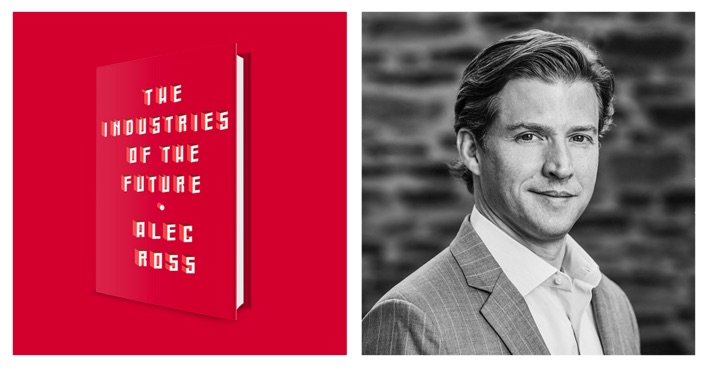
Why_Millennials_And_Governments_Must_Prepare_For_The_Industries_ (1)
The world’s economy may look drastically different in the next 20 years. Industries being built today–from robot caregivers to digital money–are creating new jobs and opportunities. In his book, The Industries of the Future, innovation expert and former advisor to past Sec. of State Hillary Clinton, Alec Ross, explains what the next industries will look like and how individuals and governments can be more competitive for them. I had the opportunity to read Ross’s book, already a #1 new release on Amazon, and interview him about what the future holds for my generation of millennials and the generations to come.
Ross’s book is about the next economy, and the promise and peril it may bring. After logging more than half a million miles as the senior advisor for innovation at the State Department and witnessing innovation across the globe, Ross decided to write a book for recent college graduates about the industries shaping the coming two decades.
When Ross graduated Northwestern University in 1994, he didn’t know about the fundamental changes the age of the Internet would bring to his career. The last wave of innovation and globalization with the Internet created wealth for individuals who caught on early, while people whose skills were outpaced by technological change found themselves jobless, replaced by machines. The future industries in this next wave of innovation—from robots and genomics to big data and cybersecurity—will provide the next set of jobs. Ross hopes that 20 and 30-year-olds, still early in their careers, will be able to take part in these industries before they miss out. At the same time, parents can arrange for their kids the interdisciplinary education they need for their future careers, and governments can change their approaches to education and labor to be prepared for these new industries.
Millennials are already shaping these future industries, and the next generations will scale them and influence the subsequent wave of innovation. While there will be new winners and wealth in the next economy, it will inevitably also leave many behind. As Ross writes, “We aren’t as easy to upgrade as software.” Our success at upgrading will be determined by changes to our education system and how we foster interdisciplinary leaders.
While entrepreneurs and visionaries are building these future industries, the federal government is not preparing its workforce to be competitive for jobs. Ross explains that vocational education in the U.S. has been largely unchanged in the past 60 years, while the Department of Labor and municipal labor departments are stuck in the industrial age instead of the information age. The government needs to move past the vestiges of previous decades, Ross says, because “the US is not going to be competitive from a cost of labor standpoint in the next stage of globalization in anything but knowledge-based jobs.”
What does this mean for blue-collar workers? As Ross discusses in his book, blue collar workers have had a tough 30 years since the last wave of innovation, and the trend line remains negative for them. Low-level white collar workers are also at risk of their work being replaced by machine learning and artificial intelligence. That’s where vocational training plays an important role, but even more so, Ross argues that it won’t be the strongest who survive, but the most adaptable to change in this Darwinian economy.
Given the trend towards machine-driven work and algorithms, some contend that humans most closely resembling robots will be the most competitive, but Ross doesn’t believe that’s the case. Instead, leaders in these industries will need a combination of hard and soft skills that blend technical understanding, communication, and socio-political context.
While Ross writes that his kids will have multilingual fluency—in both computer and foreign languages—those hard skills are only one stepping stone to success in these future industries. Leaders also need interdisciplinary skills and a “statesman geek” approach similar to that of Google GOOGL +2.47%’s Eric Schmidt, Ross says. Schmidt has a computer science background but excelled at helping Google grow into the behemoth it is today because of his skill in moving fluidly between the technical and non-technical sides of the company. Likewise, Ross argues that while the world recognizes Facebook’s Mark Zuckerberg as primarily a computer science wiz, it fails to acknowledge how Zuckerberg has “brilliantly” applied behavioral psychology to his work.
These interdisciplinary skills are critical because without a multi-faceted approach to building the industries of the future, new technology could simply perpetuate existing structural biases in society. Ross explains that today’s algorithms are inherently regressive based on past instead of future information, and this often reinforces biases. Imagine the growing number of big data programs serving functions like human resources. Ross warns that “algorithms are noiseless, so any bias its supports is much more difficult to detect than overt racism and prejudice in the past.”
This is why engineers can’t work in isolation, but instead in collaboration with psychologists, sociologists, and political economists to understand the broader societal implications of their work. While many of the experts Ross interviewed felt that “the distance between traditional liberal arts fields and the engineering field would begin to collapse,” the most successful leaders and companies in these industries will ensure this interdisciplinary perspective.
Ross is hopeful for the future these industries hold; now it’s time for more governments and millennials to join them.
Larry Alton , Contributor… Covers changes to the American workplace
He is a full-time freelance writer and business consultant. With over 7 years of experience providing strategic consulting to companies ranging from Fortune 500 firms to small, locally-owned shops, he directly observs the way America’s workforce is changing across differing industries and businesses. . Larry’s focus is on advances in technology and how they combine with changing demographics and characteristics of America’s workforce, including changing ideas about flexibility, productivity, and collaboration. A featured columnist for some of the world’s biggest brand-name publications, he brings a diverse perspective on issues he writes about.
The author is a Forbes contributor. The opinions expressed are those of the writer.