Category: Blog

  • Why Smart Executives Fail

    Why Smart Executives Fail

    Published on August 13, 2012 by Ray Williams in Wired for Success
    The job of a CEO has never been more challenging and rewarding. However, the job can be a lonely one despite the generous compensation, perks and attention. Boards, and CEOs are increasingly turning to engaging professional executive coaches to assist CEOs in their performance and growth and reduce attrition.
    Why should CEOs have coaches now? Previous generations managed without them. Today’s president or CEO faces more pressures than ever. Business leaders are dealing with rapidly changing markets, technologies and workforces, increased financial and legal scrutiny . . . and more. Top executives who feel that they can handle it all by themselves are more likely to burn out, make poor decisions or make no decisions – potentially resulting in significant loss of opportunities, human resources and financial resources. The job of CEO is unique from several perspectives: No one else needs to hear the truth more, and gets it less from employees; no one else is the focus of criticism when things go wrong; no one else is the final decision maker on difficult and often lose-lose decisions; and finally, no one else enjoys the almost hero-celebrity status and rewards

    The success rate and longevity of top executives is vast different than a generation ago. In the past two decades, 30% of Fortune 500 CEOs have lasted less than 3 years. Top executive failure rates as high as 75% and rarely less than 30%. Chief executives now are lasting 7.6 years on a global average down from 9.5 years in 1995. According to the Harvard Business Review, 2 out of 5 new CEOs fail in their first 18 months on the job. It appears that the major reason for the failure has nothing to do with competence, or knowledge, or experience, but rather with hubris and ego and a leadership style out of touch with modern times. Research shows when someone assumes a new or different leadership role they have a 40% change of demonstrating disappointing performance. Furthermore, 82% of newly appointed leaders derail because they fail to build partnerships with subordinates and peers.

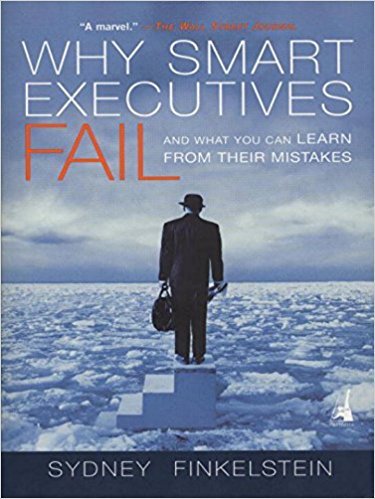
    Sydney Finkelstein, author of Why Smart Executives Fail, researched several spectacular failures during a six-year period. He concluded that these CEOs had similar deadly habits of which most were related to unchecked egos. David Dotlich and Peter C. Cairo, in their book, Why CEOs Fail: The 11 Behaviors That Can Derail Your Climb To The Top And How To Manage Them, present 11 cogent reasons why CEOs fail, most of which have to do with hubris, ego and a lack of emotional intelligence. Call it overconfidence or ego, but powerful and successful leaders often distrust or feel they don’t need advice from anyone.

    A study by Kelly See, Elizabeth Wolfe Morrison, and Naomi Rothman, published in Organizational Behavior and Human Decision, concluded one characteristic of powerful and successful leaders is high levels of self-confidence. Unfortunately, the researchers say, the higher the self-confidence, the less likely these leaders are open to advice and feedback. They also make the point that powerful leaders seldom get useful feedback in their organizations. Subordinates are loath to give bad news or critical feedback, and many boards are not diligent in seeing feedback for performance improvement, particularly relationships, as important as other things, such as financial results. See and her colleagues also contend that today’s leaders are under enormous stresses. These stresses often produce anxiety, fear and physical illness, which strong leaders are hesitant to divulge over concern about judgments that may be made about their capacities or longevity.

    Why is this leadership crisis happening? One reason may be the gaps between how leaders see themselves and how others see them. Call it self-awareness. These blind spots can be career limiting. The wider the gap, the more resistance there is to change. It also makes it difficult to create a positive organizational culture where openness and honesty are not encouraged.

    Good leaders make people around them successful. They are passionate and committed, authentic, courageous, honest and reliable. But in today’s high-pressure environment, leaders need a confidante, a mentor, or someone they can trust to tell the truth about their behavior. They rarely get that from employees and infrequently from board members.

    Paul Michelman, writing in the Harvard Business Review Working Knowledge, cites the fact that most major companies now make coaching a core part of their executive development programs. The belief is that one-on-one personal interaction with an objective third party can provide a focus that other forms of organizational support cannot. A 2004 study by Right Management Consultants found 86% of companies used coaches in their leadership development program.

    Marshall Goldsmith, a high profile coach of leaders in Fortune 500 companies and author of The Leader of the Future, argues leaders need coaches when “they feel that a change in behavior—either for themselves or their team members—can make a significant difference in the long-term success of the organization.”

    Eric Schmidt, Chairman and CEO of Google, who said that his best advice to new CEOs was “have a coach.” Schmidt goes on to say “once I realized I could trust him [the coach] and that he could help me with perspective, I decided this was a great idea…” Mike Myatt says in his article, The Benefits of a Top CEO Coach, “Executives who rise to the C-suite do so largely based upon their ability to consistently make sound decisions. However while it may take years of solid decision making to reach the boardroom it often times only takes one bad decision to fall from the ivory tower. The reality is that in today’s competitive business world an executive is only as good as his/her last decision, or their ability to stay ahead of contemporaries and competitors.”

    Douglas McKenna, writing in Forbes magazine, argues that the top athletes in the world, and even Barack Obama, have coaches. In his study of executive coaching, McKenna, who is CEO and Executive Director for the Center for Organizational Leadership at The Oceanside Institute, argues that executive coaches should be reserved for everyone at C-level, heads of major business units or functions, technical or functional wizards and high-potential young leaders.

    Despite its popularity, many CEOs and senior executives are reluctant to report that they have a coach, says Jonathan Schwartz, one-time President and CEO of Sun Microsystems, who had an executive coach himself. Steve Bennett, former CEO of Intuit says, “At the end of the day, people who are high achievers—who want to continue to learn and grow and be effective—need coaching.”

    John Kador, writing in CEO Magazine, argues that while board members can be helpful, most CEOs shy away from talking to the board about their deepest uncertainties. Other CEOs can lend a helping ear, but there are barriers to complete honesty and trust. Kador writes, “No one in the organization needs an honest, close and long term relationship with a trusted advisor more than a CEO.” Kador reports conversations with several high profile CEOs: “Great CEOs, like great athletes, benefit from coaches that bring a perspective that comes from years of knowing [you], the company and what [you] need to do as a CEO to successfully drive the company forward,” argues William R. Johnson, CEO of the H.J. Heinz Co., “every CEO can benefit from strong, assertive and honest coaching.” The cost of executive coaches, particularly a good one, is not cheap, but “compared to the decisions CEOs make, money is not the issue,” says Schwartz, “if you have a new perspective, if you feel better with your team, the board and the marketplace, then you have received real value.”

    The much asked question about coaching is its ROI. The majority of studies including a major one by Joy McGovern and her colleagues at the research firm, Manchester, indicated that the executives who received coaching valued the service between $100,000 to $1 million ROI. Joyce Russell, the Dean of the Robert H. Smith School of Business at the University of Maryland contends that once considered a concern of an employee or executive was assigned a coach, now it is viewed as a privilege and a sign that the organization values the executive’s contributions and is willing to invest money in their future growth and development.

    Robert Lee former President and CEO of the Center for Creative Leadership provided a research study for the Society for Industrial and Organizational Psychology regarding the use of executive coaches in organizations. He identified the most common areas of focus which included: dealing with paradox and ambiguity; shared power; personal visibility vs. private persona; interpersonal distance vs. personal closeness; narcissism and pride vs. humility; approachability vs. tough mindedness; emotional openness vs. rationality and logic; empowering and enabling vs. directive and forcefulness; extroversion vs. introversion; leading from the heart vs. leading from the head; ethics and morality vs. pragmatism and the ends justifies the means.

    Related Articles
    Top Dogs Can Be Lonely: Confessions of a CEO Coach
    A Coach For Every CEO
    The Upside of Coaching
    Top Dogs Are Lonely: Confessions of a CEO Coach
    Why do CEOs fail, and what can we do about it?
    Find a Therapist
    Search for a mental health professional near you.

    In my National Post articles, Top Dogs are Lonely,The Second Fastest Growing Profession and The Seven Deadly Habits of CEOs, I outlined what is now common practice for CEOs–hiring a personal executive coach–and how that helps them perform better.

    Professional executive coaches can help leaders grow and improve performance, reduce or eliminate their blind spots and be open to constructive feedback, not only reducing the likelihood of failure, and premature burnout but also provide an atmosphere in which the executive can express fears, failures and dreams. Smart CEOs and progressive organizations now realize the value of a good CEO coach.
  • Five Secrets to Enabling Highly Collaborative Ecosystems

    Five Secrets to Enabling Highly Collaborative Ecosystems

    by: Martin Echavarria, Member of the Association of Corporate Executive Coaches

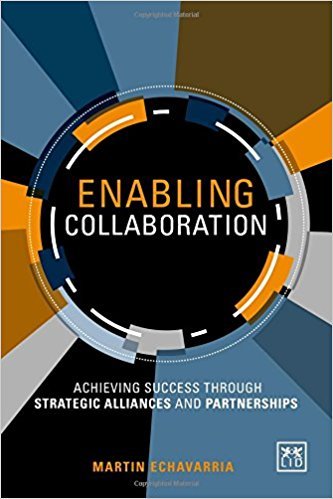
    Author of ‘Enabling Collaboration – Achieving Success Through Strategic Alliances and Partnerships’ www.enablingcollaboration.com / Coherence Inc. www.coherence360.com

    There is much talk about business ecosystems as the newest models for collective collaboration across

    industry, geography and culture.  These ecosystems are considered important not only because value chains and supply chains are outsourced and fragmented, but also due to the speed in which markets change and new competitors literally pop-up. Today, key partners once operating at arm’s length around short-term contracts need to be closer and more responsive than ever, while also connecting with others actors once considered tertiary.

    In addition, ecosystem models are being conceived to take advantage of new opportunities being created by broader interconnections. Interestingly ecosystem development is now not only reactionary to market change, but decidedly proactive. For example, who would have ever thought that a tech company such as Google would produce cars and perhaps compete with the largest of automakers, all the while cooperating with several of them on developing self-driving technology?

    So here we are. Companies today need consistency, reliability, commitment and capability to react quickly in a system of greater connectedness, volatility and competition, while simultaneously looking for more sustainability, resilience and greater permanence.

    Luckily, today, we not only have the wherewithal to envision business ecosystems, but also the technical and operational capabilities to blue-print, develop and enable their emergence. However, if not well-conceived, companies involved in making them a reality, particularly firms in the ‘center’ of the ecosystem may not access the benefits that a truly well designed ecosystem can bring.

    At the end of the day, the devil is not only in the structural details, but also in the fundamental social contracts between the partners who participate in the ecosystem and choose to contribute collaboratively to its emergence.

    These tried and true secrets, stemming from my recent book ‘Enabling Collaboration’ will help to build the kind of ecosystem that can self-correct and self-sustain in times of market change and dynamism that supports all actors’ success.

    Build the Social Contracts as you build the Structure of the Ecosystem: this means sitting with the key ecosystem stakeholders, those that perhaps currently are part of the ‘supply chain and value chain’ and those that may lie right outside it. For example, customers, the public sector and NGO’s may make sense. In structured Partnership Innovation Sessions, establish the ‘basic operating principles’ of the ecosystem, founded on the affiliation and membership goals of the groups working through the details.

    Create the Emotional Connection of Real People Co-creating Together: building a sustainable ecosystem does not happen in a vacuum but through the people who contribute to its design. To do this, bring diverse stakeholders who are an integral and vested part of the ecosystem to build the social fabric and the structural elements. Invest the time and effort for these relationships to be woven together in a productive and authentic fashion.

    Use Principles of Ecosystem Sustainability:

    1. Fair Distribution of Resources: Almost all ecological ecosystems use sunlight as their energy resource, in our case, sunlight is attune to money, and the fair and sustainable distribution of such value is fundamental to ecosystem design.
    2. Establish Formal and informal Feedback Loops: All ecosystems have cycles of waste and replenishment of nutrients. Dealing with waste and other environmental concerns are part and parcel of ecosystem design. In addition, this includes creating formal and informal feedback-loops architected into the ecosystem where all actors can communicate and contribute to improve and better its operability.
    3. Design Economic Resilience into the Ecosystem: resilience can happen serendipitously through the basic interconnections between the actors, or consciously through insurance products or savings accounts. The ecosystem actors can draw upon these resources during challenging times, or for investments in new shared technologies and capabilities.
    4. Include Diverse Actors: All ecosystems depend on bio-diversity. For business ecosystems this includes ensuring that all touchpoints of an ecosystem have some way to contribute to and get benefit from being part of the ecosystem. Benefit in this case, can be monetary, social or informational.

    Leverage Technology but Don’t use it as a Replacement for Human Interaction, leveraging technology is a critical component for designing ecosystems and enabling participant stakeholder-partners to adapt to just-in-time learning, connect and communicate directly with all ecosystem participants. However, technology and systems do not replace people talking with and connecting together and coming to terms on challenges the ecosystem faces.  This way it can up-level to better designs and improved overall functioning.

    Seek out Third Party Objective Partnership Facilitator, Collaborative Leadership, regardless of size, from the smallest of groups to the largest of complex multi-stakeholder ecosystems requires the help of a skilled objective third party. This third party, as a person or team of conveners, guides groups to see relational blind spots between partnering organizations. These unseen elements if not proactively addressed during the development phase, ultimately leak to the detriment of the system. It happens time and time again; groups don’t express grievances or concerns openly and still cooperate, ultimately unresolved issues cause greater problems down the line. Partners may try to win-over on the system, or worse, use unresolved issues as justification for inaction, lack of true collaborative participation and ownership.

    What from this post could you take action on right now to improve or begin building your ecosystem?

    What examples of ecosystem design can you share with the community that readers could learn from?

  • Creating a Culture of Collaboration @Work – 7 Steps to Start the Journey

    Creating a Culture of Collaboration @Work – 7 Steps to Start the Journey

    By Martin Echavarria, Member of the Association of Corporate Executive Coaches (ACEC)

    Collaboration is the buzz word of the 21st century and for good reason. Today employees work on all Martin Bookkinds of teams and cross functional groups to help firms remain agile and productive in response to market change and global business complexity. This basic fact of work-life places the necessity to build a culture of collaboration  at the forefront of work.

    Still, to produce a culture of collaboration we need to begin with new ways of thinking about collaborative leadership and as a result, employ new methods to support collective success.

    Firstly, consider that collaboration is fundamentally a group activity. As such, creating a culture of collaboration does not arise from implementing individual-leadership programs only. Certainly individual leadership is helpful and supports collaboration to emerge, but unfortunately a group of strong individual leaders does not magically result in collaboration.

    This is the primary challenge to creating a culture of collaboration. It happens at the group level only. When groups come together to work, they relate by communicating, feeling, coordinating activities and experiencing both explicit and implicit challenges. These dynamic interactions are generated by the group and through the group. Yet, they remain hidden from group itself. The group simply can’t see what they are producing, because they are in it, creating it from moment to moment.

    Haven’t you experienced this? You reflect on a meeting you had, left wondering “what the hell actually happened?” You reflect how you felt, what you saw, what was said but you lose sight of what occurred. You are simply left with questions and feeling of productive meeting or left drained and withdrawn with a sense of “the same old thing”.

    Just like individuals grow from leadership development coaching to see blind spots, groups similarly need facilitation and coaching when they actually engage in work.

    To enable a culture of collaboration at work requires a new approach. Here are 7 steps to start the journey toward the destination:

    1. Begin by recognizing that collaboration only happens at the group and team level, when groups come together to work.
    2. To guide groups to collaborate, use trained facilitators whose role is to challenge the group to step out and engage each other directly and honestly, coaching the group to build the collaboration capability in the work-place.
    3. Spend the time necessary to meet regularly face-to-face to build the group muscle for continued group collaboration in the act of actually engaging in work, rather than attempting team leadership retreats that take groups away from learning to actually work together. Offsite team retreats unfortunately remove teams from learning to collaborate when it counts, in office conference rooms and corridors.
    4. Identify and refine group practices such as ‘check-in’ and ‘check-out’ processes, reading chronologies of past meetings, that help to establish a “field of relationship” over time with specific cultural norms meant to optimize discourse, cooperation and most importantly learning.
    5. Encourage real conversations, not your typical “being the devil’s advocate… blah… blah… blah” instead prompt groups take responsibility for opinions, thoughts and actions.
    6. Remove the use of qualifiers and insincere business jargon that’s unclear. Ask for simple strait forward communication where clear requests are made and ideas and opinions are genuinely owned.
    7. Focus efforts on helping teams cut away what is not relevant and not necessary to the task. This means supporting groups to be able and willing to draw boundaries and limits. Often determining what is relevant and not relevant spurs “conscious conflict” that opens deliberation and the intensity needed to enter true collaboration. Collaboration never emerges sitting on your laurels.

    When you arrive at this destination of collaborative culture what you find is this:

    Groups and teams demonstrate flexibility. Participants take on different social roles to actively adapt to challenges in the moment, irrespective of seniority, authority or place. Emotions are expressed openly that lead to collaborative conflict. At this destination new ideas emerge, where greater cooperation and learning is ignited. Allowing teams to develop the capability to cut away unproductive work and focus on the essentials excelling at the tasks set for themselves. Overtime, strong group relatedness helps tackle business challenges, not perfectly or seamlessly, but collaboratively.

    At the end, building a culture of collaboration can make work more meaningful, productive and mostly enjoyable, leading to organizations that are more resilient and able to consistently adapt to market change. Yet, make no mistake; the journey requires effort, consistency, diligence, courage, commitment, conscious effort and a helpful guide along the way.


    Martin Echavarria is the Author of Enabling CollaborationAchieving Success Through Strategic Alliances and Partnerships, Bronze IPPY Winner, provides readers a foundational and practical work that describes a collaboration methodology used with all sorts of groups and an innovative alliance business process for developing successful strategic collaborations.

    Please include the following link to Amazon embedded as a hyperlink within the book title:

    http://www.amazon.com/Enabling-Collaboration-Achieving-Strategic-Partnerships/dp/0986079332/ref=sr_1_1?ie=UTF8&qid=1464118203&sr=8-1&keywords=enabling+collaboration

  • The propensity to pursue executive coaching: …

    The propensity to pursue executive coaching: …

    The propensity to pursue executive coaching: variables of self-efficacy and transformational leadership  CEOWORLD Magazine

    www.ceoworld.biz

    Two dominate variables, which has been linked to successful, sustainable, and innovative businesses is transformational leadership and leadership self-efficacy.  However, nearly 60% of companies face leadership talent shortages (Crainer, 2011).  Leadership coaching is a strategy to address the deficit of effective leaders (Gregory, Beck, & Carr, 2011; Hannafey & Vitulano, 2013), and leaders who seek coaching indicate improved self-efficacy and  transformational leadership (Abrell, Rowold, Weibler, & Moenninghoff, 2011; Enescu & Popescue, 2012; Moen & Allgood, 2009; Mukherjee, 2012; Shanker, Bhanugopan, & Fish, 2012).  According to the research literature and theorists, leadership coaching provides a new path for learning and self-awareness to an individual’s growth and development (Kay, 2013; Moen & Federici, 2012).

    Unfortunately, a paucity of information exists about leaders who take responsibility for their own development, and McCall (2010) posited no substitutes exist for teaching evolving leaders how to take charge of their own advancement.  Therefore, the objective of this research study was to (a) enrich the substantive theory building and empirical research on self-efficacy and transformational leadership by (b) assessing the leaders’ self-efficacy and transformational leadership, and(c) to ascertain if a relationship exists between these variables and the propensity to pursue executive coaching.

    Theoretical Framework

    Coaching continues to grow faster than research and Gregory et al. recommended an integration of theory and practical application of organizing frameworks.  Control Theory (CT) posited humans take an active role or responsibility toward one’s behavior, where CT attempts to control the state of some variable, often the pursuit of accomplishing a task by controlling their behavior (Gregory et al., 2011).
    Literature Review

    Executive Coaching

    In a comprehensive literature review by Kampa-Kokesch and Anderson (2001), the history of executive coaching is noted as barely traceable and a hard date for the commencement of executive coaching does not appear to exist.  The word coach emerged in the 1500s into the English language to describe a particular horse drawn carriage.  The origin of the verbto coach refers to a highly regarded person getting from where he or she was to where they wanted to go (Witherspoon & White, 1996).  Over the centuries, the term moved through several avenues from sports coaching to academic coaching and to the evolution of executive coaching (Stern, 2004).

    Predominately, western societies implement executive coaching.  The United Kingdom reports 70% of companies  use coaching, where 44% of employees report using coaching (Sergers, Vloeberghs, Henderickx, & Inceoglu, 2011), and 93% of companies in the United States (Jowett, Kanakoglou, & Passmore, 2012).  The Coaching International Federation (CIF) reported an increase in membership from 1,500 in 1999 to 10,000 members in 2006 across 80 different countries (Jowett et al., 2012).  Van Genderen (2014) asserted executive coaching is the fastest growing profession for the development of corporate success.

    According to the CIF, coaching offers the definition as an ongoing professional relationship that helps people produce extraordinary results in their lives, careers, businesses, or organizations.  Through the process of coaching, clients deepen their learning, improve their performance, and enhance their quality of life. (Brown & Rusnak, 2010, p. 15)

    Self-Efficacy

    Bandura (1986), a social cognitive theorist, first introduced the concept of self-efficacy.  Social cognitive theory includes grounding in the conceptual understanding that human beings are vigorously committing to their development and actions (Bandura, 1986).  Bandura (1997) postulated self-efficacy refers to a judgment of one’s own ability to perform a specific task within a specific domain.  Thus, self-efficacy is the aspect of self, which refers to how sure (or how confident), the individual is that he or she can successfully perform requisite tasks in specific situations, given one’s unique, and specific capabilities. (p. 4)

    Transformational Leadership

    Transformational leadership is a leadership style, which incorporates relationships and the dynamic interplay between the followers and the leader of a group. Transformational leadership inspires followers to be the best they can be, to accomplish their goals, and values what followers need and want.  By focusing on the follower’s values and aligning those values with an organization’s value this outcome may further the mission of an organization (Givens, 2008).

    Research Design

    A quantitative study with a descriptive correlational design and linear regression analysis was used for this study with established self-efficacy and leadership instruments, which contain quantitative data to assess if a relationship exists between the variables.  Applying a correlational design approach suits the needs of this study because the purpose is to examine if significant relationships exist between three sets of identified variables.

    Population and Sample

    The target population for this research study was executives in leadership positions (CEOs, COOs, VPs, CFOs, and executive management), which was accessed through SurveyMonkey®’s database.  To avoid social and research exclusion, this study did not exclude gender or industry, but was limited to the United State.  The study used a purposive sampling of executives.  A standard email notification was used to notify respondents, that he or she had a new survey to take and the invite was a random group selected through an algorithm process. SurveyMonkey®’s solicited 186 responses with 110 of those responses being fully completed.

    Instrumentation / Measures

    The instruments used in this research study were selected because of their established reliability and validity measurements.  The new general self-efficacy scale (NGSES) and the multifactor leadership questionnaire (MLQ) are established instruments (Bass & Avolio, 1997; Chen, Gully, & Eden, 2001).  Participants received a survey, which incorporated the assessments NGSES and MLQ, to include a follow-up Likert-type scale question to ask how he or she  self-rated their self-efficacy and transformational leadership (low, neutral or high), and then how likely he or she was to  pursue executive coaching (Strongly disagree-Will not pursue executive coaching, Disagree – Might consider pursuing executive coaching within the next 3 months, Neutral, Agree, will definitely pursue executive coaching within the next 3 months, Strongly agree – will pursue executive coaching immediately).
    Data Analysis
    This quantitative correlational study used SigmaXL to run the descriptive statistics, correlations, and linear regression analysis.  Minitab software was utilized to run the Cronbach alpha scores for the reliability and normality testing to reduce the risk of Type I and Type II errors of the instruments for this research project.

    Results

    Demographics

    Male 56.76% self-reported as male (N = 63)
    Female: 43.24% respondents self-reported as female (N = 48)

    Ages:                                                   Position

    18-30 – 22.52% (N=25)                      CEOs – 47.7%  (N = 53)
    31-40 – 33.3% (N=37)                        COOs – 15.3% (N=17)
    41-50 -19.8% (N=22)                         VP – 7.2% (N=8)
    51-60 – 21.6%) (N=24)                       CFOs -7.2% (N=8)
    61-70 – 2.7% (N=3)                            Executive Management – 22.% (N=25)

    Number of Employees

    >100  –                         46.85% (N = 52)
    101 – 1,000 –               30.63% (N=34)
    1,001 – 10,000 –          19.82% (N=22)
    10,001<                       2.7% (N=3)

    RESULTS

    Research Question 1: Does a relationship exist between self-efficacy and transformational leadership?  The Pearson correlation is .691 with p <  0.000 therefore the null hypotheses was rejected and the alternative hypothesis was accepted demonstrating a significant relationship between transformational leadership and self-efficacy.  These findings support  Mesterova, Prochazka, and Vaculik (2014), which stated the two variables are positively paired, contribute to each other, and contribute significantly to effective leadership.

    Research Question 2: To what extent does self-efficacy predict the propensity to pursue coaching?

    The Pearson correlation is .167 with p <  0.08 therefore the null hypotheses must be retained and the alternative hypothesis rejected demonstrating no significant relationship  between self-efficacy  and the propensity to pursue executive coaching.
    This was a surprising result to this researcher.  A possible explanation for this finding is  the purposive sampling of just high-level executives and their self-efficacy was assessed.  The composite variable for actual self-efficacy was 4.5 (on a scale of 1-5) indicating a high-level of self-efficacy as self-reported by the respondents.  The non-significant relationship between self-efficacy and executive coaching may indicate high-level executives feel quite confident, secure in their abilities, and do not feel the need to pursue coaching to enhance or develop their already existing level of self-efficacy.  Additionally, the results of this research underpin Nease et al.’s (1999) research study where participants with robust self-efficacy would exhibit decreases in feedback acceptance.

    Research Question 3: To what extent does transformational leadership predict the propensity to pursue coaching? 

    The Pearson correlation is .362 with p <  0.0001, therefore the null hypotheses was rejected and the alternative hypothesis accepted demonstrating a positive relationship between transformational leadership and the propensity to pursue executive coaching.  The overall composite combined variable score for transformational leadership was high; therefore, transformational leaders may always feel a need to improve their abilities, promoting relationships, and enhancing their followers’ abilities despite their high scores.  Transformational leadership, in definition, is a continuous growth path and one actually never arrives at full transformational leadership.  Therefore, the results of this study support the characteristic domains of transformational leadership by demonstrating a desire to pursue executive coaching for continued growth.

    Research Question 4: What is the relationship between self-efficacy, transformational leadership, and the proclivity to pursue executive coaching? 

    A linear regression model was calculated to predict likeliness to pursue coaching based on transformational leadership and self-efficacy.  A significant regression equations was found (F = 11.8488, p < 0.000), with an R-square adjusted of 0.0905.  The alternative hypothesis was supported indicating a small, only 10%, but significant likelihood when combining transformational leadership and self-efficacy, that an individual will be inclined to pursue executive coaching.  Additionally, this result indicates transformational leadership may be a possible moderator on the variable self-efficacy, as self-efficacy as a standalone variable will not propel an individual to pursue executive coaching.

    Limitations, Assumptions, and Future Research

    A limitation to this current research study was the limitation of SurveyMonkey® to give the respondents in real-time their results of their assessed transformational leadership characteristics and scores of self-efficacy.  This known variable may or may not have a different correlational relationship on the propensity to pursue executive coaching.  Understanding the demographic variables of education, experience, or length in the executives’ current position may also help to elucidate the non-significant relationship between self-efficacy and executive coaching.  Additionally, the industry of executive coaching is an established international industry and this research study was isolated to the United States.  Replicating this same study in other geographic international locations may yield different results as well as for global companies or organizations in other countries.

    Conclusion

    First, to the industry of executive coaching when soliciting possible clients, transformational leadership is a construct, which leaders may be willing to explore, enhance, and continuously develop.  Additionally, combining the assessments of transformational leadership and self-efficacy may influence a leader to pursue executive coaching.  Furthermore, organizations, HR departments, and Board of Directors can administer the MLQ (5x) separately or combined with the NGSES and may see a willingness for the leader to pursue coaching to develop and enhance these skills on a deeper level.  Leaders do appear to want to take charge of their own development and will pursue executive coaching if given the opportunity to assess their transformational leadership and self-efficacy.
    REFERENCES
    Abrell, C., Rowold, J., Weibler, J., & Moenninghoff, M. (2011). Evaluation of a long
    term transformational leadership development program. Journal of Research Personnel, 25(3), 205-224. doi:10.1688/1862-0000
    Bandura, A. (1986). Social foundations of thought and action: A social cognitive theory. New Jersey, NY: Prentice Hall.
    Bandura, A. (1997). Self-efficacy: The exercise of control. New York: NY, Freeman.
    Brown, M., & Rusnak, C. (2010). The power of coaching. Public Manager, 39(4), 15-17.
    Coaching International Federation. (2012).  Retrieved from
    Crainer, S. (2011). Leadership special report. Business Strategy Review, 22(2), 17-22. doi:10.1111/j.1467-8616.2011.00745.x
    Enescu, C., & Popescu D. (2012). Executive coaching – instrument for implementing organizational change. Review of International Comparative Management, 13(3), 378-386.
    Givens, R. (2008). Transformational leadership: The impact on organizational and personal outcome. Emerging Leadership Journeys, 1(1), 4-24. Retrieved from http://www.regent.edu/acad/global/publications/elj/issue1/ELJ_V1Is1_Givens.pdf
    Gregory, J., Beck, J. W., & Carr, A. E. (2011). Goals, feedback, and self-regulation: Control theory as a natural framework for executive coaching. Consulting Psychology Journal: Practice & Research, 63(1), 26-38. doi:10.1037/a0023398
    Hannafey, F., & Vitulano, L. (2013). Ethics and executive coaching: An agency theory approach. Journal of Business Ethics, 115, 599-603. doi:10.1007/s10551-012-1442
    Jowett, S., Kanakoglou, K., & Passmore, J. (2012). The application of the 3+1Cs relationship model in executive coaching. Consulting Psychology Journal: Practice and Research, 64(3), 183-197. doi:10.1037/a0030316
    Kampa-Kokesch, S., & Anderson, M. Z. (2001). Executive coaching: A comprehensivereview of the literature. Consulting Psychology Journal: Practice and Research, 53(4), 205. doi:10.1037/1061-4087.53.4.205
    Kay, D. (2013). Language and behavior profile as a method to be used in a coaching
    process. Poznan University of Economics Review, 13(3), 107-129.
    McCall, M. W. (2010). Recasting leadership development. Industrial and OrganizationalPsychology, 3, 3-19. doi:10.1111/j.1754-9434.2009.01189.xMesterova, J., Prochazka, J., & Vaculik, M. (2014) Relationship between self-efficacy,transformational leadership and leader effectiveness. Journal of Advanced Management Science, 3(2), 109-122. doi:10.12720/joams.3.2.109-122
    Moen, F., & Allgood, E. (2009). Coaching and the effect on self-efficacy. Organization Development Journal, 27(4), 69-82.
    Moen, F., & Federici, R. A. (2012). Perceived leadership self-efficacy and coachcompetence: Assessing a coaching-based leadership self-efficacy scale. International Journal of Evidence Based Coaching & Mentoring, 10(2), 1-16. doi:10.5539/jel.v1n2p1
    Mukherjee, S. (2012). Does coaching transform coaches? A case study of internal coaching. International Journal of Evidence Based Coaching & Mentoring, 10(2), 76-87.
    Nease, A. A., Mudgett, B. O., & Quiñones, M. A. (1999). Relationships among feedback sign, self-efficacy, and acceptance of performance feedback. Journal of Applied Psychology, 84, 806-814. doi:10.1037/0021-9010.84.5.806
    Segers, J., Vloeberghs, D., Henderickx, E., & Inceoglu, I. (2011). Structuring andunderstanding the coaching industry: The coaching cube. Academy of Management Learning & Education, 10(2), 204-221. doi:10.5465/amle.2011.62798930
    Shanker, R., Bhanugopan, R., & Fish, A. (2012). Changing organizational climate for innovation through leadership: An exploratory review and research agenda. Review of Management Innovation & Creativity, 5(14), 105-118.
    Stern, L. R. (2004). Executive coaching: A working definition. Consulting Psychology Journal: Practice and Research, 56(3), 154-162. doi:10.1037/1065-9293.56.3.154
    Van Genderen, E. (2014). Strategic coaching’ and consulting: More similar than meetsthe eye. Middle East Journal of Business, 9(1), 3-8. doi:10.5742/mejb.2014.91368
    Witherspoon, R., & White, R. P. (1996). Executive coaching: A continuum of roles. Consulting Psychology Journal: Practice and Research, 48(2), 124-133. doi:10.1037/1061-4087.48.2.124
    ++++++
By Dr. Shauna Rossington, DBA, LMFT.
    0 Comments

    2 + 7 =
    RECOMMENDED ARTICLES

    Executive coaching is back in fashion Economic growth in the UK has led to a resurgence in businesses u

  • On the Lighter side: Fantastic Job Titles for Your Business Card

    On the Lighter side: Fantastic Job Titles for Your Business Card

    Photo credit: getty images

    inc.com
    Please Steal One of These Fantastic Job Titles for Your Business Card. Your job title says a lot about you.

    Sadly, many of us use titles that sound like we’re boring or not that creative. HR manager? Really? There must be a better way. Here are a few creative options.

    1. Chief people officer

    What does this job entail? Who cares? It sounds awesome. It’s the name for the HR officer at Opportunity Network, a company that links CEOs to financial institutions.

    2. Culture operations manager

    Here’s another HR-related title, this one from When I Work. The scheduling app helps managers know when employees are at work.

    3. Chief robot whisperer

    This is a title from the startup Savioke, a company that provides robots to the service industry. It’s an apt description because it relays a sense of wonder and excitement.

    4. Director of bean-counting

    The creative agency Bidlack in Ann Arbor, Michigan, uses this title for the main accountant. It’s a nod to the fact that the role tends to be meticulous (in a good way).

    5. Software ninjaneer

    At a startup called TSheets, they don’t mess around with boring titles. This one nails it because, in many ways, software development is a mysterious and ancient art form.

    6. Director of first impressions

    At publishing house Houghton Mifflin Harcourt, the receptionist has this title. It’s perfect because it is exactly this person’s role at the company.

    7. Digital overlord

    If you have ever worked on a website, you know this term is fitting for the role. They use it at Composites Media, a company that works in the engineering field.

    8. Director of storytelling

    This role creates social media campaigns and strategies for companies. They use it at Eyespeak, a website development company.

    9. Money maestro

    At Delivering Happiness, this is the title for the accounting manager. It is definitely a role of orchestration, especially with pay scales, budgets, and expenses.

    10. Wizard of light bulb moments

    This title, popular on LinkedIn, describes the role of a marketing director. It works because, in a pure sense, marketing is the act of inspiring people to action.

  • MEECO™ (Measuring Excellence in the use of Corporate Executive Coaching in Organizations)

    MEECO™ (Measuring Excellence in the use of Corporate Executive Coaching in Organizations) is a designation that distinguishes organizations that have achieved excellence through weaving executive coaching into the fabric of their culture.

    Our goal is to recognize organizations that provide a benchmark and role model for other organizations that want to increase stockholder and stakeholder value, while experiencing overall success through utilizing mastery level executive coaches who understand how organizations work, and are determined to make a meaningful difference as “enterprise-wide business partners™”.

    www.meeco-institue.org

  • The End of Pay Secrecy?

    hreonline.com
    By Julie Cook Ramirez

    Employers are under pressure to divulge salary information. Could one of the last workplace taboos be going by the wayside?

    Thursday, February 4, 2016

    You are not to tell anyone how much you’re paid.

    It’s an unwritten rule at many companies, while other employers openly inform their employees they are not to share salary information with colleagues. A 2010 Institute for Women’s Policy Research/Rockefeller Survey of Economic Security found half of all workers were either “explicitly prohibited or strongly discouraged” from discussing pay with their coworkers.

    That may all be changing, as employees are increasingly seeking to discuss pay issues both inside and outside company walls. In large part, the trend is being driven by social media, coupled with the emergence of millennials in the workplace, according to Kevin Hallock, director of the Institute for Compensation Studies at Cornell University in Ithaca, N.Y., and author of Pay: Why People Earn What They Earn and What You Can Do Now to Make More. Younger employees, in particular, are comfortable sharing virtually every detail of their lives, he says, so divulging their salary doesn’t seem like a breach of privacy.

    It’s not just employees who are openly discussing compensation. A small but growing number of employers are making such information available, either internally to the workforce at large or externally, posting all workers’ salaries on their websites for the world to see. The most widely publicized example is Austin, Tex.-based Whole Foods Market, which allows employees to view information on pay and bonuses for everyone from the CEO down. The policy was introduced by then-co-CEO John Mackey in 1986, just six years after the natural-food retailer’s inception. The goal was to encourage competition by helping employees understand why some people are paid more than others. If workers understood what types of performance led to greater compensation, Mackey reasoned, they would be motivated to adopt similar workplace behaviors themselves.

    While Whole Foods is a notable exception, the trend toward pay transparency is almost exclusively limited to “small tech-y companies,” according to Ed Lawler, director of the Center for Effective Organizations at the University of Southern California’s Marshall School of Business in Los Angeles. For the most part, large companies have shied away from the idea, instead adopting a “what you don’t know won’t hurt me” attitude, says Lawler. That’s unfortunate, he says, because they have much to gain from sharing pay information with the workforce.

    “They seem to be stuck in the mindset of ‘If I don’t have to defend it, life is better and people are happier,’” says Lawler. “If you have a reasonably administered pay system that meets a certain agenda, like pay for performance, and it’s defensible, you are better off from an organizational effectiveness point of view of making that clear and visible to people. It’s a big credibility builder.”

    While Hallock sees more employers “experimenting” with pay transparency than ever before, he agrees that “most organizations are very reluctant” to divulge salary information. Usually, that’s because they fear the “chaos that might come with it,” he says, as employees learn they are making less money than colleagues they consider their inferiors. That bedlam can be avoided by adopting an approach in which salary information is accompanied by the opportunity to ask questions, learn more about the connection between pay and performance, and map out a plan for increasing their own earning potential, according to Sarah Moore, a partner in the Cleveland office of Fisher & Phillips.

    “To the extent that you can have a conversation with the employees and provide each of them a context for where they are in the scheme of things, that’s always a preferred approach, rather than just putting it up on the bulletin board,” says Moore.

    That’s the approach taken by Whole Foods. Rather than posting such data on the company intranet for easy access, the retailer requires employees to make an appointment with an HR manager to see others’ salary information. That enables the retailer to achieve its goal of bolstering employee performance through pay transparency.

    Even if an employer chooses not to officially divulge compensation data, technology is enabling employees to disseminate such information themselves via anonymous interoffice messenger apps like “Get the Memo” or websites such as Glassdoor.com, where current and former employees review companies and their management. One enterprising Google employee simply created an Excel spreadsheet where employees could plug in their salary information.

    While conventional wisdom may frown on such activities — and some employers might seek to squelch them — they could have no choice but to accept pay transparency as a component of the 21st century workplace. Legally speaking, says Moore, employees have every right to tell anyone they choose how much they make. Section 7 of the National Labor Relations Act makes it legal for employees to discuss the terms and conditions of their employment with each other. That includes salary and benefits.

    The end of pay secrecy is inevitable, says Moore. She advises employers to get in front of the issue and begin laying the groundwork for a smooth transition into the world of pay transparency.

    “The first step is to make sure the most-valued employees are compensated in a manner that is reflective of objective fairness so that when that information is rolled out, they don’t have a situation where a lot of angry people feel burned and ready to walk out the door,” says Moore. “The key is to make sure it’s done in a measured way, keeping an eye on retention of the most valued employees and recognizing you are going to have some people who just aren’t happy regardless.”

    Send questions or comments about this story to hreletters@lrp.com.

  • Terminating an Employee on FMLA Leave

    hreonline.com

    By Keisha-Ann G. Gray

    Question: My organization would like to terminate an employee who is currently on FMLA leave, for reasons unrelated to the leave. Can we properly lay off this employee?

    Wednesday, June 3, 2015

    Answer: Under the Family and Medical Leave Act (“FMLA”), which applies to employers with 50 or more employees within 75 miles, covered employees who are on qualified leave have a right to be restored to the same, or an equivalent, position upon their return. 29 U.S.C. § 2614(a)(1) (1993). Further, employers cannot use the taking of FMLA leave as a negative factor in employment actions such as hiring, firing and promotions. See Wage and Hour Division, FMLA Fact Sheet, United States Department of Labor. However, this does not mean that an employee on FMLA leave is immune from termination. To the contrary, “an employee has no greater right to reinstatement or to other benefits and conditions of employment than if the employee had been continuously employed during the FMLA leave period.” 29 C.F.R. § 825.216.

    Prior to terminating an employee on FMLA leave, an employer should consider carefully whether it would make the same termination decision even if the employee did not take leave. Indeed, if the termination is challenged, the burden will be on the employer to prove the leave was not a factor in the decision. Accordingly, it is critical to keep sufficient documentation that supports the business decisions behind the termination. Below we describe some of the applicable case law that provides employers with examples of situations that may provide legitimate, non-discriminatory reasons for terminating an employee on FMLA leave and underscores the importance of maintaining relevant documents.

    First, a corporate re-organization may qualify as a legitimate reason for terminating an employee on FMLA leave, provided that the re-organization is not merely a reaction to the employee taking the leave. See Yashenko v. Harrah’s NC Casino Co., LLC, 446 F.3d 541, 551 (4th Cir. 2006). Nonetheless, an employer still must be sure to document the specific business decisions and determinations behind a corporate re-organization in order to avoid potential FMLA violations if an employee on leave is terminated. For instance, in Brenlla v. LaSorsa Buick Pontiac Chevrolet, Inc., No. 00 CIV. 5207 (JCF), 2002 WL 1059117, at *2 (S.D.N.Y. May 28, 2002), an employer decided to consolidate two job functions, thus eliminating the position of an employee on qualified FMLA leave, three days after the employee formally requested to return to full-time work. The employer argued that the “re-organization” was motivated by legitimate business concerns. Id. at *5. However, the jury found, and the court upheld, there was no documentation or evidence showing any financial benefits from the consolidation or indicating how the employer chose which employee was best suited for the new consolidated position. Id. Instead, the temporal proximity to the employee’s request to be reinstated and the employer’s decision to consolidate the positions supported the conclusion that the restructuring would not have taken place had the employee not taken FMLA leave.

    Second, courts have held that an employee’s poor performance may qualify as a legitimate reason for terminating an employee on FMLA leave. See Mercer v. Arc of Prince Georges Cnty., Inc., 532 F. App’x 392 (4th Cir. 2013) (upholding employer’s decision to terminate an at-will employee for poor performance, despite the employee being on FMLA leave). Again, documentation, such as performance evaluations, likely will be instrumental to ensure that the termination is not viewed as retaliation for taking FMLA leave. See Richmond v. Oneok, Inc., 120 F.3d 205, 209 (10th Cir. 1997) (ruling that the employee was not terminated for taking FMLA leave, but instead was properly terminated based on 15 documented incidents of poor performance). A prudent employer should make sure that it has documentation indicating not only the reason for the termination, but also why the termination decision was not made prior to the employee’s request for (or taking of) FMLA leave. Even with sufficient documentation, some employers choose to wait until the employee returns to work before taking an adverse employment action to avoid the inference of retaliation. Simply waiting until an employee returns from work, however, will not insulate an employer from a retaliation claim. Even if performance issues are well-documented, an employer should evaluate the timing of a discharge of an employee who recently took FMLA leave to avoid even the appearance of a retaliatory motive. Of course, an employer might not become aware of performance issues or policy violations until the employee goes out on FMLA leave. In that situation, the employer likely will be within its right to terminate the employee immediately, even if the employer discovered the misconduct from the employee’s leave replacement. See Cracco v. Vitran Exp., Inc., 559 F.3d 625, 636 (7th Cir. 2009).

    Furthermore, a reduction in force is likely to be considered a legitimate reason for terminating an employee on FMLA leave. If a reduction in force results in the termination of an entire department or division, depending on the size of those groups, it will usually be sufficient to show that there was no discriminatory animus to eliminate an employee on FMLA leave. However, if a reduction in force is employee-based, instead of group-based, the employer will want to produce significant documentation indicating how and why each laid off employee was chosen. See Roll v. Bowling Green Metalforming, LLC, 457 F. App’x 458, 460 (6th Cir. 2012) (upholding the termination of an employee on FMLA leave because the employer produced significant documentation that the employee’s selection for inclusion in the reduction in force was based on objective criteria including skills, performance and work history).

    Overall, the main takeaway from the case law for employers is that it is not only important to have legitimate, nondiscriminatory business reasons for terminating an employee on FMLA leave, but employers should also make certain they have adequate documentation supporting the business decisions behind the termination.

    Patrick Lamparello is a senior counsel in Proskauer’s labor and employment department in New York. Proskauer Associate Ian Plummer assisted with this article.


  • Fostering Feedback

    hreonline.com
    Fostering Feedback
    By Maura C. Ciccarelli

    Organizations need candid feedback, yet it’s often not supplied as frequently as needed to make solid business decisions. Two experts discuss ways companies can improve their employee-feedback programs.

    Monday, February 1, 2016

    Getting honest employee feedback is a tricky prospect. What strategies we think are effective — having an open-door policy, establishing real or virtual suggestion boxes, conducting online surveys, etc. — are actually wasted efforts if an organization’s culture doesn’t make it safe from the very top for employees to give voice to their complaints and ideas.

    To understand the best ways to encourage and get employee feedback, HRE spoke with James R. Detert, a professor at Cornell University’s Samuel Curtis Johnson Graduate School of Management, and Ethan Burris, associate professor of management at the University of Texas in Austin. Together, they have studied what inhibits workers from giving feedback as well as what organizations are doing right — and wrong — in this two-way communication dance.

    Why is it so important to understand why feedback works or doesn’t work in an organization?

    JD: This world is simply too competitive and complex for anybody at the top to have all the answers and know what all the problems and opportunities are. Learning from people who have their ears to the ground and have more real expertise is crucial to performance. The second reason is simply that we live in a democracy. We say we believe in freedom of speech, ideas, and thoughts, but when you’re in most workplaces, you basically lose your First Amendment rights. When people feel repressed, it’s much harder for them to truly enjoy work, feel engaged and satisfied, and feel they are really contributing.

    EB: The irony is that organizations really need this candid feedback, yet it’s not supplied as frequently as needed for organizations to make good decisions. It’s a very personal thing to be engaged and excited about the work that you do and feel that you are [making] a difference. When your direct boss or someone higher up in the hierarchy doesn’t pay attention, ignores you, [or] doesn’t use your feedback in a way that you think is most appropriate, it’s hugely damaging to your relationship with that organization. It’s a strategic question around how organizations can best take advantage of their employees’ ideas and it’s also a very personal experience.

    How can HR leaders improve the process?

    JD: If you don’t send signals from the top down that [feedback] is safe, that we will listen and that we will do something with it, [then] it’s really an uphill and mostly losing proposition. We’ve been approached by HR folks who say, “We can’t get the CEO or the senior team or C-suite interested or the senior business unit level people, but we want to work with [a lower level of the organization].” My single biggest pushback would be: “Then don’t bother.” [Laughs] You cannot change the culture around speaking up from the bottom up. You change it by the senior people fundamentally changing behavior, policy and practice.

    HR can play a role in aligning how people are evaluated and promoted [if an organization says it] espouses honest communication. If people still believe that the way to advance in the organization is to be a yes-man or yes-woman, you simply won’t have a culture of honest input. People pay a lot of attention to who gets promoted and what they believe are the reasons for promotion.

    If you ask people and organizations to describe [what happens when people speak up], the majority of the urban legends we’ve heard are negative. For example, so-and-so spoke up and was gone a month later. That’s natural because people tend to remember bad stories longer and with more potency. That suggests that HR can play a really active role in celebrating [honest feedback] in formal and informal ways. [Ideas include publicizing internally that] this person shared this idea and saved the company this much money; this person is receiving a reward [for his or her idea]; or [top leaders can] start certain kinds of meetings with a thank you or recognition to an employee for specifically pushing and challenging them and giving them an important suggestion.

    What types of organizations are doing it right?

    EB: It’s a lot easier in very small organizations than in very large ones because of things like access to the top people and being able to influence culture more immediately. [However], a really large tech company in Silicon Valley that I’ve been working with has not only hammered out policies but has also tried to institute things about its culture to explicitly encourage [people] to speak up a lot. Now that [its leaders] have thousands of ideas, the challenge is in asking how do they prioritize them, what system will help with that, and how do they then communicate with employees so they feel that their ideas are heard and considered.

    What resources can help?

    JD: The book Creativity, Inc.: Overcoming the Unseen Forces That Stand in the Way of True Inspiration by Ed Catmul, president of Pixar, has at least 15 concrete instances in which he shows tremendous insight about subtle barriers – changing furniture, redesigning entire office spaces and designing processes for periodic reviews of the films at various stages. As you can imagine, these are [projects] that people have massive identity invested in. He describes a really brilliant understanding of how ambient stimuli such as furniture and room layout [and] power dynamics can make a difference.

    Google has similarly understood that, if you want people to interact more freely, design your organization to have lots of common areas. Design your cafeterias to have long tables so people have to sit together rather than isolate themselves. Google, like other organizations, has used technology not just to collect ideas, but also to have people build on other’s ideas, by allocating points, or fake or real dollars [for] better or worse ideas and volunteering to become owners in those processes.

    EB: The other side of it is, if you are an employee who wants to pitch an idea, how do you tangibly set up those conversations, especially if some of them are a bit more difficult or challenging? Doug Stone and company from Harvard have a book called Difficult Conversations: How to Discuss What Matters Most. That’s an excellent introduction to [setting] the stage so that you can be more productive and not get killed in the process.

    Anything else HR folks should understand about the feedback process?

    JD: More often than not, voice problems are just the unintentional reality of people’s orientation to authority. HR can help managers understand that the challenges of getting your people to be honest with you has nothing to do with being a good or bad person or leader. It’s just the reality of human hierarchy. People are [often] unintentionally shutting others down. It’s really about awareness-raising rather than finger-pointing.

    EB: We have yet to meet a manager who says, “I have a closed-door policy. I’m just not interested in hearing my employees’ feedback.” For the most part, developing a policy is not going to fix the real issue. This is really about culture change. That takes a long time, a lot of effort and a lot of failure along the way.

    JD: Ethan and I have both seen occasions in which HR has led task forces or reviews and probably the net result was only to increase employees’ perceptions that it is futile to speak up because they collect more data, waste more people’s time on surveys or interviews asking about speak-up problems, and then basically do nothing. It’s worth it for HR folks to really consider whether there’s truly a commitment to doing something systemic and over a sustained period of time, because if not, they might actually make the problem worse by engaging in a half-hearted effort.

    Send questions or comments about this story to hreletters@lrp.com.