Category: Leadership Development

  • Three Things Successful People Do!

    by Marshall Goldsmith

    If you’ve read my best-selling book, What Got You Here Won’t Get You There, you know that most of us are successful in spite of certain behaviors. For instance, most highly successful people have the bad habit of Winning Too Much.

    Winning too much is the #1 challenge for most people because it underlies nearly every other behavioral problem. If we argue too much, it’s because we want our view to prevail (in other words we want to win). If we put other people down, it’s our way to position them beneath us (again, winning). If we withhold information, it’s to gain an edge over others. If we play favorites, it’s to gain allies so “our side” has an advantage. Our obsession with winning crosses the spectrum of our lives. It’s not just an issue in our professional lives, it works its way into our personal lives as well. It is incredibly difficult for smart, successful people not to constantly win.

    Another classic behavioral challenge of smart, successful people is Adding Too Much Value. This bad habit can be defined as the overwhelming desire to add our two cents to every discussion. A slight variation on Winning Too Much, Adding Too Much Value is common among leaders who are used to running the show. It is extremely difficult for successful people to listen to other people tell them something that they already know without communicating somehow that (a) they already knew it and (b) they know a better way.

    These are just a couple of the behaviors that the most successful leaders I know work on to become even better. A lot of leaders choose to forego change, believing that they are “successful enough” and that change therefore isn’t necessary.

    What makes the most highly successful leaders different is what makes them some of the greatest leaders in history. I believe there are three characteristics that differentiate good leaders from great leaders.

    The first thing successful people do is have Courage. Great leaders have the courage to get feedback and to look at themselves in the mirror, honestly. This isn’t an easy task. To truly look at yourself and to ask for, accept, and act on feedback you receive from others, you have to have courage.

    The second thing successful people do is have Humility. If you’re going to get better, then that means you probably don’t think you’re perfect. This is a great place to start. Think about it. It is very hard for perfect people to get better! For someone to change, he or she first has to have the humility to admit there is room for improvement.

    The third and final thing that great leaders do is they have Discipline. To be a great leader, you have to have the discipline to follow up and do the hard work to keep getting better.

    There you have it: the three must-have characteristics of very great leaders: Courage, Humility, and Discipline. Are you a great leader? Do you know a great leader? How would you describe a great leader? I’d love to hear your thoughts!

    Life is good. Marshall.

    View original publication here

  • Leadership Practices for a Strong Start to the New Year

    Join us and experience the transformative effects of a ‘Virtual Triathlon’


    In this 75-minute workshop, Barbara Mintzer McMahon ‘Executive Coach and Mindfulness Expert’ will guide you through an experience to enhance engagement at all levels mind, body, and spirit. You will learn how to enhance your own well-being and the well-being and capacity of your team. Learn how these practices can maximize and sustain performance. This simple and most powerful experience can be used to:

    • Reduce stress
    • Enhance capacity for being fully present
    • Enable quality thinking and creativity
    • Build resilience
    • Enable quality connections to others

    In this time, Barbara will engage you in exercises to enhance quality thinking and will invite you to take time (30 minutes) to energize yourself by engaging in a physical activity of your choice. You will unplug and be able to engage your body – take a walk, run, dance, do yoga, whatever you choose. Then, we will come back together to learn how to channel this energy and advance our best thinking. The topics covered will focus on “What Now” and “What Next” as we step into the field of possibilities waiting for us in 2021.

  • Lead with Empathy

    Contributor: John Baldoni

    Deposit Photos

    Empathy has become the buzzword of 2020.

    And that’s too bad because too often, buzzwords fall into disuse. We need empathy now more than ever.

    Empathy is the capacity to feel for someone else, to feel compassion for what they are experiencing. As our nation is riven by the twin viruses of Covid-19 and systemic racism, and the resulting economic fallout, people in need, or people in general, want to know that someone cares.

    When we see images of people who have suffered or are caring for those suffering, we feel sympathy. We are in synchronicity with their loss. That is fine, but it’s not empathy. Empathy, as classically defined in Webster’s Dictionary, is “the ability to share in another’s emotions, thoughts or feelings.”

    Leaders can be empathetic, but feeling empathy is not enough. Acting with empathy is what’s necessary. “The most beautiful people we have known are those who have known defeat, known suffering, known struggle, known loss, and have found their way out of the depths,” wrote the Swiss psychiatrist Elizabeth Kubler-Ross. “These persons have an appreciation, a sensitivity, and an understanding of life that fills them with compassion, gentleness, and a deep loving concern. Beautiful people do not just happen.”

    Acting with empathy

    Being and doing are different things. Here are some tips for acting on empathy.

    Listen intently. While sympathy is an inclination to experience another’s pain, empathy is the willingness to act. You can only act if you know what the issue is. That comes from listening. Focus on the other person. Have a conversation.

    Anticipate the need. Acting on empathy means not waiting to be asked. Sense the need and fulfill it. Don’t ask if someone is hungry. Bring them a meal. Don’t ask if they need a job. Help them find one. Don’t ask people if they feel sad. Find a moment of joy for them.

    Follow up. People with genuine empathy follow up to see how those in need are doing. Sometimes all a person needs is a shoulder to lean on for support. Other times it is a blueprint for survival with assistance along the way. Checking in on people keeps you in touch. It also gives the individual being helped the opportunity to say thank you. Being grateful opens the door for them to maintain their dignity. And even more, it reminds them of their self-worth. 

    Leo Buscaglia, popular author, speaker and university professor, wrote, “Too often we underestimate the power of a touch, a smile, a kind word, a listening ear, an honest compliment, or the smallest act of caring, all of which have the potential to turn a life around.” 

    Empathy is generative. That is, the more we give, the more we get in return. We feel good about helping others and, in turn, feel the energy from that. Empathy is the capacity to care and act on that caring.

    John Baldoni
    Master Corporate Executive Coach
    Member of Marshall Goldsmith 100 Coaches
    www.johnbaldoni.com

  • How do we Manage, Measure, Motivate?

    Cellene HoogenkampLeadership Talks Episode 2

    Following our first episode of GlobalLeadership Talks, this second episode of our first series continues our conversation with our global panel of HR experts on the evolution of the workplace during a pandemic – How do we Manage, Measure, Motivate?

    Kathleen Procario – Head of HR Bacardi N-America
    Nicole Barrow – Head of HR DP DHL Group Americas
    Kathleen Halligan – Organizational psychologist with People Performance Ireland
    Co-host : Jordan Goldrich – Author of WorkPlace Warrior
    HOW DO WE MANAGE, MEASURE, MOTIVATE? – KEY TAKE AWAYS
    Performance measurements systems: Key is through a more frequent dialogue to adjust people’s commitments and goals, e.g. weekly team conversations with goal adjustments – keep it flexible.

    Motivating: performance goals & measurements are created by the individual and become part of their performance profile – not a top down approach. This ensures ownership, accountability, and clarity in conversations with their managers.

    Managing the performance of your team: ask “How would I like to be managed?” Become more deliberate about your conversations. Listen to the cues of employees: “How can we work together better?” and, “What level of support do I need to provide?”

    Measurements: it’s about managing the outcome. Trust your people to make decisions and be prepared to be delighted by the outcome. Press the “Pause” button if editing is needed.

    Stress: often caused by the fear of the unknown. Being addressed by managers with more empathy, more flexibility, supportive of new working conditions – we are seeing an increase in the EQ coefficient.

    Connecting is paramount: have multiple touch points to communicate messages, formally and informally. Town halls were found to be effective – don’t assume people know.

    Strategic decision making – needs to be swift – a more dynamic environment supports this, versus hierarchical structure. Gather decision makers around the table. Trust & Empower. Cultivate & share best practice – enable freedom within a framework.

    Global and Regional approaches – key is freedom within a giving framework and being empowered to act.

    Preventing burn-out: improving Wellness offers to support the employees – e.g. Virtual Yoga and meditation classes.

    Advice from the Panel:
    Stay connected to customers & employees with more diligence and a personal touch – Trust and empower.

    Transparency throughout all communications, with honesty and humility.

    Put on your own oxygen mask first: Ask yourself, “How do I want to be managed?”

    Will we see a decline in old hierarchical structures into more partnership approaches enabling the motivation to work faster and with more transparency?
    Stay tuned for Episode 3 – How do we help people Thrive in this environment?

  • Challenges of the C-Suite: Guest – Susan Curtin, MCEC

    Challenges of the C-Suite
    Special Guest – Susan Curtin, MCEC
    Tuesday, Oct 27th @ 12pm MDT

    Susan Curtin, MCEC, is President & Owner at Insights4Results, LLC., Executive Coach & Consultant who partners with clients in igniting new insights, innovations & increased results.
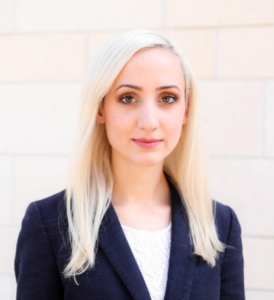
    Susan started a coaching/consulting firm after 20 years of experience training & coaching internal/external personnel in San Diego County & City organizations. Soon after, she noticed gaps in coaching provided to individuals and teams that were not being addressed by existing coaching models & programs. 

    • The first gap was that there was no coaching to hire the right individual for the job in the first place. 
    • Approaches of existing coaching programs tended to coach everyone the same & didn’t account for each individual having a unique set of skills, challenges or their current performance State.
    • Then there was no support to coach leaders when they were in the Slipping State. 
    • After coaching leaders to become better managers, there was no plan to coach these developed leaders to succession.

    The gaps led to the creation of Managing4Results™ a successful, comprehensive management program that incorporates development of a department managers’ role as a coach for ongoing employee engagement and increased retention. This program helps managers learn: “How to be, What to do and When to do” in order to build stronger relationships with their direct reports through giving constructive feedback, coaching, and communicating in ways that truly motivate and enable teams to achieve greater results. Managing4Results™ provides a certification program for coaches, consultants and trainers interested in utilizing this proven training program for their current and future client organizations. 

    Susan’s coaching includes leadership development, transition to the next stage of leadership, succession management & work on key competencies including interpersonal savvy/EQ & political acumen. She specialize in utilizing Managing4Results™ program to facilitate managers & leaders in developing personnel while building their own capacity to coach their teams ensuring greater employee engagement. “Behind Every Good Result Is a Great Insight.”

    Susan is a member of the Association of Corporate Executive Coaches https://www.acec-association and is a certified Master Corporate Executive Coach with the MEECO Leadership Institute.


    #cbBowmanLIVE, #LinkedInLive, #WRE, #MG100, #ACEC, #leadership

    To Join LinkedIn Live
    Follow These Simple Steps:

    Step 1: “Link” with and “follow” CB Bowman on LinkedIn  https://www.linkedin.com/in/cbbowman/

    Step 2: The day and time of the show go to my “Activities Section” and select “See All”

    Step 3: Next go to the “post” tab

    Step 4: Search for the event. 

    Step 5: Click on “join” at the start time for the event

    Step 6: While watching the show please select a reaction i.e. clapping hands or thumbs up repeatedly during the event to boost our rankings:)!

    Next Thursday on
    WORKPLACE RACIAL EQUALITY 
    Special Guest: Liz Gutheridge, MCEC
    Managing Director at Connect Consulting Group
  • AsK Marshall: LIVE Q&A with Marshall Goldsmith

    Ask the #1 Leadership Thinker in the world your questions.

    Do you have leadership challenges right now? Is coaching changing? What new skills do I need to lead post COVID? How do I find balance and calm in such uncertain times?

    Marshall Goldsmith joins #MG100 coaches CB Bowman, Rhett Power, Andrew Nowak, and Mitali Chopra and shares his insights on leadership, life, and finding balance. 

    This is your chance to ask Marshall your burning questions. 

    Date: July 9th Time: 6 am PT, 9 am ET, 2 pm London, 9 pm Hong Kong 

    The session is open to our worldwide audience. Spots are limited reserve yours now: https://www.eventbrite.co.uk/e/ask-marshall-live-qa-with-dr-marshall-goldsmith-tickets-112134043944

    #Leadership #coaching #success #100Coaches #LeadershipDevelopment

  • As A Female Founder, I Don’t Have 108 Years for Gender Parity

    Following the release of our recent report “A Decade in Review: Funding to the Female Founders” Crunchbase is highlighting female founders who are paving the way for the next generation of glass-ceiling-smashers. The “Female Founder Series” is comprised of stories, Q&As and thought-leadership pieces from female founders who overcame the odds, raised funding and are now leading successful companies.


    Last year, Geosite arrived at an exciting inflection point in our growth and I was meeting regularly with current and potential investors. One morning I was walking to my office in Palo Alto when I saw my reflection in a storefront window. A light breeze had caught the hem of my floral sundress and it fluttered in the spring sunlight. A sinking feeling stopped me in my tracks and I had the sudden, unexpected thought: I don’t look like a CEO. 

    I brushed the feeling off. I decided I didn’t have time to be slowed down worrying about others’ perceptions. I had work to do and a company to grow. But the thought stuck with me over the past few years as I built Geosite. 

    Sometimes I am still struck by the realization that I have a firm idea of what a CEO “should” look like, and I have to challenge myself to not buy into that or any preconceived notion of how I might be perceived. Maybe I don’t look the way people expect a CEO to look, but I am lucky to feel very comfortable with who I am. Ultimately, it reminds me to keep my own preconceptions in check as well. 

    I founded Geosite two years ago and have built the team to 15 people with $1.7 million in investment and $1.8 million in revenue. With clients in defense and energy, I spend a lot of time in rooms where I am the only woman. Like all founders, I invest considerable time–more than I had originally anticipated–talking to investors, the overwhelming majority of whom are men. It doesn’t matter what we wear or how we look, women will always stand out in these rooms; there just aren’t enough women empowered in leadership, tech, or finance. 

    After years of scrolling through “Meet Our Team” pages on VC websites, the homogeneity of the teams wears on female founders (and founders from any minority group). That’s bad for all of us. It is hard for the underrepresented founders leading their companies and it’s not good for white male VC’s either. They begin to blur together, robbing them of deserved individuality. “I don’t know, maybe I’ve met this guy before…? I’m not sure, they all look the same.”

    I see signs that diversity is increasing, but far too slowly. As a woman running a company now, I don’t have 108 years for gender parity, so here are the things I choose to lean on in the meantime: 

    1. Get a strong tribe of advisers, mentors and friends

    I am extraordinarily lucky that the very first check came from the team that, to this day, is the solid foundation of advice, access, and cheerleading I need to run Geosite. The team at Bee Partners provides incredible support to not only me, but is blazing a clear path in the venture community with 50 percent of their portfolio companies in 2019 founded by women. 

    Beyond having great investors, peers are vital. I cannot imagine running Geosite without my CEO besties. The camaraderie of entrepreneurship is unbelievable and breathtaking: From the highest highs to the lowest lows, peers who can empathize with and challenge you are a critical component to sustain yourself. Practically, it is also important. We expand each others’ networks and refine each others’ decks and pitches to be the best possible reflection of our companies.

    2. Practice introducing yourself

    Heuristics and pattern matching are important in the risky, intuition-filled world of early-stage investing. We have little control over how others perceive us at first glance, and first impressions are lasting. This makes a strong introduction one of the most important, and often overlooked, skills for founders. I learned this the hard way. 

    After a pitch to a few highly regarded partners on Sand Hill Road, a friend from grad school who had become an investor at the firm told me I had done a wonderful job explaining my company … but I had fallen short when it came to my personal introduction. 

    Sadly, many people in VC aren’t going to assume you, a woman, have the credentials to run your company. You have to tell them your credentials explicitly. Make sure you prepare an introduction and practice it, just like you would a pitch. 

    3. Never be ashamed of your ambition

    It is important to have the humility to identify what you do and do not know. Don’t make the mistake of conflating this with a need to hide ambition. If you have the data and insight to back up what you’re doing, do not shy away from stating that you will change the world (or an industry, or lives, or the state of technology). Others will revise down your optimism, so you should not. 

    Building a fledgling startup into a unicorn takes a vision and a superhuman amount of optimism. Share that vision and dream with the people (investors) who have the resources to help you make that dream a reality and with the team who will join you on the journey to make that dream a reality.

    You’ll be surprised how supportive people are when you aren’t shy about your ambition to change the world.


    Rachel Olney is a Stanford University Mechanical Engineering PhD candidate and the Founder and CEO of Geosite Inc. She has taught innovation frameworks and built standard operating procedures for the most elite US military special operations teams. She has also helped create and scale an international program in national security innovation and conducted research for the US Air Force on the Strategic Implications of Ultra Low-Cost Access to Space.

    As the CEO of Geosite she leads a YCombinator backed startup disrupting the geospatial data industry, making it easier for logistically intensive industries, such as Oil and Gas and the Department of Defense and Intelligence Communities, to easily leverage spatial data (satellites, drones, IOT, and cloud-enables SCADA) to increase operational efficiency. Geosite is the first enterprise software to imbed cutting-edge geospatial data into business intelligence tools.

    Rachel was featured on this year’s Forbes Enterprise Technology 30 Under 30 list.

    Original article appears here: https://about.crunchbase.com/blog/i-dont-have-108-years-for-gender-parity/?utm_source=cb_daily&utm_medium=email&utm_campaign=20200320&utm_content=intro&utm_term=content&mkt_tok=eyJpIjoiWkRKaU4ySTVPR0psTm1aayIsInQiOiJmc3g3NU9US2o0RGtEQkVLNzRqXC9JRXRiZnpJTk9XNnpEK0Y4OXNGNmFCejNCK085azRuckFycEV3ME9aelZoQVBROTBcL1U4TktLZWhVSlFIUDVoNDQ2cmpaVEcwelh4Tk9TRk5vMUZ2aytNZEhWZkxJSlRmdUt3MHRuck5XdjhkIn0%3D