Tag: ACEC

  • What High-Performance Workplaces Do Differently

    by Rob DeSimone

    December 12, 2019

    Employees now look to their workplace for purpose and development Companies that create a high-development culture achieve high performance Learn four development strategies to retain your best employees You’ve heard of high-performance workplaces, but how do they become “high-performance”? Gallup has discovered that one of the most important factors in creating a high-performance workplace is instilling a high-development culture: one that values the growth of individuals. Organizations that have made a strategic investment in employee development, Gallup finds, report 11% greater profitability and are twice as likely to retain their employees. It makes sense. High-achieving people (the ones who can grow your company) seek development. And all employees have a psychological need to learn and grow as human beings. Development at work satisfies two of the five essential elements of well being by fulfilling a person’s drive for career and social well being. Having a sense of purpose makes people feel great about what they do at work and helps them enrich and deepen their relationships outside of it.

    Nearly nine in 10 millennials say professional development or career growth opportunities are very important to them in a job. “Career growth opportunities” is the No. 1 reason people give for changing jobs. People need to be connected and involved in their workplace, and they want to be when that workplace offers them not only purpose, but also employee training and development. How to Create a High-Development Culture Perspective Paper Employee Engagement: Maximizing Employee Potential Learn how to build a high-development workplace culture driven by engagement that improves productivity, performance and profitability. Creating a high-development culture means more than adding a few learning programs and development plans to the roster. Here are four strategies that set the highest-performing workplaces apart:

    1. They protect their investment in employee development with a focus on increasing employee engagement. Many leaders fear that they will invest in their employees’ development only to see them walk out the door anyway. This does happen — but the best way to keep it from happening is to secure people’s psychological commitment through an employee engagement strategy. Organizations can foster commitment and improve engagement by meeting employees’ basic needs with clear expectations, sincere recognition, the right materials and equipment — and the rest of the 12 elements we outline in our employee engagement practices. People won’t stay with an organization or perform at their best — even if they’re given lots of development and learning opportunities — if they’re not engaged in their work and committed to the company. Read more about building a high-development culture through employee engagement.

    2. They avoid the most common misunderstanding about development. Companies have typically defined growth and development as a promotion. While effective development may involve a promotion, it doesn’t have to. Often, the employees who are really good at what they’re currently doing don’t necessarily want to be promoted — but they still want growth. From Gallup’s extensive workplace research, development should primarily be: A process of understanding each person’s unique talents (naturally recurring patterns of thought, feeling or behavior that can be productively applied) and finding roles, positions and projects that allow them to combine their talents and abilities with experiences to build strengths (the ability to consistently provide near-perfect performance in a specific activity). Giving people the opportunity to understand themselves, develop what they’re good at and use their strengths every day at work can be more fulfilling than a new title for most of your employees. Gallup research shows that when employees know and use their strengths, they are more engaged (nearly six times more), have higher performance and are much less likely to leave their company. NEW BOOK It’s the Manager Learn why the manager is key to every aspect of your workplace.

    3. Their managers are highly involved in the development of individuals — they act as coaches, not bosses. The manager is the vessel that makes culture change and engagement a reality. Managers are closer than HR or leadership to employees’ daily realities, so they’re more likely to understand how to develop employees and engage them. And since people are more likely to learn and grow when they receive immediate feedback that is specific and targeted to their development, managers become the perfect people to coach employees and link them to practical learning and action. Learn more about the importance of the manager in employee development.

    4. Their leadership owns the culture change (not HR alone). Culture change does not happen through all-hands meetings, emails, newsletters and strategy retreats. Consistent communication does help. But the fundamental driver of culture change is commitment from leadership to high-performance workplace practices that is backed by their actions. When C-level officers model a focus on development and put resources toward it, managers and employees will begin to mimic that focus on their own. This behavior change is foundational to making culture change stick. The Best Employees Will Always Seek Development A focus on developing people has the potential to outperform practices like Six Sigma in creating organic growth for companies. High-achieving employees continuously seek purpose and development — so if they’re engaged at your company and you provide those growth and development opportunities, they won’t have a reason to leave, and you’ll attract even more top talent. It’s a powerful opportunity for companies to capture the loyalty of hardworking employees who want to invest in their future and the future of your business. Start creating a high-development culture today: Download our latest perspective paper, Building a High-Development Culture Through Your Employee Engagement Strategy. Learn what Gallup recommends for a transformative learning and development strategy for your company. Get our bestselling book, It’s the Manager, to learn more about how managers play a key role in creating your ideal culture. Rob DeSimone is a Gallup Consultant based in Washington, D.C. Jessica Buono contributed to this article. Related Topics Include: Article CliftonStrengths Culture Development Employee Engagement Leadership Learning & Development Millennials Performance Management Profitability Retention Workplace Gallup at Work Newsletter Get the insights you need to create an exceptional workplace. Subscribe to the Gallup at Work newsletter to get our latest articles, analytics and advice. * Email Address * Country or Region I’d also like to be among the first to know about new Gallup offerings and services. I understand that I may unsubscribe from these offerings at any time. Recommended

    Original article appears here: https://www.gallup.com/workplace/269405/high-performance-workplaces-differently.aspx?utm_source=workplace-newsletter&utm_medium=email&utm_campaign=WorkplaceNewsletter_Jan_01212020&utm_content=whattheydodifferently-CTA-1&elqTrackId=d70ff841135e453c850d4e8572f3becd&elq=88f3f8febfec49ed937b26c4fb54216d&elqaid=3132&elqat=1&elqCampaignId=696

  • The Power Of Resiliency — And How To Prepare For The Coming Storms

    Helps leaders in new roles make a bigger impact faster. Neuroscience, behavior design and communication. www.connectconsultinggroup.com

    During her 2017 book tour, Facebook COO and best-selling author Sheryl Sandberg taught me to appreciate the power of resiliency, and I continue to be indebted to her, especially during the June through November hurricane season. Along with a friend who joined me for Sandberg’s talk, I marveled at what we had heard. We agreed that Sandberg seemed to exhibit superpowers.

    Shortly after Sandberg’s husband, Dave Goldberg, died unexpectedly and suddenly in May 2015, she teamed up with another best-selling author, the Wharton professor Adam Grant, to co-author Option B: Facing Adversity, Building Resilience, and Finding Joy. Writing the book helped her deal with her grief as well as recover. Less than two years after the loss of her husband, she had completed another bestselling book to go along with her well-known Lean In. Plus, she was raising two kids on her own while working as the chief operating officer at Facebook and serving on the board of directors for Disney.

    While my friend and I were tempted to wallow in our feelings of inadequacy over dessert following the talk, I realized Sandberg was teaching me valuable lessons about resiliency that can be applied in a variety of circumstances.

    According to psychologists, individuals with good resilience are able to bounce back from hardships, often life-shattering ones, more quickly and with less stress than someone whose resilience is less developed. Some individuals who face trauma even experience positive changes. They bounce forward from their trauma with renewed strength. And even those who may have been shaken to their core by a traumatic event can over time discover a sense of personal growth. The psychologists call this post-traumatic growth.

    Until Sandberg’s talk, I had started to take for granted the resilience skills I had learned many years ago during a man-made disaster in New York City. Almost 30 years ago, in August 1989, weeks before Hurricane Hugo destroyed much of Charleston, South Carolina, and the 6.9 magnitude Loma Prieta earthquake rocked the San Francisco Bay area, we experienced the Gramercy Park steam pipe explosion where I lived.

    Three days after the deadly explosion, authorities discovered that the underground pipe had been wrapped in asbestos. Since airborne asbestos is a major health hazard, the 200 residents of my 18-story apartment building were forced to evacuate for the cleanup, which lasted about four-and-a-half months. As victims, we were fine from a financial perspective, since the utility Con Edison was responsible for the accident and paid for our living expenses, including providing us with a clothing allowance. But, from a quality of life perspective, it was a very strange experience.

    Sandberg’s Option B made me recognize that my life experiences to date, as well as the book I co-authored with a client back in 2006, Leading People Through Disasters, had helped me build up strong resiliency skills that are transferable.

    Having dealt with tornadoes in my home state of Oklahoma and earthquakes when I lived in California, I now face hurricanes in Charleston, where my family and I moved in early 2014. Every fall since 2015, we’ve dealt with one major hurricane or flood each season. After staying home the first time, we now prefer to evacuate, saving our strength for the cleanup that saps our energy, time and other resources.

    While resilience is so often built in the aftermath of a disaster, much of our stress occurs when we see the inevitable trauma coming toward us. Here are my five tips for dealing with the stress of preparing for a disaster, which I most recently used this September for Hurricane Florence. (We lucked out when the storm turned inland rather than moving south and spared Charleston this time.)

    1. Adjust your view of time.

    Suspend your desire to be as productive as usual. Everything takes more time than you think it will. You’ve also got to rearrange your schedule for the next few weeks, including canceling appointments and meetings, rescheduling what you can and focusing on important actions you need to take now. For example, you probably want to pack up important documents, photographs and other irreplaceable or important items to keep with you.

    2. Practice self-care.

    As much as possible, try to get enough sleep and exercise. Try to eat well-balanced meals. You’ll feel better physically and mentally. And, generally, you’ll able to react faster if conditions change quickly and you need to alter your plans.

    3. Toggle between keeping to a routine and taking advantage of opportunities that present themselves.

    For example, when Hurricane Florence was approaching this September, I was concerned about getting to Washington, D.C., for a conference I was facilitating. So, I left two days ahead of my planned departure date. Once in D.C., I enjoyed the extra time by having lunch with a college friend and exploring a couple of museums. One morning I even conducted a webinar workshop from my hotel room for one of my clients.

    4. Advocate for yourself.

    Speak up for yourself when talking to customer service representatives. Unless you tell them, they probably won’t realize the severity of your situation. Many also are clueless about how much latitude they have with their company’s rules and deadlines until they ask a supervisor. When I explain my situation, airlines, hotels and even insurance companies generally accommodate my requests.

    5. Be social.

    Stay in touch with friends, family and colleagues to allay their concerns as well as get an opportunity to talk and think about something other than your situation.

    You never know what disaster you’re going to face, but if you prepare and you’re resilient, you’ll power through and be stronger for it.

    I help leaders improve and shape their organization’s culture by building better habits. For more info, https://connectconsultinggroup.com

  • The One Voice Holding You Back Could Be Your Own

    We act on the things we tell ourselves. Here’s how to make that internal dialogue work for you (your clients).

    As I work with clients to help them become the leaders they want to be, I often find that the singular thing holding them back — or pushing them forward — is what they tell themselves.

    Take, for example, my client Carissa, a high-tech professional on the path to a leadership position. Carissa has a promising career. She holds a Harvard MBA. Her company has flagged her as a high-potential leader and enrolled her in a robust leadership program.

    During our first coaching session, I asked Carissa what she’d like to work on. “I constantly self-sabotage,” she replied. “I put myself down all the time and I don’t see my own worth.”

    This ongoing internal dialogue affects how she presents herself at work. When Carissa facilitates meetings, she uses self-deprecating phrases like, “I’m not an expert,” “I’m not sure if this is right,” and “I may be wrong.” This language immediately tells her audience, “I don’t believe in myself. You shouldn’t either.”

    Carissa’s internal dialogue affects her non-verbal communication, too. When she’s not leading a meeting, she tends to sit in the back of the room, out of sight, sending the message that she does not belong. Even though her education, experience, and performance more than prove she does.

    There are many cultural, sociological, and personal reasons behind the things we say to ourselves. But one thing is universally true: Our internal dialogue can become so powerful that it can change the way we live our lives.

    The story you tell yourself can hold you back, or it can power you to move forward. Here are some strategies to help you change your story.

    1. Identify your story. Many of us are not aware of our internal dialogue. The first step is figuring out what we’re telling ourselves, and making sure it’s helping, not hurting. What do you say to yourself after a success? After a failure? How do you approach high-stress situations — do you build yourself up, or tear yourself down?

    2. Develop a growth mindset. According to researcher Carol Dweck, there are two types of mindsets — a fixed mindset and a growth mindset. People who hold fixed mindsets believe their talents and abilities are permanently in place, inflexible to change. On the other hand, people with growth mindsets focus on the future. They believe their talents and abilities can grow and develop. Our internal dialogue can reflect a fixed mindset (“I’m just not good at public speaking”) or a growth mindset (“With some practice, I’ll be a great public speaker.”)

    3. Think in the “now.” People often place conditions on their happiness or readiness for success — “I’ll be happy when I get a different job,” or “I’ll be confident at work once I have enough experience.” This type of thinking may focus on the future, but it is limiting. It keeps us from living in the moment, from taking the experience, knowledge and confidence we have now and using it as fuel for growth.

    4. Treat yourself with respect. Before you engage in internal dialogue, ask yourself, is this something I would say to a friend? A colleague? A family member? If it’s something you wouldn’t say to someone you respect, don’t say it to yourself. The inspirational George Raveling, Nike’s former Director of International Basketball, said it best when he said: “Most relationships come with an expiration date. The most important relationship you will ever have is the relationship you have with yourself.”

    5. Be intentional. In his book “Triggers” executive coach and author Marshall Goldsmith describes a set of questions he asks himself at the end of each day. The questions start with the phrase, “Have I done my best” as it relates to health, relationships, and professional matters. For example, “Have I done my best today to build positive relationships?” Think if there are any areas of your life that can benefit from specific, intentional self-messaging. Replacing negative, self-sabotaging internal dialogue with questions like these can lead us on a more proactive, positive path.

    6. Meditate with a mantra. Marshall’s questions are intentional. Another way to integrate a daily intention is through meditation, specifically with a mantra that focuses us in a positive direction. Deepak Chopra has authored many of my favorite mantras, including “Everything I desire is within me” and “I move through my days light-hearted and carefree, knowing all is well.”

    As I meditate, I use these mantras as reminders of my intention, reminders that as I change my internal dialogue — my own story — I change my life.

  • How To Use 360-Degree Feedback For Executive Coaching

    Executive coaching has been on the rise for decades as a strategic investment in human capital. When well-designed and delivered, coaching has been found to be one of the most effective approaches for developing senior leaders and enhancing the performance of their teams and organizations.

    One of the most important components of executive coaching is the 360-degree feedback that the coach gathers for coaching participants about their strengths and development needs, how they are perceived, and what they need to do in order to achieve a higher level of performance and positive impact. Feedback can be gathered via automated online surveys or one-on-one interviews.

    The first decision for coaching participants, their managers, and the coach is whether to collect data online or through in-person, video conference, or telephone interviews, or some combination thereof. Online 360s are more convenient and less costly, but, if correctly formulated and well-structured, interviews can help provide additional context and information. Sometimes an executive coach can use both, and follow up on a previous online 360 or performance review by interviewing designated feedback providers, in-person when possible, and via video conference or phone for those who are traveling and/or who work in different locations.

    Once the approach has been decided on, the next decision is who should participate. The list of feedback providers should generally include anyone who has enough familiarity with the coachee’s work to be able to contribute useful observations and suggestions. The list should also be inclusive rather than exclusive, and should include all of the coachee’s direct reports, peers, and managers. It’s important to take organizational politics into account when drafting the 360 list: internal or external constituencies, such as customers or counter-parties, may also have helpful feedback to provide, and inviting them to participate can send a positive message, indicating that the coachee cares about their views and feedback. In order to ensure that the feedback providers will have a balanced perspective, there should be no sample bias, wherein only those who have positive (or negative) things to say are invited to participate. As far as process is concerned, it’s generally best to have coachees draft the initial list, and then run it by their boss, and possibly even HR, for refinement and approval.

    In advance of doing the online 360 or conducting the interviews, it’s important to define who will see the feedback reports, either in full, edited, or summary form, and to clarify whether comments will be given “verbatim” in the feedback providers’ own words, or whether the coach will offer filtered/paraphrased feedback. Generally, we recommend that verbatim comments get shared in the report in order to include the most direct feedback. However, it should be clear to everyone who participates in an online or interview 360 that their verbatim comments will be shared, and in the case of an online 360, it’s useful to provide feedback providers with a sample report so they can see how their comments will be reflected in the report. We also suggest that the online or interview-based 360 should be shared in full, but only with the coaching participants themselves, as this increases the comfort that people have in being open and honest in the feedback that they provide without concern that tough feedback and/or specific criticism will somehow end up in the coachee’s “file.” However, once participants have received the full report, they should be willing to share a summary of insights gained, and/or developmental plans made, based on the feedback in order to ensure that they will be (and feel) accountable for making progress based on the report. Regardless of which option is chosen, the choice needs to be made and communicated before the interviews are conducted, so that parameters are fully clear in advance to all participants, and they know exactly how, and with whom, their feedback will, and will not, be shared.

    Once a consensus has been reached about the list of 360 providers, and who will see the report, the next step is drafting the questions that will be asked. If a standard online 360 will be used, it can be helpful, at times, to include a few additional context-specific questions, including open-ended questions, to gather more relevant information for the coachee. The boss and the coaching participant will likely be interested in each other’s preferred additional open-ended questions, as these questions will reveal their respective priorities and goals for the coaching program. If the boss wants to ask questions about executive presence or presentation skills, that is a signal to the coachee that the boss believes that those areas are relevant and improvable. If the coachee wants to ask what he or she needs to do in order to get promoted, that informs the boss that getting a promotion is a current goal or expectation for the coaching participant.

    It’s important to achieve consensus between the boss and the coachee about how broadly or narrowly to focus the questions, whether or not to include questions about the individual’s role and organizational constraints, whether to ask about potential future roles for the coachee, and whether or not to ask the same, or different questions to different people. Every question will also send a signal to participants about the coaching participant’s (and potentially the boss’s) coaching concerns and priorities, so it’s important to also consider organizational politics in drafting the questions in order to make sure that they are conveying the right messages. As with the participant list, we recommend that the coaching participants first draft the list of questions and then ask their boss (and possibly HR as well) for any edits, additions or changes.

    For interview-based 360s, here are some open-ended questions that we find helpful as a starting point:

    • How would you describe Jane’s leadership and management style?

    • How would you describe Jane’s communication and collaboration style?

    • What are Jane’s strengths?

    • What are Jane’s areas for development?

    • If you could give Jane one piece of advice, what would it be?

    • If you could make one request to Jane, what would it be?

    If the boss and organization are open to it, the coach can also ask contextual questions like:

    • What organizational factors or changes outside of Jane’s department present challenges and opportunities?

    • What organizational factors or changes inside of Jane’s department present challenges and opportunities?

    • What leadership suggestions do you have for Jane and her department to be more successful in the future?

    • What organizational suggestions do you have for Jane and her department to be more successful in the future?

    After all of the above decisions have been made, the next step is for participants to email their feedback providers about the upcoming interviews (or online 360). Sharing the questions in advance can have the dual benefit of giving people time to prepare their answers in advance, and also providing reassurance that everyone will be asked the same questions in the interviews. Furthermore, gaining alignment about the timing and logistics of the interview-based or online 360, including the list of participants, the questions that will be asked, and the confidentiality and reporting parameters can help set up the process for success. When the coach asks the most topical and timely 360 questions of the right sample of feedback providers, the answers will enable the coach to provide the most specific, relevant and useful feedback to coaching participants who can in turn utilize it to develop their skills and professional capabilities. Often, the process of selecting feedback providers, drafting questions, and deciding on timing, logistics and parameters can itself be an important learning opportunity within the overall coaching process. When it comes to 360-degree feedback, the questions (and the process of the coachee achieving consensus with his or her stakeholders about how the questions will be asked, of whom, and how and with whom the report will be shared) can be as important as the answers to those questions.

    In brief, although it can be laborious and complex to get it right, there is no better source of evidence for an executive’s reputation, and no better way to enhance their self-awareness, than through 360s.

    Dr. Tomas Chamorro-Premuzic is a Professor of Psychology at UCL and Columbia University, and the Chief Talent Scientist at ManpowerGroup

    Resource: https://www.forbes.com/sites/discoverpersonalloans/2018/04/16/5-expenses-small-business-owners-face-and-how-to-cover-them/#7b2e98456fd5

  • High-Performing Teams Need Psychological Safety. Here’s How to Create It

    “There’s no team without trust,” (….”and no tribe without trust and direct feedback” cb) says Paul Santagata, Head of Industry at Google. He knows the results of the tech giant’s massive two-year study on team performance, which revealed that the highest-performing teams have one thing in common: psychological safety, the belief that you won’t be punished when you make a mistake ...”or speak your truth”…cb). Studies show that psychological safety allows for moderate risk-taking, speaking your mind, creativity, and sticking your neck out without fear of having it cut off — just the types of behavior that lead to market breakthroughs.

    Ancient evolutionary adaptations explain why psychological safety is both fragile and vital to success in uncertain, interdependent environments. The brain processes a provocation by a boss, competitive coworker, or dismissive subordinate as a life-or-death threat. The amygdala, the alarm bell in the brain, ignites the fight-or-flight response, hijacking higher brain centers. This “act first, think later” brain structure shuts down perspective and analytical reasoning. Quite literally, just when we need it most, we lose our minds. While that fight-or-flight reaction may save us in life-or-death situations, it handicaps the strategic thinking needed in today’s workplace.

    Twenty-first-century success depends on another system — the broaden-and-build mode of positive emotion, which allows us to solve complex problems and foster cooperative relationships. Barbara Fredrickson at the University of North Carolina has found that positive emotions like trust, curiosity, confidence, and inspiration broaden the mind and help us build psychological, social, and physical resources. We become more open-minded, resilient, motivated, and persistent when we feel safe. Humor increases, as does solution-finding and divergent thinking — the cognitive process underlying creativity.

    When the workplace feels challenging but not threatening, teams can sustain the broaden-and-build mode. Oxytocin levels in our brains rise, eliciting trust and trust-making behavior. This is a huge factor in team success, as Santagata attests: “In Google’s fast-paced, highly demanding environment, our success hinges on the ability to take risks and be vulnerable in front of peers.”

    So how can you increase psychological safety on your own team? Try replicating the steps that Santagata took with his:

    1. Approach conflict as a collaborator, not an adversary. We humans hate losing even more than we love winning. A perceived loss triggers attempts to reestablish fairness through competition, criticism, or disengagement, which is a form of workplace-learned helplessness. Santagata knows that true success is a win-win outcome, so when conflicts come up, he avoids triggering a fight-or-flight reaction by asking, “How could we achieve a mutually desirable outcome?”

    2. Speak human to human. Underlying every team’s who-did-what confrontation are universal needs such as respect, competence, social status, and autonomy. Recognizing these deeper needs naturally elicits trust and promotes positive language and behaviors. Santagata reminded his team that even in the most contentious negotiations, the other party is just like them and aims to walk away happy. He led them through a reflection called “Just Like Me,” which asks you to consider:

    • This person has beliefs, perspectives, and opinions, just like me.
    • This person has hopes, anxieties, and vulnerabilities, just like me.
    • This person has friends, family, and perhaps children who love them, just like me.
    • This person wants to feel respected, appreciated, and competent, just like me.
    • This person wishes for peace, joy, and happiness, just like me.

    3. Anticipate reactions and plan countermoves. “Thinking through in advance how your audience will react to your messaging helps ensure your content will be heard, versus your audience hearing an attack on their identity or ego,” explains Santagata.

    Skillfully confront difficult conversations head-on by preparing for likely reactions. For example, you may need to gather concrete evidence to counter defensiveness when discussing hot-button issues. Santagata asks himself, “If I position my point in this manner, what are the possible objections, and how would I respond to those counterarguments?” He says, “Looking at the discussion from this third-party perspective exposes weaknesses in my positions and encourages me to rethink my argument.”

    Specifically, he asks:

    • What are my main points?
    • What are three ways my listeners are likely to respond?
    • How will I respond to each of those scenarios?

    4. Replace blame with curiosity. If team members sense that you’re trying to blame them for something, you become their saber-toothed tiger. John Gottman’s research at the University of Washington shows that blame and criticism reliably escalate conflict, leading to defensiveness and — eventually — to disengagement. The alternative to blame is curiosity. If you believe you already know what the other person is thinking, then you’re not ready to have a conversation. Instead, adopt a learning mindset, knowing you don’t have all the facts. Here’s how:

    • State the problematic behavior or outcome as an observation, and use factual, neutral language. For example, “In the past two months there’s been a noticeable drop in your participation during meetings and progress appears to be slowing on your project.”
    • Engage them in an exploration. For example, “I imagine there are multiple factors at play. Perhaps we could uncover what they are together?”
    • Ask for solutions. The people who are responsible for creating a problem often hold the keys to solving it. That’s why a positive outcome typically depends on their input and buy-in. Ask directly, “What do you think needs to happen here?” Or, “What would be your ideal scenario?” Another question leading to solutions is: “How could I support you?”

    5. Ask for feedback on delivery. Asking for feedback on how you delivered your message disarms your opponent, illuminates blind spots in communication skills, and models fallibility, which increases trust in leaders. Santagata closes difficult conversations with these questions:

    • What worked and what didn’t work in my delivery?
    • How did it feel to hear this message?
    • How could I have presented it more effectively?

    For example, Santagata asked about his delivery after giving his senior manager tough feedback. His manager replied, “This could have felt like a punch in the stomach, but you presented reasonable evidence and that made me want to hear more. You were also eager to discuss the challenges I had, which led to solutions.”

    6. Measure psychological safety. Santagata periodically asks his team how safe they feel and what could enhance their feeling of safety. In addition, his team routinely takes surveys on psychological safety and other team dynamics. Some teams at Google include questions such as, “How confident are you that you won’t receive retaliation or criticism if you admit an error or make a mistake?”

    If you create this sense of psychological safety on your own team starting now, you can expect to see higher levels of engagement, increased motivation to tackle difficult problems, more learning and development opportunities, and better performance.

  • Defy Gravity

    Defy Gravity

    How to break from convention and lead in an ambiguous business world

    by Susan Gilell-Stuy, Executive Coach, Trusted Leadership Advisor and Host of Lead With IT podcast

    A reliance on conventional wisdom limits your ability to act in an ambiguous business world. A new generation of employees has redefined their expectations for top leaders and global organizations. And I’m going to tell you something your employees won’t: if you aren’t meeting their needs, they’ve already decided to jump ship and find a new team or company that will.

    Their lack of loyalty is a sign of your neglect. It’s a clear message that you can’t continue to tackle today’s challenges and opportunities with yesterday’s approach. You’ve got to change or lose them.

    It’s time you defy the gravitational pull for doing for what’s conventional: after all the only other option is staying stuck in the past.

    Here are 4 ways you can defy gravity:

    Raise the Bar for Everyone

    Everyone you add to the team should raise the bar for everyone else. That includes you. Only hire people you could see yourself working for one day. The goal is to constantly boost the talent pool, create ongoing intellectual diversity, and learn from each team member’s knowledge and ability.

    Give Up “Kitchen Sink” Meetings

    Stop holding catch-all weekly team meetings. Instead, switch to meetings driven by subject matter. For example: Mondays are project meetings, Wednesdays are budget meetings, and so on. Invite only the key players to keep things simple. A focused meeting makes for quicker and better decision-making.

    Think Big and Let Them Call the Cadence

    As the leader, paint the big picture for your team. Share with them where you’re heading, tell them that you expect them to get there the quickest way possible, and assure them that you’ll clear the speed bumps if need be. Then step back and let your trusted team members call the cadence, approach, and path they’re going to take to get there.

    Kill the Annual Review

    Only one thing matters when it comes to connecting with your people: putting them first. Spend more time focused on them and less time worrying about technical aspects of the business. Don’t wait for an annual review to share what you’re thinking; coach and develop them in real-time. Your investment in them will pay big dividends over the long-term.

    Once you’ve chosen to defy gravity and finish your transformational journey the organization and those around you have no option but to transform too. Fostering real change in those you lead and the organization itself makes you an unstoppable force as a leader.

    Susan Gilell-Stuy, Executive Coach, Trusted Leaderhip Advisor and Host of “Lead With IT” podcast

    Susan is a top-tier corporate executive coach, leadership strategist and speaker who helps millennial leaders and executives tap their genius by discovering the distinct skills and abilities that empower them to map out a plan for success – one that is perfectly suited to them. She is an executive coach for The Wharton School – University of Pennsylvania, a member of the Association of Corporate Executive Coaches and host of the Lead With IT™ podcast. If you’re wondering what your sweet spot is as a leader get your free copy of Susan’s Lead With IT Kit© at susangilellstuy.com and find out what you lead with.

  • The Surprising Value of Being Unattached

    The Surprising Value of Being Unattached

    Some people are naturally blessed with the powers of persuasion. Maybe you’ve seen them in action. They ask and they receive, and they make it look effortless, painless—even fun. For the rest of us, trying to persuade someone can be a maddening experience, and one that is definitely not fun. Maybe we’re trying to make a sale, recruit a partner or get the support we need to pursue a new idea—whatever our goal, and no matter our tactics, the other person stays resolute in “no.” We can push, beg and even manipulate, but he won’t budge. It soon becomes clear that if we keep pushing we might make things worse.
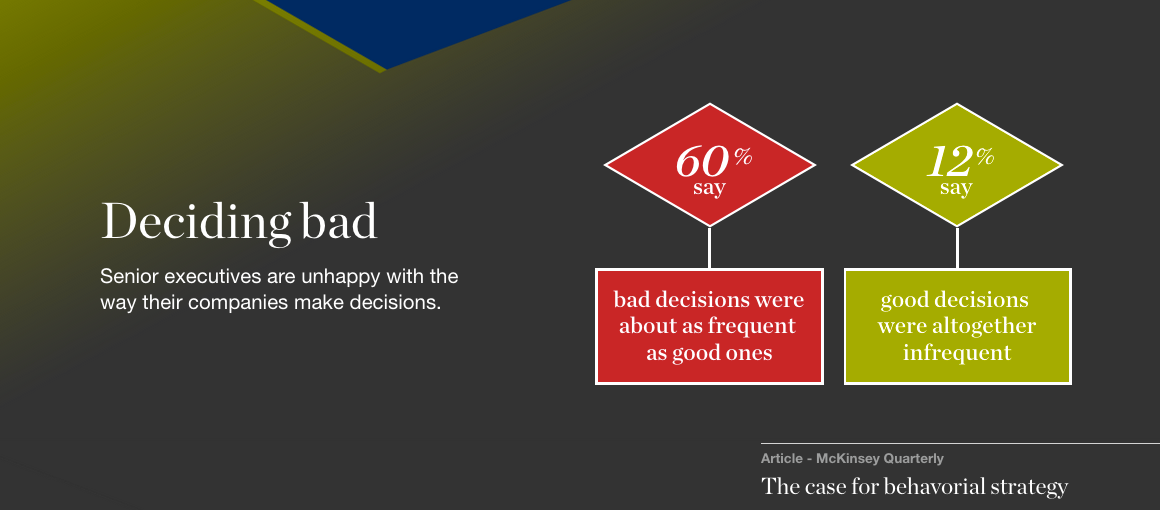
    In those moments, if we can step back and stop pushing, the situation is more likely to work out in our favor—perhaps with a result perhaps better than the one we sought. It seems counterintuitive, but something happens when we stop trying to force an outcome. And if we understand why this happens, we can use it to get the results we want.

    This is not a new idea. In the 14th century Japan it was shibui, while in 16th century Italy, it was called sprezzatura. Chinese Daoists call it wu-wei, and Hindu philosophers know it as ahamkara.

    In the North America, we think of it simply as cool. And if we remember anything we learned in junior high, it was that life was infinitely better for the people who were cool.

    It’s All About Attachment

    In New Age circles, people sometimes speak of a concept called attachment—which means when we’re caught up in something, we get attached to it. That’s when we lose sight of the big picture. We get tunnel vision on the outcome we want, so we don’t notice all that’s happening
    around us. We are blind to what’s really going on, and we are equally incapable of seeing the situation from another person’s perspective.

    This is when the Law of Attraction kicks in, according to New Age Thought. When we’re attached to the outcome, we’re afraid that the thing we want won’t happen. We become attached to that negative thought pattern and then, under the Law of Attraction, we begin attracting more of that negativity. In other words, we begin to imagine the person saying no to us, and eventually he really does say “no.”

    In the Western paradigm—inherited from the thinking of Dr. Sigmund Freud—we end up clinging to our egos. This ego-centered way of related to the world (and to ourselves) traps us in behaviour patterns that don’t meet our needs but which, maddeningly, are hard to see in the moment.

    Effortlessness + Effectiveness = Success

    All of this happens because we’re merely repeating old patterns. We’re like a car that’s stuck in the mud. The harder we try, the more we spin our wheels and make our situation worse.

    Over years of repetition, we have unintentionally trained ourselves to react this way. Just like an athlete who uses repetition to instill muscle memory, we’ve trained our mind to immediately apply that approach. When we become frustrated or desperate, we instinctively revert to these ways. It’s an unconscious, knee-jerk response. If we want to avoid it, we have to consciously change how we react.

    Early Chinese philosophers believed the ideal state of being was when a person was not actively thinking and was not exerting effort. They believed that this is the state in which the person is most able to achieve his goals.

    But retraining yourself so that you can get to that state most definitely requires conscious effort.

    The first step is simply to be aware of your patterns. Catch yourself in that moment; try to talk yourself out of pushing harder. And it’s a paradox, but trying too hard to stop trying too hard is not going to help you break the habit. Mencius, a Chinese philosopher in the fourth century B.C., advocated an approach similar to gardening: Do the planting and monitor the progress, but mostly just sit back and let the plants grow.

    Mencius’ approach isn’t much different from what New Age thought leaders call “the mindset of the witness.” They argue that, when we find ourselves caught up in these frustrating ineffective patterns, we should try to think like a witness. Because a witness is watching the event, not participating and not invested in the outcome.

    Consider the detective shows you’ve watched on TV: A witness comes in and impassively tells the detective what she saw. She wasn’t harmed by the crime and wasn’t involved in the action. She simply watched it all go down. Taking on the mindset of the witness means not getting emotionally engaged in what is taking place.

    As the witness, we notice what is happening but have no expectations about what will happen. We may intend a certain result, but we are not attached to it.

    Still not convinced? Think about insomnia. The harder you try to fall asleep, the less likely it is to happen. Stop trying and…zzz.

    Non-attachment feels unnatural to us in the West. It’s a hard practice to follow. From birth, we’re trained to desire, act and expect positive results, and we’re taught that the harder we work, the greater our reward. It feels strange to let go of an outcome in order to succeed. It’s especially difficult to practice in the moment, when we are trying to persuade someone and our stress levels begin to rise.

    But, by consciously practicing a more passive approach, we can establish new patterns and get our cars unstuck from the mud. We can train ourselves to let go. Whether we call it sprezzatura, shibui, wu-wei, ahamkara or just cool, we’ll be able to remove the tension from the interaction, tension that is keeping the other person from saying “yes.” With that tension gone, we may find ourselves getting a bigger “yes” than the one we imagined.

    AUTHOR: Beverly Benwick

    ABOUT BEVERLY: https://acec.mgmcsolutions.com/directory/bev-benwick-mal-pcc-cpcc/

    CONTACT INFORMATION:
    Ste. 30, 6488 – 168th Street
    Surrey, BC  V3S 8Z1 Canada

    TEL:  604.576.4970
    TOLL FREE: 1.866.95COACH or 1.866.952.6224
    E-MAIL: bev@advanceyourleadership.com
    WEBSITE: http://advanceyourleadership.com/
    LINKEDIN: www.linkedin.com/in/bevbenwick
    FACEBOOK: www.facebook.com/advanceyourleadership