Tag: Association of Corporate Executive Coaches

  • Business as “Unusual”

    “Would you tell me, please, which way I ought to go from here?” [Alice asked.]
    “That depends a good deal on where you want to get to,” said the Cat.
    “I don’t much care where—” said Alice.
    “Then it doesn’t matter which way you go,” said the Cat.
    – from Alice’s Adventures in Wonderland, Lewis Carroll

    Nobody signed up for this. On New Year’s Eve, no one held up a glass and sang “Auld Lang Syne,” accompanied by resolutions around pay cuts, furloughs, airplanes without passengers, and hotels without guests…

    But these are the times we find ourselves in. It’s natural to reminisce about history, even if that’s five months ago, but we can’t stay there. The world has changed.

    We’re here now and, unlike Alice lost in Wonderland, we must decide where we are going to go. And it does matter what we choose: We can get up—or give up. 

    What was business as usual just a couple of months ago has radically changed—now it’s business as “unusual.” Leaders around the globe and in every industry are facing gut-wrenching decisions. As one executive confided in me recently, “They’re all bad decisions. I’m just trying to pick the least worst decisions.”

    Yes, ambiguity abounds, but we can’t wait for the clouds to clear. Here are a few thoughts:

    • Take control: Here’s a cautionary tale for leaders at this time. A group of settlers in a remote location were gathering firewood to prepare for winter. The group’s leader thought it was going to be a cold winter but wanted to check with the experts. He went to the next town and called the National Weather Service (NWS), which confirmed his thinking. So, more firewood was collected. A week later, the leader checked in with NWS again, and the forecast had changed: a very cold winter. That meant even more firewood. This went on three or four times, with increasingly dire forecasts from NWS that meant getting even more firewood. Finally, the leader asked NWS: “Why do you think the winter is going to be so very, very cold?” The answer: “Because those settlers are gathering a boatload of firewood.” The moral of this story: Don’t let herd mentality take you down. Take control.
    • Get up or give up: I’m reminded of the late John McKissick, America’s “winningest” coach in football, who guided high school players for more than 60 years. He motivated them with his own father’s advice: “As my daddy used to say, ‘Son, if you don’t put something in the bucket, how are you going to get anything out of it?’ Winning takes hard work, particularly when the opponent is a virus—invisible but, we have to believe, not invincible. In these times of business as unusual, people have to believe to achieve. You can’t teach hustle, but you can motivate it!
    • Failing to fail: The mantra these days is “we will get through this.” Of course we will—the alternative is impossible and unthinkable. The way back to normal will come in waves, with victories and setbacks. But it will be hard, and there will be failures along the way. In times like these, though, the only real failure is failing to fail. As Michael Jordan said, “I’ve missed more than 9,000 shots in my career. I’ve lost almost 300 games. Twenty-six times I’ve been trusted to take the game-winning shot and missed. I’ve failed over and over and over again in my life. And that is why I succeed.” Fail fast, learn faster.
    • It’s one day at a time: Cash, biology, or psychology? Which one is the real secret weapon for getting through this crisis? Cash helps, but not everybody has this luxury; and, besides, it’s not a durable commodity. Fiscal stimulus will only get us so far. Biology will eventually prevail, with the science to produce a treatment and a vaccine. But even with the best minds on the task, it will take time. Psychology, along with sociology, will get us through this crisis. We can’t let ourselves get lulled into paralysis. If we’re not careful, tomorrow can look like today. To break this pattern, the other day I intentionally got dressed up as if I were going to a meeting, even though I didn’t leave my driveway. My wife and my daughter even cut my hair—it took three tries, but I wanted to break the monotony. All of us must go out of our way to make tomorrow different than today.
    • Remember empathy: Although we’re isolated, we don’t walk alone. This is not the time to feel sorry for ourselves. More empowering is to empathize with others. And that’s what I’m finding everywhere. One colleague shared his stresses of overcoming a heart attack and cancer, which left him “severely immune compromised,” and worrying about his aging parents who are thousands of miles away. “Hard times,” he told me. “But still grateful that they are not as hard…as for so many others. I am actually fortunate, grateful, and blessed.”
    • To the real heroes: In this crisis, one group more than any embodies the spirit of taking control in the most challenging circumstances: our healthcare professionals. Every day, these warriors put their own health and well-being on the line in service of others. As a chief nursing officer told me, “I can’t tell you how many times, both personally and professionally, I’ve assured someone, ‘It’s going to be OK.’” Indeed, everything will be OK.

    As the week comes to an end, I have been reflecting, which brought my thoughts back to Kansas where I grew up. I can remember being in my grandmother’s house on a cold day, and trying to get warm by standing with one foot on either side of the floor register that blew hot air from the furnace. My grandmother was singing her favorite song: “You’ll Never Walk Alone.”

    So appropriate and so timeless:

    When you walk through a storm
    Hold your head up high
    And don’t be afraid of the dark

    At the end of a storm
    There’s a golden sky
    And the sweet silver song of a lark

    Walk on through the wind
    Walk on through the rain
    Though your dreams be tossed and blown

    Walk on, walk on
    With hope in your heart
    And you’ll never walk alone… 

    Author Gary Burnison
    Korn Ferry CEO

  • How To Get Access to Your COVID Stimulus Money


    It’s the beginning of the month and bills are coming due. If you are stressed out, it’s important that you know where and how to get access to financial relief. Please consider this not only for yourself, but for your adult children and elderly parents, too, even if you do not need it for yourself.

    On March 27, President Trump signed a $2.2 trillion stimulus bill into law that will hopefully provide some relief for many, perhaps including you. The CARES Act (Coronavirus Aid, Relief, and Economic Security Act) sends money directly to Americans, expands unemployment coverage, and funds loans and grants for small businesses. So let’s look at how you can access these funds.

    Who gets direct stimulus money and how much do they get?

    All eligible adults who have a Social Security Number, filed tax returns in 2018 and/or 2019 will automatically get a $1,200 direct stimulus deposit from the government within a particular income bracket. This is true whether you have been laid off, are currently employed, or are currently self-employed or an independent contractor.

    To get the full amount:
    A single adult must have an adjusted gross income of $75,000 or less.Married couples with no children must earn $150,000 or less for a combined total stimulus of $2,400.Every qualifying child 16 or under adds $500 to a family’s direct stimulus.If you have filed as head of household, have dependents, and earned $112,500 when you last filed, you will get the full payment.
    This payment is not considered income—it’s essentially free money from the government. Therefore, it will not be taxed. It also is not a loan, so if you are eligible, you will not be charged interest or expected to pay it back. As of right now, the stimulus is a one-time payment.

    Are there exceptions?

    Payment decreases and eventually stops for single people earning $99,000 or more or married people who have no children and earn $198,000 annually. Additionally, a family with two children will no longer be eligible for payments if their income is over $218,000.

    If you are an adult claimed on your parent’s tax return, you do not get the $1,200.

    What do I need to do to get my stimulus money?

    For most people, no action is necessary. If the IRS has your bank account information already, it will transfer the money to you via direct deposit. If, however, you need to update your bank account information, the IRS has posted on their website that they are in the process of building an online portal where you can do so.

    An important note: if you have not filed a tax return in the past couple of years, or you don’t usually need to file one, you should file a “simple tax return” showing whatever income you did have, so you can qualify for these benefits.

    You can continue to check for updates on how to make sure you get your payment by regularly checking for updates on their Coronavirus Tax Relief page.  https://www.irs.gov/coronavirus
    When will that money come through?

    Treasury secretary Steven Mnuchin says that he expects most people will get their payments by Friday, April 17th, though other sources say that it could take up to 4–8 weeks.

    Loans (and Grant Money) for Independent Contractors

    If you have a business, are an independent contractor or are self-employed, you can apply for loans, and get a $10,000 grant from the government via the CARES Act.
    These are Economic Injury Disaster Loans (EIDL) and Paycheck Protection Program (PPP) loans. Please note that there are still elements of these loans that are not fully understood, and we are giving our best legal interpretation based on information from the Small Business Administration and the US Chamber of Commerce.

    VERY IMPORTANT: If you apply for EIDL right now, you can claim a $10,000 advance that does not need to be repaid. It’s essentially a grant that can be used to keep your business alive. You can apply for it right here: https://covid19relief.sba.gov/ Do it, now.  This is applicable if you are an independent contractor, or a self-employed business owner. Basically, if you file a separate tax return for your business or a Schedule C on your personal tax return, you SHOULD qualify. But please see note above that we don’t really know how all of this will be implemented. What we do believe is that you should get your application in for the EIDL grant money.

    The PPP applications will be made through your bank, so contact your banker, if you believe you will need the PPP loan, which will be forgiven if used for payroll specifically in the weeks after receiving the loan funds.

    You should have the following information on hand to fill out either of the two loan applications:
    IRS Form 4506T—Tax Information Authorization—completed and signed by each principal or owner,Recent federal income tax returns,SBA Form 413—Personal Financial Statement,SBA Form 2202—Schedule of Liabilities listing all fixed debts,Any profit and loss statements, recent tax returns, and balance sheets.
    Here’s a bit more information about both loan programs.

    Economic Injury Disaster Loans (Above and Beyond the $10,000 Grant)

    Every state has been declared a disaster area due to COVID-19, and therefore your business may be eligible for an SBA economic injury disaster loan (EIDL). This is a low-interest loan that has terms that can last as long as 30 years, and can provide you with capital loans of up to $2 million and an advance of up to $10,000.

    Economic Injury Disaster Loans (EIDL) can be used to cover:
    Paid sick leave to employees unable to work due to the direct effects of COVID-19,Rent or mortgage payments,Maintaining payroll (to help prevent layoffs and pay cuts),Increased costs due to supply chain disruption,Payment obligations that could not be met due to revenue loss.
    Whereas the application used to take hours, it now only takes about 10 minutes to fill out. A couple of important notes, however:
    SBA loan reps have said that they are focusing on processing applications filed after March 30th, so if you have a confirmation number starting with 2000, you should probably reapply.Be sure to check the box toward the end of the application if you want to be considered for an advance up to $10,000 (as I mentioned at the top of the article, this amount does not need to be repaid and so is essentially a grant!).
    You can apply for disaster loan assistance here: https://covid19relief.sba.gov/
    Coronavirus Emergency Paycheck Protection Loan

    The CARES Act’s $350 billion allocation to small businesses is specifically called the Paycheck Protection Program (PPP). It specifically incentivizes borrowers who maintain their payrolls, i.e., don’t lay off their employees. This program will fully forgive loans where at least 75% of the forgiven amount is used to pay employees for the eight weeks following the loan. If you lay off employees or cut salaries and wages, your loan forgiveness will also be reduced.

    PPP loans can be used to cover:
    Payroll costs,Group health care benefits during periods of paid, sick, medical, or family leave, and insurance premiums;Interest on a mortgage obligation,Rent, under lease agreements in force before February 15, 2020,Utilities, for which service began before February 15, 2020,Interest on any debt incurred before February 15, 2020.
    Small businesses with less than 500 employees (including sole proprietorships, independent contractors, and those who are self employed) are eligible. You can apply through SBA 7(a) lenders, federally insured credit unions, or participating Farm Credit Systems (ie your bank). Other lenders might be on the scene soon as well, but a lot of them are currently being reviewed for approval to the program.

    Full details are available here: https://www.sba.gov/funding-programs/loans/paycheck-protection-program-ppp
    We are here to support you making educated, informed, empowered decisions for yourself and the people you love, in all areas of your wealth, health, and happiness. In my blog last week, we discussed the most important legal and financial actions to take right now in light of this COVID pandemic.  In case you missed it, you can read that here.

    I look forward to serving you during these unprecedented times.  If there is anything I can do for you and your family, for matters concerning the law or anything at all, please contact me at (858) 432-3923 or at tara@cheeverlaw.com.  I look forward to connecting (virtually) and serving you during these unprecedented times.  Please stay healthy and safe!

    Sincerely,


    Tara Cheever, Principal/Owner of Cheever Law, APC

    I hope you found this e-Newsletter valuable.  Interested in sharing this information with others?  Please use the Social Share links here:
         
     
    Tara H. Cheever
    Attorney at Law at Cheever Law, APC 5205 Avenida Encinas, Suite A, Carlsbad, CA 92008 (858) 432-3923  tara@cheeverlaw.com www.cheeverlaw.com
    **PLEASE TAKE NOTE OF NEW ADDRESS** IMPORTANT: The contents of this email and any attachments are confidential. They are intended for the named recipient(s) only. If you have received this email by mistake, please notify the sender immediately and do not disclose the contents to anyone or make copies thereof.       
    Information courtesy of Cynthia Burnham, MCEC
  • Why Do Smart People Do Foolish Things?

    Intelligence is not the same as critical thinking—and the difference matters.

    Scientific American |

    By: Heather A. Butler

    We all probably know someone who is intelligent but does surprisingly stupid things. My family delights in pointing out times when I (a professor) make really dumb mistakes. What does it mean to be smart or intelligent? Our everyday use of the term is meant to describe someone who is knowledgeable and makes wise decisions, but this definition is at odds with how intelligence is traditionally measured. The most widely known measure of intelligence is the intelligence quotient, more commonly known as the IQ test, which includes visuospatial puzzles, math problems, pattern recognition, vocabulary questions and visual searches.

    The advantages of being intelligent are undeniable. Intelligent people are more likely to get better grades and go farther in school. They are more likely to be successful at work. And they are less likely to get into trouble (for example, commit crimes) as adolescents. Given all the advantages of intelligence, though, you may be surprised to learn that it does not predict other life outcomes, such as well-being. You might imagine that doing well in school or at work might lead to greater life satisfaction, but several large-scale studies have failed to find evidence that IQ impacts life satisfaction or longevity. University of Waterloo psychologist Igor Grossmann and his colleagues argue that most intelligence tests fail to capture real-world decision-making and our ability to interact well with others. This is, in other words, perhaps why “smart” people do “dumb” things.

    The ability to think critically, on the other hand, has been associated with wellness and longevity. Though often confused with intelligence, critical thinking is not intelligence. Critical thinking is a collection of cognitive skills that allow us to think rationally in a goal-orientated fashion and a disposition to use those skills when appropriate. Critical thinkers are amiable skeptics. They are flexible thinkers who require evidence to support their beliefs and recognize fallacious attempts to persuade them. Critical thinking means overcoming all kinds of cognitive biases (for instance, hindsight bias or confirmation bias).

    Critical thinking predicts a wide range of life events. In a series of studies, conducted in the U.S. and abroad, my colleagues and I have found that critical thinkers experience fewer bad things in life. We asked people to complete an inventory of life events and take a critical thinking assessment (the Halpern Critical Thinking Assessment). The critical thinking assessment measures five components of critical thinking skills, including verbal reasoning, argument analysis, hypothesis testing, probability and uncertainty, decision-making and problem-solving.

    The inventory of negative life events captures different domains of life such as academic (for example, “I forgot about an exam”), health (“I contracted a sexually transmitted infection because I did not wear a condom”), legal (“I was arrested for driving under the influence”), interpersonal (“I cheated on my romantic partner who I had been with for more than a year”), financial (“I have over $5,000 of credit-card debt”), and so on. Repeatedly, we found that critical thinkers experience fewer negative life events. This is an important finding because there is plenty of evidence that critical thinking can be taught and improved.

    Is it better to be a critical thinker or to be intelligent? My latest research pitted critical thinking and intelligence against each other to see which was associated with fewer negative life events. People who were strong on either intelligence or critical thinking experienced fewer negative events, but critical thinkers did better.

    Intelligence and improving intelligence are hot topics that receive a lot of attention. It is time for critical thinking to receive a little more of that attention. Keith E. Stanovich wrote an entire book in 2009 about What Intelligence Tests Miss. Reasoning and rationality more closely resemble what we mean when we say a person is smart rather than spatial skills and math ability. Furthermore, improving intelligence is difficult. Intelligence is largely determined by genetics. Critical thinking, though, can improve with training, and the benefits have been shown to persist over time. Anyone can improve their critical thinking skills. Doing so, we can say with certainty, is a smart thing to do.

    Heather A. Butler is an assistant professor in the psychology department at California State University, Dominguez Hills. Her numerous research interests include critical thinking, advanced learning technologies, and the use of psychological science to prevent wrongful convictions.

    This article was originally published on October 3, 2017, by Scientific American, and is republished here with permission.

  • How To Remove Fear From Your Work Culture

    by Chester Elton and Adrian Gostick

    We all know that fear can get stuff done. If stress levels are amped up sufficiently, people can do some crazy things for short periods of time. We’ve all heard the story of the mom who lifts a Pontiac off a trapped family member. Marketers have long known the power of fear, using it to sell everything from life insurance to alarm systems to fiber cereals that taste like tree bark and feet.

    A degree of fear in our workplaces is unavoidable with this pandemic and economic downturn. But it’s important for leaders to recognize that fear at work can cause a host of ill effects that undermine the quality of people’s output as well as overall team performance. At the heart of fear is doubt, and uncertainty can kill motivation, not to mention innovation.

    When faced with a threat—real or imagined—the brain’s amygdala sends out a distress signal, prompting the release of stress hormones, which cause a number of physiological changes, such as increased heartbeat, quickened breathing, and muscle tensing. This reaction is designed as a boon in response to immediate threats, giving us a surge of energy and enhancing our strength. Shazam! But all that is intended as a temporary response to danger, not as a prolonged state of being. If this pandemic worry stretches into weeks and months, it will sap energy. Chronic stress like that can also seriously undermine the quality of people’s sleep, further undercutting their energy. Fear-induced stress is a major factor in burnout.

    Getting people into a fight mode during a crisis might sound okay to some leaders—“They’ll be charged up to tackle this challenge!” What they need to understand is a fighting spirit, when evoked by fear rather than inspiration and a sense of purpose, actually can end up aimed right back against their managers instead of the challenges to be tackled. Never underestimate the degree of bald-faced contempt that people let brew in response to the perception that a manager isn’t doing all he/she can to solve the problems that are causing them to freak out (even if the manager has little to no control over them).

    In short, few things in a crisis are worse than key stakeholders perceiving leadership to be in disarray, indecisive, or indifferent. It is the very moment of crisis when the organization needs its people to believe the most, yet their faith is often challenged.

    What to do as leaders? Here are just a few tactics that can help.

    Create a Safe Place: One sure-fire way to help reduce fear starts with frequently and honestly framing the market situation in real terms that people can relate to. Leaders must explain in clear terms what behaviors employees must focus their efforts on, all while creating a reassuringly safe environment to keep delivering to clients. During our interviews with leaders who successfully led their teams through the last global crisis, they displayed a dogged commitment to their mission and core values. Employees we interviewed after told us things such as, “He forced us to keep thinking about our mission, and how we were helping make the world a better place,” or “She reminded us that real people were using our products; they had to be perfect every time.”

    Leave the Pillows at Home. During tough times, it’s more important than ever to be more honest and more transparent. In other words: Don’t soften the blow. Let people know what’s up with the business in clear ways and communicate with them every day, even if there’s not much to share. Part of this concept means you’ll need to admit you need employee help and ideas to get through this. After all, you don’t have all the ingenuity or improvement ideas in your head, so let your people know you want to hear their input. Encourage debate on ways to improve service or find new business or enhance processes, even if it rattles established harmony. When employees know their managers are seeking better ways during tough times, and are encouraging them to practice the same, it builds trust and a larger culture of optimism.

    Amp up Gratitude. It is in the worst of times that leaders must amp up praise and recognition of every step forward. In the organizations we studied that made it through the Great Recession in the best shape, there was a statistically significantly higher preponderance of gratitude of employee efforts than in those organizations that achieved average or poor returns. The seemingly warm and fuzzy skill of thanking people for the value they bring creates tangible feelings of hope and points people toward the right behaviors.

    Manage to Motivators. Every person on this planet has a thumbprint-like makeup of what makes him or her most engaged at work and those prints vary considerably. During this stressful time, one of the most powerful ways to engage people is to align (as much as possible) assignments with a person’s specific motivations and uncover subtle changes that can lead to increases in team morale, engagement, and results. The problem is, very few managers know what’s really motivating to their people or, if they do, how to apply that information to day-to-day work. The best leaders have discovered that the surest way to help their employees be more productive in challenging times is to do some sculpting of the nature of jobs or tasks to better match duties with passions.

    Adrian Gostick and Chester Elton are the New York Times bestselling authors of Leading with Gratitude, The Carrot Principle and All In. They own the global training company The Culture Works and work with organizations around the world to address employee engagement issues. Learn more at TheCultureWorks.com.

    Original article appears here: https://www.thecultureworks.com/how-to-remove-fear-from-your-work-culture/

  • How to Lead in Time of Crisis: This is the Ultimate Time for Empathy

    By: Urs Koenig Here is what I learned from interviewing 15 leaders over the last 5 days on how to best lead teams and organizations during this time of crisis. What is your take away? What might you add? I would love to hear from you!

    Original: https://www.youtube.com/watch?v=XAVAoxUp3Pk&t=

  • As A Female Founder, I Don’t Have 108 Years for Gender Parity

    Following the release of our recent report “A Decade in Review: Funding to the Female Founders” Crunchbase is highlighting female founders who are paving the way for the next generation of glass-ceiling-smashers. The “Female Founder Series” is comprised of stories, Q&As and thought-leadership pieces from female founders who overcame the odds, raised funding and are now leading successful companies.


    Last year, Geosite arrived at an exciting inflection point in our growth and I was meeting regularly with current and potential investors. One morning I was walking to my office in Palo Alto when I saw my reflection in a storefront window. A light breeze had caught the hem of my floral sundress and it fluttered in the spring sunlight. A sinking feeling stopped me in my tracks and I had the sudden, unexpected thought: I don’t look like a CEO. 

    I brushed the feeling off. I decided I didn’t have time to be slowed down worrying about others’ perceptions. I had work to do and a company to grow. But the thought stuck with me over the past few years as I built Geosite. 

    Sometimes I am still struck by the realization that I have a firm idea of what a CEO “should” look like, and I have to challenge myself to not buy into that or any preconceived notion of how I might be perceived. Maybe I don’t look the way people expect a CEO to look, but I am lucky to feel very comfortable with who I am. Ultimately, it reminds me to keep my own preconceptions in check as well. 

    I founded Geosite two years ago and have built the team to 15 people with $1.7 million in investment and $1.8 million in revenue. With clients in defense and energy, I spend a lot of time in rooms where I am the only woman. Like all founders, I invest considerable time–more than I had originally anticipated–talking to investors, the overwhelming majority of whom are men. It doesn’t matter what we wear or how we look, women will always stand out in these rooms; there just aren’t enough women empowered in leadership, tech, or finance. 

    After years of scrolling through “Meet Our Team” pages on VC websites, the homogeneity of the teams wears on female founders (and founders from any minority group). That’s bad for all of us. It is hard for the underrepresented founders leading their companies and it’s not good for white male VC’s either. They begin to blur together, robbing them of deserved individuality. “I don’t know, maybe I’ve met this guy before…? I’m not sure, they all look the same.”

    I see signs that diversity is increasing, but far too slowly. As a woman running a company now, I don’t have 108 years for gender parity, so here are the things I choose to lean on in the meantime: 

    1. Get a strong tribe of advisers, mentors and friends

    I am extraordinarily lucky that the very first check came from the team that, to this day, is the solid foundation of advice, access, and cheerleading I need to run Geosite. The team at Bee Partners provides incredible support to not only me, but is blazing a clear path in the venture community with 50 percent of their portfolio companies in 2019 founded by women. 

    Beyond having great investors, peers are vital. I cannot imagine running Geosite without my CEO besties. The camaraderie of entrepreneurship is unbelievable and breathtaking: From the highest highs to the lowest lows, peers who can empathize with and challenge you are a critical component to sustain yourself. Practically, it is also important. We expand each others’ networks and refine each others’ decks and pitches to be the best possible reflection of our companies.

    2. Practice introducing yourself

    Heuristics and pattern matching are important in the risky, intuition-filled world of early-stage investing. We have little control over how others perceive us at first glance, and first impressions are lasting. This makes a strong introduction one of the most important, and often overlooked, skills for founders. I learned this the hard way. 

    After a pitch to a few highly regarded partners on Sand Hill Road, a friend from grad school who had become an investor at the firm told me I had done a wonderful job explaining my company … but I had fallen short when it came to my personal introduction. 

    Sadly, many people in VC aren’t going to assume you, a woman, have the credentials to run your company. You have to tell them your credentials explicitly. Make sure you prepare an introduction and practice it, just like you would a pitch. 

    3. Never be ashamed of your ambition

    It is important to have the humility to identify what you do and do not know. Don’t make the mistake of conflating this with a need to hide ambition. If you have the data and insight to back up what you’re doing, do not shy away from stating that you will change the world (or an industry, or lives, or the state of technology). Others will revise down your optimism, so you should not. 

    Building a fledgling startup into a unicorn takes a vision and a superhuman amount of optimism. Share that vision and dream with the people (investors) who have the resources to help you make that dream a reality and with the team who will join you on the journey to make that dream a reality.

    You’ll be surprised how supportive people are when you aren’t shy about your ambition to change the world.


    Rachel Olney is a Stanford University Mechanical Engineering PhD candidate and the Founder and CEO of Geosite Inc. She has taught innovation frameworks and built standard operating procedures for the most elite US military special operations teams. She has also helped create and scale an international program in national security innovation and conducted research for the US Air Force on the Strategic Implications of Ultra Low-Cost Access to Space.

    As the CEO of Geosite she leads a YCombinator backed startup disrupting the geospatial data industry, making it easier for logistically intensive industries, such as Oil and Gas and the Department of Defense and Intelligence Communities, to easily leverage spatial data (satellites, drones, IOT, and cloud-enables SCADA) to increase operational efficiency. Geosite is the first enterprise software to imbed cutting-edge geospatial data into business intelligence tools.

    Rachel was featured on this year’s Forbes Enterprise Technology 30 Under 30 list.

    Original article appears here: https://about.crunchbase.com/blog/i-dont-have-108-years-for-gender-parity/?utm_source=cb_daily&utm_medium=email&utm_campaign=20200320&utm_content=intro&utm_term=content&mkt_tok=eyJpIjoiWkRKaU4ySTVPR0psTm1aayIsInQiOiJmc3g3NU9US2o0RGtEQkVLNzRqXC9JRXRiZnpJTk9XNnpEK0Y4OXNGNmFCejNCK085azRuckFycEV3ME9aelZoQVBROTBcL1U4TktLZWhVSlFIUDVoNDQ2cmpaVEcwelh4Tk9TRk5vMUZ2aytNZEhWZkxJSlRmdUt3MHRuck5XdjhkIn0%3D

  • COVID-19 Strategies and Policies of the World’s Largest Companies by Larry Emond and Ellyn Maese

    Story Highlights

    • New teams are critical for developing policies and providing information
    • Learn COVID-19 protocols and business contingency plans
    • Monitor impact and conduct assessments to sustain business function

    Gallup Managing Director Larry Emond gathered the strategies and policies of 100 members of the CHRO Roundtable, an organization that includes the CHROs of more than 650 of the world’s largest companies, for their responses to the COVID-19 pandemic. The companies in this sampling average $27 billion in revenue with 80,000 employees and most are global organizations. This is what Emond found.

    Crisis Management Teams

    Most organizations have created crisis management teams, task forces or committees with a response tailored to specific geographic regions. These task forces meet regularly to develop policies and provide information to leaders, managers and front-line employees regarding COVID-19 awareness, prevention, management and hygiene practices.

    These teams are also focused on management protocols and business continuity plans to guide current actions and forecast possible responses to future events. In general, their protocols and plans include:

    • developing succession contingencies for all major executives
    • conducting business using virtual, video or audio capabilities
    • restricting travel
    • reducing to business-critical operations only
    • moving critical operations to unaffected regions
    • cross-training team members to perform critical functions in the event of an unexpected absence or quarantine of another team member
    • documenting business-critical functions, processes or procedures in the event of an unexpected absence or quarantine of a team member
    • distributing call center scripts and agent communications

    If an employee is diagnosed with COVID-19, many companies have established protocols like these:

    • Require employees to report confirmed cases — either of self or family member — of COVID-19 to HR or management. The affected are typically required to stay home for 14 days and/or until cleared by a doctor to return to work with confirmation that there is no diagnosis of COVID-19.
    • Isolate employees diagnosed at work; immediately disinfect objects they’ve touched; trace their contact with other employees, customers, and clients; and notify those who may have been exposed without releasing the diagnosed employee’s name.
    • Ask employees to log all contact with other employees or visitors in case they become symptomatic so that others can be informed of potential exposure.

    Travel Requirements

    Most companies have recommended limiting personal and professional travel, and some have assured workers they could decline professional invitations without penalty. Generally called soft bans, these partial travel restrictions have been issued with requests to inform HR of travel and avoid air travel, public transportation and large gatherings, as well as 14-day self-quarantines following travel to affected areas.

    However, hard bans are in effect in many companies, and travel to China, Italy, South Korea, Iran, Japan, Hong Kong and Taiwan has been prohibited. Indeed, most intercontinental travel — and, more recently, even travel in general — has stopped for the time being, unless it’s mission-critical.

    Business Impact

    Leaders are holding additional meetings to monitor business impact in efforts to protect or sustain business functions. Many companies with facilities in affected areas have closed them and are canceling their own — or their employees’ presence at — conferences, events and face-to-face meetings. Some have been able to move operations to unaffected locations.

    Simultaneously, CHROs are:

    • monitoring supply chains or providers for potential impacts
    • conducting ongoing supply chain risk assessment and operation impact assessment
    • considering alternative suppliers
    • preparing for shortages, transportation delays or communication delays
    • approving additional budget for supplies or additional paid time off
    • reducing or suspending bonuses for top earners
    • analyzing and forecasting potential market impacts

    Wellbeing

    Companies are also assessing risks to their employees’ physical and financial wellbeing. Their mitigation efforts include:

    • instituting mandatory work-from-home or remote work policies where possible
    • closing on-site facilities such as gyms, cafeterias and common areas
    • making revisions to employee compensation and benefits policies
    • granting paid time off for symptomatic employees, employees who must care for family members who are diagnosed with COVID-19, and/or employees with diagnosed cases of COVID-19
    • using standing sick leave, extended sick leave, vacation time, paid time off or flex-time policies
    • increasing sick leave or paid time off for all or on a case-by-case basis
    • utilizing short-term disability, family leave (FMLA) or other existing benefits
    • recommending available Employee Assistance Programs (EAPs)
    • reminding employees about mental health services for stress management
    • using back-up care programs, childcare subsidies or other dependent care benefits
    • refraining from penalizing time off of any kind
    • permitting unlimited unpaid time off without penalty
    • providing travel/international SOS (medical and travel security) services
    • paying for time spent under quarantine
    • offering work-from-home options or adjusting schedules due to school closures
    • communicating employer-sponsored insurance and other relevant benefits
    • advising employees to avoid public transportation
    • staggering shifts to help employees avoid busy commutes
    • advising employees to avoid visiting high-traffic events or locations on personal time
    • reconfiguring meeting rooms, break rooms and other common areas to promote social distancing
    • expanding the time of meal service to avoid congestion, and asking employees to consider alternate meal times to reduce crowds

    Technology

    These companies are testing technological (e.g., remote work) capabilities, emergency notification systems and updating employee contact information. They’re advising employees to take their laptops or other portable equipment home each night, and they are devoting IT staff to help employees set up remote connections at home, sometimes on employees’ personal computers.

    Leaders are holding additional meetings to monitor business impact in efforts to protect or sustain business functions.

    Many companies have required or are encouraging video or audio-conferencing meetings (e.g., Skype, Zoom, Microsoft Teams) or phone calls in lieu of face-to-face meetings. They also recommend conducting collaborative projects by video or audio-conferencing, Google Docs, emails or other online channels.

    Communications

    Corporate leadership is communicating frequently — daily, weekly or as available — to address their organization’s COVID-19 response, advice, policies and protocols. Many are issuing FAQ guides, and many are including links to authorities and external organizations such as the Centers for Disease Control and Prevention (CDC), The World Health Organization (WHO), Johns Hopkins University, local governments and outbreak maps.

    Along with expert advice, these messages often include a genuinely personal element, i.e., reminding workers to get information from credible organizations, assuring them that none of their fellow employees have tested positive for the virus (where applicable) and urging employees not to panic or spread rumors. They will also often encourage employees to obtain enough food, water, medicines and other essentials for their families in case of quarantine or scarcity.

    Corporate leadership is communicating frequently — daily, weekly or as available — to address their organization’s COVID-19 response, advice, policies and protocols.

    Communications are usually tailored to the recipients — whether leaders, managers, employees or clients/customers, respectively — and methods include:

    • social media for public messages
    • email, mail, text messages, hotlines and internal systems (i.e., intranet) to propagate pertinent information
    • signage to reinforce hygiene, screening and other organizational policies

    Members of the CHRO Roundtable are conscious of the effects of their communication, particularly on customers. To that end, many have:

    • Proscribed responses from managers/leaders if contacted by the media. Many have designated media relations personnel who address all questions from the media.
    • Asked employees not to violate the privacy of diagnosed employees or clients/customers in social media messages.
    • Deployed social media and marketing messaging about customer policies and alternative commerce/services.

    Training

    Businesses are rapidly expanding training opportunities. Much of it concerns managers, who are being tasked with assisting in coronavirus containment, responding to employee needs or concerns, and communicating disease-management policies and preventative measures, such as hygiene practices. But CHROs are also creating COVID-19-specific training programs for security professionals, cleaning crews, maintenance and groundskeeping staff.

    These protocols and responses, we’re told, will be operational as long as is needed — the end of May is the current long-term projection — and all are subject to revision. Gallup will continue to report on our findings as the situation evolves.

    Adapt quickly to COVID-19.

    Watch our live webinar “COVID-19: Managing Your Workforce Through Disruption” to get everything Gallup knows about disruption and other crises. Join us on Thursday, March 19, at 2:30 p.m. CT. Dr. Jim Harter, Gallup’s chief workplace scientist, and other experts will share what we’ve learned through research, hands-on experience and our connections with leaders around the world.

    Larry Emond is Managing Director of Global Leadership Advisory at Gallup.

    Ellyn Maese is a Research Associate at Gallup. Jennifer Robison contributed to this article.

  • COVID-19 Has My Teams Working Remotely: A Guide for Leaders by Jennifer Robison

    Story Highlights

    • Individualization, expectations, communication are key for remote workers
    • Managers need their leaders’ support more than ever during this time
    • Going fully remote may be your organization’s new way to work

    The novel coronavirus outbreak has put Italy on lockdown, closed schools in Madrid, shuttered the Securities and Exchange Commission’s D.C. headquarters, turned New Rochelle into a containment zone — and prompted business leaders everywhere to tell employees to take their laptops home at night in case a COVID-19 diagnosis suddenly turns the company remote.

    If so, they’ll join what Time calls “the World’s Largest Work-From-Home Experiment,” but without the preparation other companies have had. If your company is one of them — or you think it will be — this is what Gallup analytics reveals about managing remote workers.

    Individualization is key. The best managers have always individualized their coaching to the worker, but doing so at a distance requires greater intentionality. Managers need to ask each team member to describe the conditions under which they perform best, their concerns about their workflow and their emotional response to the situation.

    Managers in strengths-based businesses have a huge asset — they can predict employees’ reactions. Whether that means a driving need to complete projects, keep promises, maintain relationships or any other motivator, those traits are powerful … and different for everyone. Managers will need to individualize to the person to get the best performance. A one-size-fits-all response never fits anyone very well.

    Set expectations early and clearly. About half of all U.S. employees — remote or not — don’t know what’s expected of them at work. That’s a bad beginning, and it’ll get worse for employees sent home without good guidance. So managers must make expectations crystal clear: X is the work you should do, Y is the quality standard, Z is the deadline. Executives should provide higher-level expectations aligned with the company’s purpose: We’ll keep our customers engaged by doing X, we’ll maintain our standards by doing Y, we’ll fulfill our mission by doing Z. The more detail, the better.

    But remember, fulfilling expectations requires equipment and information. Research from University of California Irvine professor Judith Olson found that the most successful remote work situations are those in which workers have similar work styles, know and like each other, have technology that allows them to collaborate, and know how to use that technology. You may not have time to create great working relationships — though you should try — but now’s the time to explore your digital options. That’s how people will meet the expectations you set.

    Communication. Employees who are accustomed to working in-house may feel cut off from the resources, information or relationships they need to do their jobs well, so plan for more conference calls. It’s OK to pad socializing into the timeframe; indeed, it may be vital for people who need lots of interaction to keep their energy up. Managers will have to be diligent about communicating productively — coaching high performance requires frequent conversations, and there won’t be chance conversations in the hall.

    But your staff needs to hear from you too, especially as economic fears worsen, to maintain their trust in leadership. Keep the lines of communication open, honest and broad. Send emails or post videos about your reasoning, intentions and expectations. Make it easy for managers to know your thoughts and contribute their own.

    Support your managers: A sudden change in the practice of management can be hard on managers. They may worry about disruptions to the workflow they’re accountable for. Some may feel they have to be physically present to be good coaches, unsure that they can engage workers from a distance. Rather more negatively, there are still some managers who don’t trust workers they can’t see. All of them will have to manage workers in a new way, and fast.

    So give them your support, both practical and emotional, during what may be a tough transition. Invest in management development and coaching ahead of the budget plan, and be affirming about the situation and understanding about altered deadlines. Just remember, your managers always need to know you have their back — but never more so than when they feel insecure.

    Looking Ahead

    Gallup finds that 43% of U.S. employees work remotely some or all of the time, and many, many studies show remote workers are more productive and profitable than in-house employees. So don’t worry — telework can succeed spectacularly. Although your company will have to learn quickly, your people may perform at levels that surprise you.

    But don’t be surprised if they don’t want to come back to the office.

    Gallup research shows that 53% of employees say greater work-life balance and personal wellbeing are “very important” to them when considering a new job — as do 60% of women, of whom 48% are actively looking for a new employer — and that 51% of U.S. workers say they would quit their current job for one that allows flextime.

    A huge proportion of workers already have. Gallup found that the number of remote workers grew by four percentage points — representing millions of employees — between 2012 and 2016, that workers are spending more time off-site than ever before, and that more and more industries are putting remote work policies in place (primarily finance, insurance and real estate, followed by transportation, retail, manufacturing and construction). “Remote work is no longer a privilege,” Forbes recently reported. “It’s become the standard operating mode for at least 50% of the U.S. population.”

    That percentage is about to explode, whether companies are prepared for it or not. So if you have to send people home to keep them safe, individualize, communicate and set expectations so your managers can coach effectively during a crisis. But keep this in mind: While COVID-19 won’t be an issue forever, remote work will be. What you learn about leading a remote workforce now will likely become best practice for your company later on.

    Adapt quickly to COVID-19.

    Watch our live webinar “COVID-19: Managing Your Workforce Through Disruption” to get everything Gallup knows about disruption and other crises. Join us on Thursday, March 19, at 2:30 p.m. CT. Dr. Jim Harter, Gallup’s chief workplace scientist, and other experts will share what we’ve learned through research, hands-on experience and our connections with leaders around the world.

    Jennifer Robison is a Senior Editor at Gallup. Adam Hickman, Ph.D., contributed to this article.

    Original article appears here with additional tips: https://www.gallup.com/workplace/288956/covid-teams-working-remotely-guide-leaders.aspx?utm_source=workplace-newsletter&utm_medium=email&utm_campaign=WorkplaceNewsletter_March_03172020&utm_content=readourrecommendations-CTA-2&elqTrackId=5425240020ec4c2297f4836b9fb5810c&elq=c7db8c639bfa4d5bbe2551a4f67d607b&elqaid=3589&elqat=1&elqCampaignId=787

  • How to Manage the Loneliness and Isolation of Remote Workers

    Story Highlights

    • Loneliness is emotional and isolation is structural
    • Managers need to know the difference to help remote workers thrive
    • A strategy of engagement can help managers keep remote workers connected

    Despite the productivity gains and cost savings associated with remote work, many leaders worry that those advantages come at the expense of remote workers’ emotional health — in particular, that remote work causes loneliness and isolation. Ultimately, it’s feared, remote workers’ engagement and productivity will suffer.

    Gallup finds that remote workers can feel lonely and isolated — but it’s not typical and it is preventable. In fact, a recent Buffer study of 1,900 remote workers around the world found that 90% intend to work remotely for the rest of their lives and 94% recommend off-site careers. And when asked to name the biggest struggle with working remotely, just 21% named “loneliness.”

    Still, one-fifth of a workforce is a lot of people, and leaders need measures in place to fix that problem before it damages engagement and performance. Gallup research shows that managers are best positioned to implement the strategies that make the biggest difference for their teams — but first, they have to know the difference between loneliness and isolation.

    Loneliness is emotional. Isolation is structural.

    First, it helps to understand that loneliness is an emotional response to lack of connection — and people can feel just as lonely in the office as outside of it. One quasi-field experiment conducted at a global headquarters that was transitioning to open office workstations documented an interesting phenomenon. Instead of the open floorplan encouraging collaboration, the study found the volume of face-to-face interaction between employees decreased by approximately 70%, while electronic communication increased. Employees appeared to react to the workspace by socially withdrawing from peers and partners to interact over email and IM instead.

    Isolation, on the other hand, is related to access — or lack of it. The isolated can’t get the materials or information they need, they think their achievements or development are ignored, they feel cut off from the business. That isn’t an emotional issue, it’s a technical one.

    This is a manager’s top priority — having the materials and equipment you need to do your work right is fundamental to engagement.

    Loneliness can contribute to isolation and isolation can contribute to loneliness, but managers can address both by talking about the issues that cause them. Gallup workplace research recommends frequent, ongoing conversations — in fact, we recommend five distinct types of conversations that drive performance, each timed for maximum impact — but with specific language framed for remote workers: “I need to know how you’re getting along. So tell me, is it too quiet at home? Do you miss having people around? Do you feel left out?”

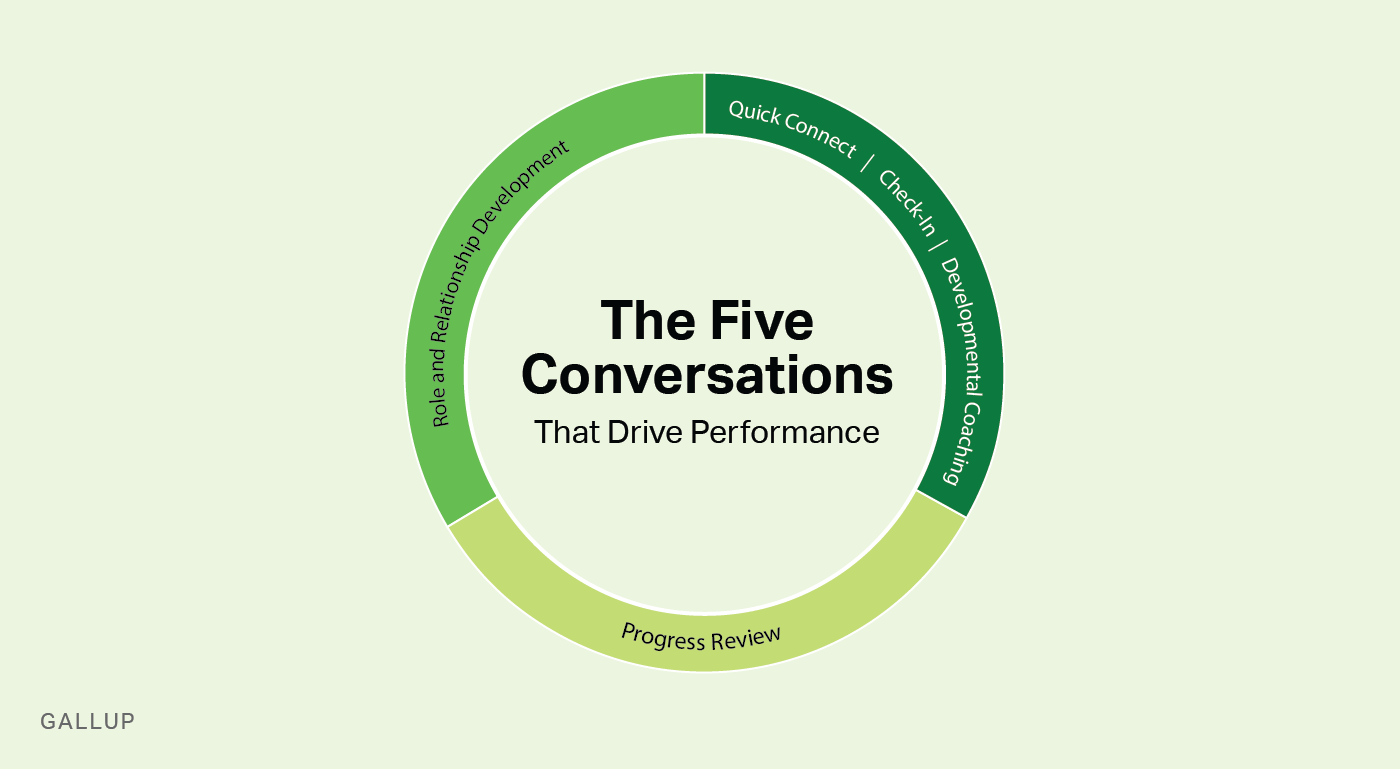
    The Five Conversations That Drive Performance: quick connect, check-in, developmental coaching, progress review, and role and relationship development.

    Direct questions get direct answers, and managers should be prepared with appropriate solutions. Here’s what Gallup recommends, geared toward the individual and the issue.

    Only the Lonely: How to Help Your Remote Workers

    If the worker’s answers indicate loneliness, the manager’s strategy must reflect the worker’s personality. If he’s lonely because he’s shy, trying to turn him into a social butterfly is a waste of the manager’s time and the worker’s patience. A better bet is creating low-stakes opportunities for meaningful connections, but the manager should take the lead — making formal introductions to colleagues, accepting the emotional labor of pre-meeting small talk, linking him with partners for projects.

    If the worker is more outgoing, his manager just needs to help him open his office door, metaphorically, to visitors. Online group chats allow teams a kind of ongoing hallway chatter. Managers can set up weekly “phone trees” for remote workers organized around a workplace topic. Managers can even send remote workers a list of local coffee shops along with a small gift card: “You need to be around people to keep your energy up. Get a cup of coffee and have a great workday.”

    In any case, managers who ask lonely employees for their opinions can gain some valuable insight. Opinions are especially fruitful post-project or at the achievement of a milestone — reflection helps workers process learning opportunities — yet remote workers may feel their perspective is so narrow that their opinion isn’t needed.

    When managers can meet the basics needs of engagement, even casual, friendly conversations turn into innovative discussions that help the team and organization thrive.

    In fact, remote workers’ perspectives can provide rare insights into the organization. Shy, lonely workers need to hear they offer unique value — it can ease social anxiety — and outgoing, lonely workers need more contact. Either way, their insights on the work environment can bring to light connections they ought to make, as well as show managers new ways to improve processes.

    Out of Sight, but Not Out of Mind

    The isolated need a more tactical approach, but it requires a judicious balance. Remember, some people choose remote work because isolation boosts their productivity. IBM learned this the hard way. In 2009, IBM reported that 40% of its workforce (386,000 employees in 173 countries) worked remotely. In 2017, after 20 straight quarters of losses IBM’s leadership decided that it needed to generate more serendipitous ideas from its employees. So “Big Blue” called in its remote workers to boost collaboration and innovation.

    It didn’t work. Those remote employees who loved to work remotely immediately began searching for new jobs that would continue to allow them to work from home. Those who did return to an office deliberately isolated themselves, possibly to recreate the environment that had best suited them — research has demonstrated as much in other workplaces. It’s a cautionary tale for managers: The isolated aren’t sad, they’re cut off. Managers can fix that by integrating remote workers deeper into the organization, despite their distance.

    For instance, managers can bring a list of their remote workers to strategic meetings, annotated with their CliftonStrengths if available, to help the manager’s recall when projects are being planned. That keeps remote workers visible and their advancement, development, and recognition top of mind. Managers can make time with their own managers to specifically discuss the engagement of remote workers and ways to help them learn and grow.

    If remote workers can’t access the materials and equipment they need, managers should work with departments that can solve the problem, such as IT or legal. Cybersecurity can be an obstacle, but tech is increasingly capable of keeping employees in the loop on secure channels. This is a manager’s top priority — having the materials and equipment you need to do your work right is fundamental to engagement.

    And remote workers who simply feel left out can really benefit from being brought in, physically. And as one Gallup manager of remote workers says, there’s always a business case to be made for in-person meetings at HQ, even if the purpose is as much social as practical. Or borrow a page from university alumni chapters’ regional meetups and organize remote-worker get-togethers somewhere central to them. It’s a cost-effective way to keep relationships alive and far-flung teams engaged, as any alumni director can tell you.

    Employee Engagement as an Organizing Principle

    Supporting the unique needs of remote workers may seem like a lot of work for a manager. It can be. Though the best managers are masters of individualization, staying on top of the psychological welfare and work environments of remote employees takes time and concern.

    It helps to use the elements of engagement as an organizing principle. The five conversations that drive performance are oriented toward engagement, and they keep managers focused where their attention most helps performance. Those conversations also give managers time and opportunity to really understand remote employees. To consider their unique contributions. To watch how they like to communicate. To discover how they respond to workplace situations. To understand loneliness when they see it or isolation for what it is.

    When managers can meet the basics needs of engagement, even casual, friendly conversations turn into innovative discussions that help the team and organization thrive. That’s what leaders want from remote workers, of course, and they’re right to worry that loneliness and isolation may get in the way.

    They can — but they don’t have to. Not if managers know the difference between loneliness and isolation and have the tools they need to solve for both.

    Explore more resources for supporting remote workers:

    Adam Hickman, Ph.D., is Content Manager at Gallup. Jennifer Robison contributed to this article.

    Original Article appears here with additional tips: https://www.gallup.com/workplace/268076/manage-loneliness-isolation-remote-workers.aspx?utm_source=workplace-newsletter&utm_medium=email&utm_campaign=WorkplaceNewsletter_March_03172020&utm_content=howtomanageremoteworkers-CTA-3&elqTrackId=d32e757e608e45adb6f99b65dfe34e9e&elq=c7db8c639bfa4d5bbe2551a4f67d607b&elqaid=3589&elqat=1&elqCampaignId=787

  • Letter from the CEO of Korn Ferry: Gary Burnison

      Hello,

    No one thinks much about this leadership quality—until the you-know-what hits the fan.

    It’s crisis management.

    Thankfully, crises are rare occurrences—the black swans of leadership.

    We’ve done nearly 70 million assessments of executives, so we know what makes a great leader—the best-in-class who are among the top 20 percent. Our research shows that three of the four qualities of a great CEO are largely intuitive: (1) sets vision and strategy; (2) drives growth; and (3) displays financial acumen. The fourth, which no one mentions, is managing crises. It’s underappreciated, overlooked, and often not even one of the top requirements—until a crisis hits.

    This is one of those times.
    A month ago, when the stock market was making all-time highs, only the rare few could have predicted universities would close, companies would tell employees to work from home en masse, and the NBA season would abruptly be suspended, followed by museums, cathedrals, and Broadway darkening.

    While it’s natural in uncertain times for people to turn to the leader for definitive answers, sometimes the authentic answer is “I don’t know right now”—quickly followed by, “And here’s what we are going to do.” In a crisis such as today, leaders need a Plan B—and a Plan C and Plan D as well.

    Leaders always deal with ambiguity—it’s timeless and comes with the job. During crises, ambiguity becomes exponential. As fear becomes contagious across organizations, leaders must manage their own responses to ambiguity.

    How do they do that? By following our six steps of leadership:

    Anticipate – predicting what lies ahead
    Navigate – course correcting in real time
    Communicate – continually
    Listen – to what you don’t want to hear
    Learn – learning from experience to apply in the future
    Lead – improve yourself to elevate others Let me provide some color commentary on what leaders can do to put crisis management in action.

    Start at the Bottom of Maslow’s Hierarchy:
    In a crisis, you first need to meet people where they are. Their most basic needs must be met first and they need to feel safe. Naturally, no one is interested in talking about the company’s strategic plan when they are out buying hand sanitizer and toilet paper. Once their essential needs are addressed, then the focus can shift to alignment, common purpose, elevating others and even opportunities for growth.

    Earthquakes and Aftershocks:
    In Los Angeles, where our firm is based, we’re accustomed to earthquakes—knowing that, when one occurs, the aftershocks are coming. In the same way, in a crisis, you have to anticipate the aftershocks—the unintended consequences of the initial shock to the system. Too often, people don’t consider all the possibilities. Anticipation becomes a Monte Carlo simulation in action. For example, what if travel bans expand, commerce slows, or a liquidity crisis develops, etc.? What is the impact on all aspects of my business? What are the implications for all stakeholders—employees, customers, and investors? Strategy is making a bet, and the skill of anticipating improves one’s odds.

    Urgent vs. Important:
    Day to day, leaders face a multitude of issues—both urgent and important. In the normal course of business, I’ve found that many leaders have difficulty distinguishing between the two. When a crisis hits, though, everything blurs as events and their implications constantly change. What’s important often becomes urgent, and the urgent becomes critical. Leaders must delegate the urgent by empowering others to lead around a common purpose.

    Leave No One Behind:
    In a crisis, leaders must connect with, motivate, and inspire others—and show genuine compassion. In the military, for example, leaders put the safety and well-being of others before themselves. I’ve met a number of military leaders who led during periods of conflict, and many have voluntarily told me, “I’ve never lost a soldier.” This reveals a deep mindset of humility and accountability, rather than hubris and bravado.

    Know What to Do When You Don’t Know What to Do:
    There’s nothing like a crisis or a complex problem to accelerate learning. This is learning agility to the “Nth” degree—applying past lessons to new and unfamiliar situations. It really is knowing what to do when you don’t know what to do. In a crisis, this has never been more profound. Amid uncertainty, leaders need to be hyper-focused on past experiences and synthesize and apply them to real-time, fluid conditions. Clarity comes from finding a close comparison. Is it like the Great Recession? The 1987 stock market crash? The outbreaks of SARS or MERS? By running the “unknown” of the current crisis against the “known” of previous ones, leaders gain perspective, identify patterns, connect the dots, and determine appropriate and timely responses. The eventual recovery may be a V or a U or some other alphabet letter, but there will be a new normal—thanks, ultimately, to the scientists, innovators, and dreamers. The natural inclination in a crisis may be to go into command-and-control. That’s not leadership! It’s creating a “bottom-up” culture of world-class observers to accurately perceive today in order to predict tomorrow.

    Regards,  
    Gary Burnison
    Korn Ferry CEO