Tag: MEECO Leadership Institute

  • Two Principles for Leading Your Organization Through the COVID-19 Crisis

    Business leaders are in the midst of a global crisis.

    The challenges facing organizations, employees, and communities are unprecedented, the stakes are high, and certainty is nowhere to be found. Under such staggering circumstances, it is only natural for leaders to feel unprepared to lead capably, nimbly, and honorably.

    “You’re feeling worry, fear, anxiety, pressure, and stress. And these feelings completely overwhelm you. And as a result of basically becoming overwhelmed, you almost become incapacitated,” says Harry Kraemer.

    Kraemer is a former chairman and CEO of the $12 billion global healthcare company Baxter International. In addition to being a clinical professor of leadership at Kellogg, he also is an executive partner with the private equity firm Madison Dearborn. Over the years, he has led through crises small and large—including a tragic crisis involving faulty dialyzers and patient deaths.

    In his view, there are two main things leaders need to understand in a crisis—two mantras, if you will, that offer a calm way forward, no matter what the situation. And, as he has been cautioning boards and management teams repeatedly in the past few weeks, COVID-19 is no exception.

    “Almost every crisis is different. So there’s not a game plan for solving the crisis. However, there is a game plan, in my mind, for how you should approach the crisis,” he says.

    Mantra 1: You’re going to do the right thing, and you’re going to do the best you can do.

    It sounds deceptively simple, so say it again. And again. You’re going to do the right thing. You’re going to do the best you can do.

    After all, that’s all you can do.

    Of course, that’s much more difficult than it sounds, Kraemer acknowledges. You don’t have to figure out what “the right thing” is all on your own. Nobody is smart enough or superhuman enough for that. Instead, surround yourself with people whom you trust and whose values align with yours and with those of the organization. Collectively, you will all determine the right thing—and then do your best to act on it.

    Picture your absolute worst nightmare, he says. For him, it would be learning that a member of his family had become critically ill with the virus; for others, it might be something quite different. Regardless, the way forward is clear: “I’m going to do the right thing, and with a lot of people’s help, I’ll do the best I can do,” he says. “I try to repeat this over and over again. Worry, fear, anxiety, pressure, and stress can be significantly reduced.”

    And by the way, he says, if you start off trying to do the right thing and it turns out it’s the wrong thing, you can adjust. Ego should be removed from the decision-making process; changing your mind is encouraged! “As I told a board earlier today, we’re not trying to be right; we’re trying to do the right thing,” says Kraemer.

    So what does following this mantra look like in practice—particularly when an organization’s values around, say, serving the community, prioritizing safety, and practicing fairness might conflict?

    “Say I’ve got a company with 100 employees,” says Kraemer. “And 50 of them are in cubicles, but 50 of them are literally making the product and they’re on an assembly line on the plant floor. Then COVID-19 happens. What’s the right thing?”

    For the 50 people in cubicles, you may send them home, even if it isn’t strictly fair: it will protect them and make the people on the assembly line safer as well. For the other 50 employees, the decision is harder. Do you need to continue to manufacture at all? If so—perhaps you’re making masks or hospital supplies or other essentials—then are there ways to make the process safer, perhaps by extending the manufacturing line so people can work further apart?

    “That may mean we don’t make as many products. Maybe that means we’re not as efficient. Maybe that means our costs go up. But that’s something we should do because we want to protect our people,” he says.

    Above all, be upfront about these trade-offs, as well as the risk to your employees. “I think what a value-based leader does is not only acknowledge that there is an elephant in the room,” he says. “They turn the floodlights on so everyone can clearly see the elephant.”

    Mantra 2: You’re going to tell people what you know, what you don’t know, and when you’ll get back to them to discuss what you didn’t know before.

    As the contours of the crisis become clearer, the exact communications will obviously change. But the general format will look the same: You’re going to tell people what you know, what you don’t know, and when you’ll get back to them to discuss what you didn’t know before.

    The first part, telling people what you know, is pretty straightforward. For COVID-19, this might require gathering data about your own operations, as well as learning as much as you possibly can about the virus, and the federal, state, and community responses to it. Then, share this information as simply and honestly as you possibly can, even if it is not what people want to hear.

    The second part—letting people know what you don’t know—tends to be even more difficult for leaders. “People will say, well, I don’t know if I want to get everybody together and let them know what I don’t know,” says Kraemer.

    But telling people what you don’t know is the key to building credibility with your stakeholders, he explains. Omit this step, and customers, employees, and others will recognize you aren’t being upfront with them and might assume that you can’t be trusted or the truth is more nefarious than it really is.

    “You’re not giving the people an understanding of what you’re doing and why, so it looks like you’re just jerking everything around and you lose all credibility.”

    Finally, you will need to tell people how quickly you’ll get back to them with any outstanding questions they may have. “We don’t know the answer to that issue yet, but here’s what we’re going to do: we’ll have another conference call or we’ll send out an email tomorrow with an update on what we didn’t know yesterday,” says Kraemer.

    Adhering to this mantra isn’t just about helping others, either, says Kraemer. It’s a good strategy for protecting your own reputation and that of your organization. Without this level of communication, “you’re not giving the people an understanding of what you’re doing and why, so it looks like you’re just jerking everything around and you lose all credibility. And that lack of trust creates chaos. [People] will start to think, ‘Either I’m being lied to, or the people in charge are idiots.’”

    Beyond reputation, the mantra also offers an organizing framework to keep the entire organization on track. “The process, I think has an enormous impact on how you operate as an organization and how you help the organization not get frozen in place with everybody running around like crazy,” he says.

    A failing during the current crisis, in Kraemer’s view, is that too many leaders, including many in the government, haven’t been upfront about the nature of the crisis: exactly what they know, all the things that they don’t, and how they plan to seek additional information and provide citizens with updates in the future.

    The worst-case scenario, he says, is one where people are truly surprised by how events are unfolding. You can’t eliminate surprise, of course, but with strong communication and follow-through, you can minimize it.

    Putting it all together

    Leaders who follow these two mantras closely stand the best chance of emerging from the current crisis with their conscience—and their organization—intact.

    There are some companies and industries that are already handling the crisis in ways that will reflect well on them in the future, says Kraemer. The airlines are bending over backwards to allow people to cancel or change flights without incurring fees, for instance, while Major League Baseball clubs have pledged $30 million dollars to the thousands of ballpark employees who will lose income while the league is on hiatus.

    “It may hurt your profitability in the short term, but the long-term impact is going to be very, very positive because they did the right thing,” says Kraemer.

    This post was originally published in Kellogg Insight here.

    ABOUT THE WRITER
    Jessica Love is editor in chief of Kellogg Insight.

    Photo by Erik Mclean on Unsplash

    Original article appears here: https://harrykraemer.org/2020/03/23/two-principles-for-leading-your-organization-through-the-covid-19-crisis-article/

  • As A Female Founder, I Don’t Have 108 Years for Gender Parity

    Following the release of our recent report “A Decade in Review: Funding to the Female Founders” Crunchbase is highlighting female founders who are paving the way for the next generation of glass-ceiling-smashers. The “Female Founder Series” is comprised of stories, Q&As and thought-leadership pieces from female founders who overcame the odds, raised funding and are now leading successful companies.


    Last year, Geosite arrived at an exciting inflection point in our growth and I was meeting regularly with current and potential investors. One morning I was walking to my office in Palo Alto when I saw my reflection in a storefront window. A light breeze had caught the hem of my floral sundress and it fluttered in the spring sunlight. A sinking feeling stopped me in my tracks and I had the sudden, unexpected thought: I don’t look like a CEO. 

    I brushed the feeling off. I decided I didn’t have time to be slowed down worrying about others’ perceptions. I had work to do and a company to grow. But the thought stuck with me over the past few years as I built Geosite. 

    Sometimes I am still struck by the realization that I have a firm idea of what a CEO “should” look like, and I have to challenge myself to not buy into that or any preconceived notion of how I might be perceived. Maybe I don’t look the way people expect a CEO to look, but I am lucky to feel very comfortable with who I am. Ultimately, it reminds me to keep my own preconceptions in check as well. 

    I founded Geosite two years ago and have built the team to 15 people with $1.7 million in investment and $1.8 million in revenue. With clients in defense and energy, I spend a lot of time in rooms where I am the only woman. Like all founders, I invest considerable time–more than I had originally anticipated–talking to investors, the overwhelming majority of whom are men. It doesn’t matter what we wear or how we look, women will always stand out in these rooms; there just aren’t enough women empowered in leadership, tech, or finance. 

    After years of scrolling through “Meet Our Team” pages on VC websites, the homogeneity of the teams wears on female founders (and founders from any minority group). That’s bad for all of us. It is hard for the underrepresented founders leading their companies and it’s not good for white male VC’s either. They begin to blur together, robbing them of deserved individuality. “I don’t know, maybe I’ve met this guy before…? I’m not sure, they all look the same.”

    I see signs that diversity is increasing, but far too slowly. As a woman running a company now, I don’t have 108 years for gender parity, so here are the things I choose to lean on in the meantime: 

    1. Get a strong tribe of advisers, mentors and friends

    I am extraordinarily lucky that the very first check came from the team that, to this day, is the solid foundation of advice, access, and cheerleading I need to run Geosite. The team at Bee Partners provides incredible support to not only me, but is blazing a clear path in the venture community with 50 percent of their portfolio companies in 2019 founded by women. 

    Beyond having great investors, peers are vital. I cannot imagine running Geosite without my CEO besties. The camaraderie of entrepreneurship is unbelievable and breathtaking: From the highest highs to the lowest lows, peers who can empathize with and challenge you are a critical component to sustain yourself. Practically, it is also important. We expand each others’ networks and refine each others’ decks and pitches to be the best possible reflection of our companies.

    2. Practice introducing yourself

    Heuristics and pattern matching are important in the risky, intuition-filled world of early-stage investing. We have little control over how others perceive us at first glance, and first impressions are lasting. This makes a strong introduction one of the most important, and often overlooked, skills for founders. I learned this the hard way. 

    After a pitch to a few highly regarded partners on Sand Hill Road, a friend from grad school who had become an investor at the firm told me I had done a wonderful job explaining my company … but I had fallen short when it came to my personal introduction. 

    Sadly, many people in VC aren’t going to assume you, a woman, have the credentials to run your company. You have to tell them your credentials explicitly. Make sure you prepare an introduction and practice it, just like you would a pitch. 

    3. Never be ashamed of your ambition

    It is important to have the humility to identify what you do and do not know. Don’t make the mistake of conflating this with a need to hide ambition. If you have the data and insight to back up what you’re doing, do not shy away from stating that you will change the world (or an industry, or lives, or the state of technology). Others will revise down your optimism, so you should not. 

    Building a fledgling startup into a unicorn takes a vision and a superhuman amount of optimism. Share that vision and dream with the people (investors) who have the resources to help you make that dream a reality and with the team who will join you on the journey to make that dream a reality.

    You’ll be surprised how supportive people are when you aren’t shy about your ambition to change the world.


    Rachel Olney is a Stanford University Mechanical Engineering PhD candidate and the Founder and CEO of Geosite Inc. She has taught innovation frameworks and built standard operating procedures for the most elite US military special operations teams. She has also helped create and scale an international program in national security innovation and conducted research for the US Air Force on the Strategic Implications of Ultra Low-Cost Access to Space.

    As the CEO of Geosite she leads a YCombinator backed startup disrupting the geospatial data industry, making it easier for logistically intensive industries, such as Oil and Gas and the Department of Defense and Intelligence Communities, to easily leverage spatial data (satellites, drones, IOT, and cloud-enables SCADA) to increase operational efficiency. Geosite is the first enterprise software to imbed cutting-edge geospatial data into business intelligence tools.

    Rachel was featured on this year’s Forbes Enterprise Technology 30 Under 30 list.

    Original article appears here: https://about.crunchbase.com/blog/i-dont-have-108-years-for-gender-parity/?utm_source=cb_daily&utm_medium=email&utm_campaign=20200320&utm_content=intro&utm_term=content&mkt_tok=eyJpIjoiWkRKaU4ySTVPR0psTm1aayIsInQiOiJmc3g3NU9US2o0RGtEQkVLNzRqXC9JRXRiZnpJTk9XNnpEK0Y4OXNGNmFCejNCK085azRuckFycEV3ME9aelZoQVBROTBcL1U4TktLZWhVSlFIUDVoNDQ2cmpaVEcwelh4Tk9TRk5vMUZ2aytNZEhWZkxJSlRmdUt3MHRuck5XdjhkIn0%3D

  • COVID-19 Strategies and Policies of the World’s Largest Companies by Larry Emond and Ellyn Maese

    Story Highlights

    • New teams are critical for developing policies and providing information
    • Learn COVID-19 protocols and business contingency plans
    • Monitor impact and conduct assessments to sustain business function

    Gallup Managing Director Larry Emond gathered the strategies and policies of 100 members of the CHRO Roundtable, an organization that includes the CHROs of more than 650 of the world’s largest companies, for their responses to the COVID-19 pandemic. The companies in this sampling average $27 billion in revenue with 80,000 employees and most are global organizations. This is what Emond found.

    Crisis Management Teams

    Most organizations have created crisis management teams, task forces or committees with a response tailored to specific geographic regions. These task forces meet regularly to develop policies and provide information to leaders, managers and front-line employees regarding COVID-19 awareness, prevention, management and hygiene practices.

    These teams are also focused on management protocols and business continuity plans to guide current actions and forecast possible responses to future events. In general, their protocols and plans include:

    • developing succession contingencies for all major executives
    • conducting business using virtual, video or audio capabilities
    • restricting travel
    • reducing to business-critical operations only
    • moving critical operations to unaffected regions
    • cross-training team members to perform critical functions in the event of an unexpected absence or quarantine of another team member
    • documenting business-critical functions, processes or procedures in the event of an unexpected absence or quarantine of a team member
    • distributing call center scripts and agent communications

    If an employee is diagnosed with COVID-19, many companies have established protocols like these:

    • Require employees to report confirmed cases — either of self or family member — of COVID-19 to HR or management. The affected are typically required to stay home for 14 days and/or until cleared by a doctor to return to work with confirmation that there is no diagnosis of COVID-19.
    • Isolate employees diagnosed at work; immediately disinfect objects they’ve touched; trace their contact with other employees, customers, and clients; and notify those who may have been exposed without releasing the diagnosed employee’s name.
    • Ask employees to log all contact with other employees or visitors in case they become symptomatic so that others can be informed of potential exposure.

    Travel Requirements

    Most companies have recommended limiting personal and professional travel, and some have assured workers they could decline professional invitations without penalty. Generally called soft bans, these partial travel restrictions have been issued with requests to inform HR of travel and avoid air travel, public transportation and large gatherings, as well as 14-day self-quarantines following travel to affected areas.

    However, hard bans are in effect in many companies, and travel to China, Italy, South Korea, Iran, Japan, Hong Kong and Taiwan has been prohibited. Indeed, most intercontinental travel — and, more recently, even travel in general — has stopped for the time being, unless it’s mission-critical.

    Business Impact

    Leaders are holding additional meetings to monitor business impact in efforts to protect or sustain business functions. Many companies with facilities in affected areas have closed them and are canceling their own — or their employees’ presence at — conferences, events and face-to-face meetings. Some have been able to move operations to unaffected locations.

    Simultaneously, CHROs are:

    • monitoring supply chains or providers for potential impacts
    • conducting ongoing supply chain risk assessment and operation impact assessment
    • considering alternative suppliers
    • preparing for shortages, transportation delays or communication delays
    • approving additional budget for supplies or additional paid time off
    • reducing or suspending bonuses for top earners
    • analyzing and forecasting potential market impacts

    Wellbeing

    Companies are also assessing risks to their employees’ physical and financial wellbeing. Their mitigation efforts include:

    • instituting mandatory work-from-home or remote work policies where possible
    • closing on-site facilities such as gyms, cafeterias and common areas
    • making revisions to employee compensation and benefits policies
    • granting paid time off for symptomatic employees, employees who must care for family members who are diagnosed with COVID-19, and/or employees with diagnosed cases of COVID-19
    • using standing sick leave, extended sick leave, vacation time, paid time off or flex-time policies
    • increasing sick leave or paid time off for all or on a case-by-case basis
    • utilizing short-term disability, family leave (FMLA) or other existing benefits
    • recommending available Employee Assistance Programs (EAPs)
    • reminding employees about mental health services for stress management
    • using back-up care programs, childcare subsidies or other dependent care benefits
    • refraining from penalizing time off of any kind
    • permitting unlimited unpaid time off without penalty
    • providing travel/international SOS (medical and travel security) services
    • paying for time spent under quarantine
    • offering work-from-home options or adjusting schedules due to school closures
    • communicating employer-sponsored insurance and other relevant benefits
    • advising employees to avoid public transportation
    • staggering shifts to help employees avoid busy commutes
    • advising employees to avoid visiting high-traffic events or locations on personal time
    • reconfiguring meeting rooms, break rooms and other common areas to promote social distancing
    • expanding the time of meal service to avoid congestion, and asking employees to consider alternate meal times to reduce crowds

    Technology

    These companies are testing technological (e.g., remote work) capabilities, emergency notification systems and updating employee contact information. They’re advising employees to take their laptops or other portable equipment home each night, and they are devoting IT staff to help employees set up remote connections at home, sometimes on employees’ personal computers.

    Leaders are holding additional meetings to monitor business impact in efforts to protect or sustain business functions.

    Many companies have required or are encouraging video or audio-conferencing meetings (e.g., Skype, Zoom, Microsoft Teams) or phone calls in lieu of face-to-face meetings. They also recommend conducting collaborative projects by video or audio-conferencing, Google Docs, emails or other online channels.

    Communications

    Corporate leadership is communicating frequently — daily, weekly or as available — to address their organization’s COVID-19 response, advice, policies and protocols. Many are issuing FAQ guides, and many are including links to authorities and external organizations such as the Centers for Disease Control and Prevention (CDC), The World Health Organization (WHO), Johns Hopkins University, local governments and outbreak maps.

    Along with expert advice, these messages often include a genuinely personal element, i.e., reminding workers to get information from credible organizations, assuring them that none of their fellow employees have tested positive for the virus (where applicable) and urging employees not to panic or spread rumors. They will also often encourage employees to obtain enough food, water, medicines and other essentials for their families in case of quarantine or scarcity.

    Corporate leadership is communicating frequently — daily, weekly or as available — to address their organization’s COVID-19 response, advice, policies and protocols.

    Communications are usually tailored to the recipients — whether leaders, managers, employees or clients/customers, respectively — and methods include:

    • social media for public messages
    • email, mail, text messages, hotlines and internal systems (i.e., intranet) to propagate pertinent information
    • signage to reinforce hygiene, screening and other organizational policies

    Members of the CHRO Roundtable are conscious of the effects of their communication, particularly on customers. To that end, many have:

    • Proscribed responses from managers/leaders if contacted by the media. Many have designated media relations personnel who address all questions from the media.
    • Asked employees not to violate the privacy of diagnosed employees or clients/customers in social media messages.
    • Deployed social media and marketing messaging about customer policies and alternative commerce/services.

    Training

    Businesses are rapidly expanding training opportunities. Much of it concerns managers, who are being tasked with assisting in coronavirus containment, responding to employee needs or concerns, and communicating disease-management policies and preventative measures, such as hygiene practices. But CHROs are also creating COVID-19-specific training programs for security professionals, cleaning crews, maintenance and groundskeeping staff.

    These protocols and responses, we’re told, will be operational as long as is needed — the end of May is the current long-term projection — and all are subject to revision. Gallup will continue to report on our findings as the situation evolves.

    Adapt quickly to COVID-19.

    Watch our live webinar “COVID-19: Managing Your Workforce Through Disruption” to get everything Gallup knows about disruption and other crises. Join us on Thursday, March 19, at 2:30 p.m. CT. Dr. Jim Harter, Gallup’s chief workplace scientist, and other experts will share what we’ve learned through research, hands-on experience and our connections with leaders around the world.

    Larry Emond is Managing Director of Global Leadership Advisory at Gallup.

    Ellyn Maese is a Research Associate at Gallup. Jennifer Robison contributed to this article.

  • COVID-19 Has My Teams Working Remotely: A Guide for Leaders by Jennifer Robison

    Story Highlights

    • Individualization, expectations, communication are key for remote workers
    • Managers need their leaders’ support more than ever during this time
    • Going fully remote may be your organization’s new way to work

    The novel coronavirus outbreak has put Italy on lockdown, closed schools in Madrid, shuttered the Securities and Exchange Commission’s D.C. headquarters, turned New Rochelle into a containment zone — and prompted business leaders everywhere to tell employees to take their laptops home at night in case a COVID-19 diagnosis suddenly turns the company remote.

    If so, they’ll join what Time calls “the World’s Largest Work-From-Home Experiment,” but without the preparation other companies have had. If your company is one of them — or you think it will be — this is what Gallup analytics reveals about managing remote workers.

    Individualization is key. The best managers have always individualized their coaching to the worker, but doing so at a distance requires greater intentionality. Managers need to ask each team member to describe the conditions under which they perform best, their concerns about their workflow and their emotional response to the situation.

    Managers in strengths-based businesses have a huge asset — they can predict employees’ reactions. Whether that means a driving need to complete projects, keep promises, maintain relationships or any other motivator, those traits are powerful … and different for everyone. Managers will need to individualize to the person to get the best performance. A one-size-fits-all response never fits anyone very well.

    Set expectations early and clearly. About half of all U.S. employees — remote or not — don’t know what’s expected of them at work. That’s a bad beginning, and it’ll get worse for employees sent home without good guidance. So managers must make expectations crystal clear: X is the work you should do, Y is the quality standard, Z is the deadline. Executives should provide higher-level expectations aligned with the company’s purpose: We’ll keep our customers engaged by doing X, we’ll maintain our standards by doing Y, we’ll fulfill our mission by doing Z. The more detail, the better.

    But remember, fulfilling expectations requires equipment and information. Research from University of California Irvine professor Judith Olson found that the most successful remote work situations are those in which workers have similar work styles, know and like each other, have technology that allows them to collaborate, and know how to use that technology. You may not have time to create great working relationships — though you should try — but now’s the time to explore your digital options. That’s how people will meet the expectations you set.

    Communication. Employees who are accustomed to working in-house may feel cut off from the resources, information or relationships they need to do their jobs well, so plan for more conference calls. It’s OK to pad socializing into the timeframe; indeed, it may be vital for people who need lots of interaction to keep their energy up. Managers will have to be diligent about communicating productively — coaching high performance requires frequent conversations, and there won’t be chance conversations in the hall.

    But your staff needs to hear from you too, especially as economic fears worsen, to maintain their trust in leadership. Keep the lines of communication open, honest and broad. Send emails or post videos about your reasoning, intentions and expectations. Make it easy for managers to know your thoughts and contribute their own.

    Support your managers: A sudden change in the practice of management can be hard on managers. They may worry about disruptions to the workflow they’re accountable for. Some may feel they have to be physically present to be good coaches, unsure that they can engage workers from a distance. Rather more negatively, there are still some managers who don’t trust workers they can’t see. All of them will have to manage workers in a new way, and fast.

    So give them your support, both practical and emotional, during what may be a tough transition. Invest in management development and coaching ahead of the budget plan, and be affirming about the situation and understanding about altered deadlines. Just remember, your managers always need to know you have their back — but never more so than when they feel insecure.

    Looking Ahead

    Gallup finds that 43% of U.S. employees work remotely some or all of the time, and many, many studies show remote workers are more productive and profitable than in-house employees. So don’t worry — telework can succeed spectacularly. Although your company will have to learn quickly, your people may perform at levels that surprise you.

    But don’t be surprised if they don’t want to come back to the office.

    Gallup research shows that 53% of employees say greater work-life balance and personal wellbeing are “very important” to them when considering a new job — as do 60% of women, of whom 48% are actively looking for a new employer — and that 51% of U.S. workers say they would quit their current job for one that allows flextime.

    A huge proportion of workers already have. Gallup found that the number of remote workers grew by four percentage points — representing millions of employees — between 2012 and 2016, that workers are spending more time off-site than ever before, and that more and more industries are putting remote work policies in place (primarily finance, insurance and real estate, followed by transportation, retail, manufacturing and construction). “Remote work is no longer a privilege,” Forbes recently reported. “It’s become the standard operating mode for at least 50% of the U.S. population.”

    That percentage is about to explode, whether companies are prepared for it or not. So if you have to send people home to keep them safe, individualize, communicate and set expectations so your managers can coach effectively during a crisis. But keep this in mind: While COVID-19 won’t be an issue forever, remote work will be. What you learn about leading a remote workforce now will likely become best practice for your company later on.

    Adapt quickly to COVID-19.

    Watch our live webinar “COVID-19: Managing Your Workforce Through Disruption” to get everything Gallup knows about disruption and other crises. Join us on Thursday, March 19, at 2:30 p.m. CT. Dr. Jim Harter, Gallup’s chief workplace scientist, and other experts will share what we’ve learned through research, hands-on experience and our connections with leaders around the world.

    Jennifer Robison is a Senior Editor at Gallup. Adam Hickman, Ph.D., contributed to this article.

    Original article appears here with additional tips: https://www.gallup.com/workplace/288956/covid-teams-working-remotely-guide-leaders.aspx?utm_source=workplace-newsletter&utm_medium=email&utm_campaign=WorkplaceNewsletter_March_03172020&utm_content=readourrecommendations-CTA-2&elqTrackId=5425240020ec4c2297f4836b9fb5810c&elq=c7db8c639bfa4d5bbe2551a4f67d607b&elqaid=3589&elqat=1&elqCampaignId=787

  • How to Manage the Loneliness and Isolation of Remote Workers

    Story Highlights

    • Loneliness is emotional and isolation is structural
    • Managers need to know the difference to help remote workers thrive
    • A strategy of engagement can help managers keep remote workers connected

    Despite the productivity gains and cost savings associated with remote work, many leaders worry that those advantages come at the expense of remote workers’ emotional health — in particular, that remote work causes loneliness and isolation. Ultimately, it’s feared, remote workers’ engagement and productivity will suffer.

    Gallup finds that remote workers can feel lonely and isolated — but it’s not typical and it is preventable. In fact, a recent Buffer study of 1,900 remote workers around the world found that 90% intend to work remotely for the rest of their lives and 94% recommend off-site careers. And when asked to name the biggest struggle with working remotely, just 21% named “loneliness.”

    Still, one-fifth of a workforce is a lot of people, and leaders need measures in place to fix that problem before it damages engagement and performance. Gallup research shows that managers are best positioned to implement the strategies that make the biggest difference for their teams — but first, they have to know the difference between loneliness and isolation.

    Loneliness is emotional. Isolation is structural.

    First, it helps to understand that loneliness is an emotional response to lack of connection — and people can feel just as lonely in the office as outside of it. One quasi-field experiment conducted at a global headquarters that was transitioning to open office workstations documented an interesting phenomenon. Instead of the open floorplan encouraging collaboration, the study found the volume of face-to-face interaction between employees decreased by approximately 70%, while electronic communication increased. Employees appeared to react to the workspace by socially withdrawing from peers and partners to interact over email and IM instead.

    Isolation, on the other hand, is related to access — or lack of it. The isolated can’t get the materials or information they need, they think their achievements or development are ignored, they feel cut off from the business. That isn’t an emotional issue, it’s a technical one.

    This is a manager’s top priority — having the materials and equipment you need to do your work right is fundamental to engagement.

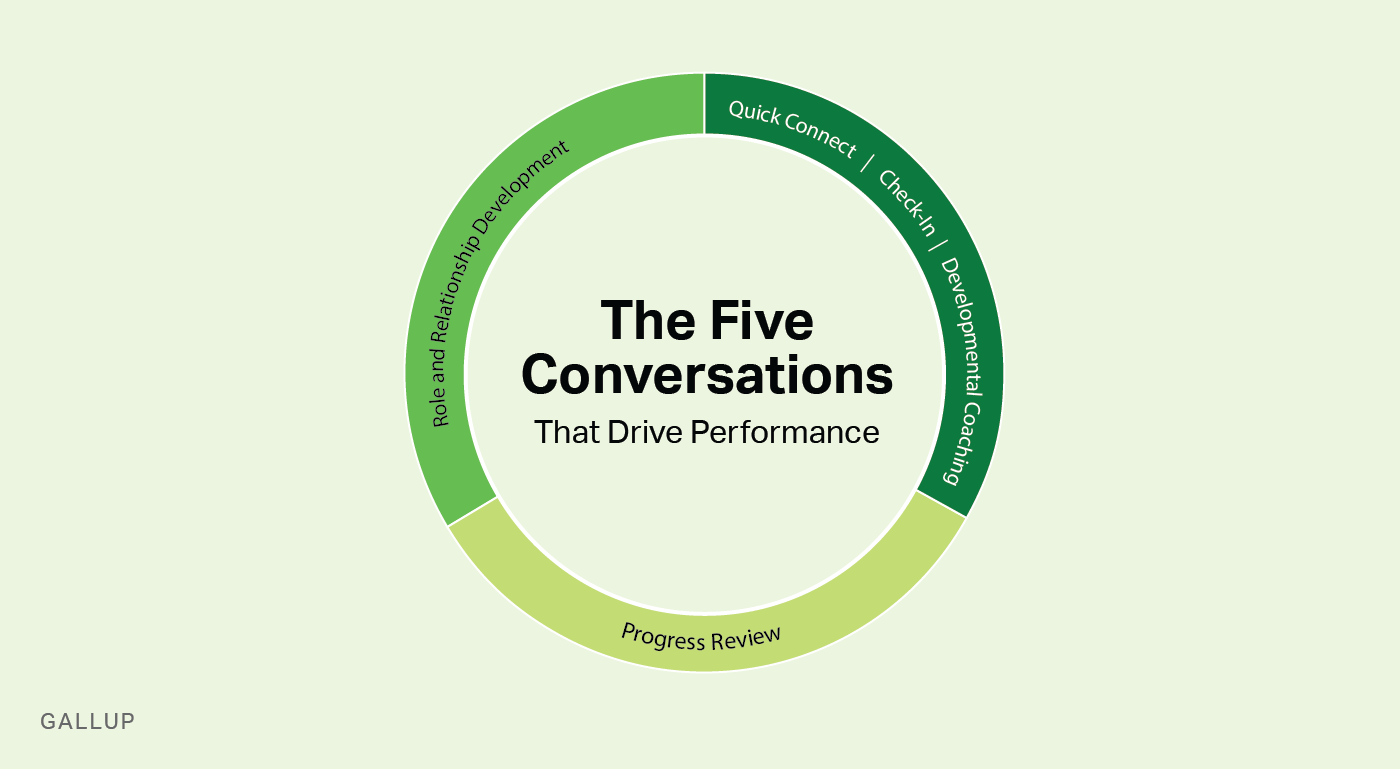
    Loneliness can contribute to isolation and isolation can contribute to loneliness, but managers can address both by talking about the issues that cause them. Gallup workplace research recommends frequent, ongoing conversations — in fact, we recommend five distinct types of conversations that drive performance, each timed for maximum impact — but with specific language framed for remote workers: “I need to know how you’re getting along. So tell me, is it too quiet at home? Do you miss having people around? Do you feel left out?”

    The Five Conversations That Drive Performance: quick connect, check-in, developmental coaching, progress review, and role and relationship development.

    Direct questions get direct answers, and managers should be prepared with appropriate solutions. Here’s what Gallup recommends, geared toward the individual and the issue.

    Only the Lonely: How to Help Your Remote Workers

    If the worker’s answers indicate loneliness, the manager’s strategy must reflect the worker’s personality. If he’s lonely because he’s shy, trying to turn him into a social butterfly is a waste of the manager’s time and the worker’s patience. A better bet is creating low-stakes opportunities for meaningful connections, but the manager should take the lead — making formal introductions to colleagues, accepting the emotional labor of pre-meeting small talk, linking him with partners for projects.

    If the worker is more outgoing, his manager just needs to help him open his office door, metaphorically, to visitors. Online group chats allow teams a kind of ongoing hallway chatter. Managers can set up weekly “phone trees” for remote workers organized around a workplace topic. Managers can even send remote workers a list of local coffee shops along with a small gift card: “You need to be around people to keep your energy up. Get a cup of coffee and have a great workday.”

    In any case, managers who ask lonely employees for their opinions can gain some valuable insight. Opinions are especially fruitful post-project or at the achievement of a milestone — reflection helps workers process learning opportunities — yet remote workers may feel their perspective is so narrow that their opinion isn’t needed.

    When managers can meet the basics needs of engagement, even casual, friendly conversations turn into innovative discussions that help the team and organization thrive.

    In fact, remote workers’ perspectives can provide rare insights into the organization. Shy, lonely workers need to hear they offer unique value — it can ease social anxiety — and outgoing, lonely workers need more contact. Either way, their insights on the work environment can bring to light connections they ought to make, as well as show managers new ways to improve processes.

    Out of Sight, but Not Out of Mind

    The isolated need a more tactical approach, but it requires a judicious balance. Remember, some people choose remote work because isolation boosts their productivity. IBM learned this the hard way. In 2009, IBM reported that 40% of its workforce (386,000 employees in 173 countries) worked remotely. In 2017, after 20 straight quarters of losses IBM’s leadership decided that it needed to generate more serendipitous ideas from its employees. So “Big Blue” called in its remote workers to boost collaboration and innovation.

    It didn’t work. Those remote employees who loved to work remotely immediately began searching for new jobs that would continue to allow them to work from home. Those who did return to an office deliberately isolated themselves, possibly to recreate the environment that had best suited them — research has demonstrated as much in other workplaces. It’s a cautionary tale for managers: The isolated aren’t sad, they’re cut off. Managers can fix that by integrating remote workers deeper into the organization, despite their distance.

    For instance, managers can bring a list of their remote workers to strategic meetings, annotated with their CliftonStrengths if available, to help the manager’s recall when projects are being planned. That keeps remote workers visible and their advancement, development, and recognition top of mind. Managers can make time with their own managers to specifically discuss the engagement of remote workers and ways to help them learn and grow.

    If remote workers can’t access the materials and equipment they need, managers should work with departments that can solve the problem, such as IT or legal. Cybersecurity can be an obstacle, but tech is increasingly capable of keeping employees in the loop on secure channels. This is a manager’s top priority — having the materials and equipment you need to do your work right is fundamental to engagement.

    And remote workers who simply feel left out can really benefit from being brought in, physically. And as one Gallup manager of remote workers says, there’s always a business case to be made for in-person meetings at HQ, even if the purpose is as much social as practical. Or borrow a page from university alumni chapters’ regional meetups and organize remote-worker get-togethers somewhere central to them. It’s a cost-effective way to keep relationships alive and far-flung teams engaged, as any alumni director can tell you.

    Employee Engagement as an Organizing Principle

    Supporting the unique needs of remote workers may seem like a lot of work for a manager. It can be. Though the best managers are masters of individualization, staying on top of the psychological welfare and work environments of remote employees takes time and concern.

    It helps to use the elements of engagement as an organizing principle. The five conversations that drive performance are oriented toward engagement, and they keep managers focused where their attention most helps performance. Those conversations also give managers time and opportunity to really understand remote employees. To consider their unique contributions. To watch how they like to communicate. To discover how they respond to workplace situations. To understand loneliness when they see it or isolation for what it is.

    When managers can meet the basics needs of engagement, even casual, friendly conversations turn into innovative discussions that help the team and organization thrive. That’s what leaders want from remote workers, of course, and they’re right to worry that loneliness and isolation may get in the way.

    They can — but they don’t have to. Not if managers know the difference between loneliness and isolation and have the tools they need to solve for both.

    Explore more resources for supporting remote workers:

    Adam Hickman, Ph.D., is Content Manager at Gallup. Jennifer Robison contributed to this article.

    Original Article appears here with additional tips: https://www.gallup.com/workplace/268076/manage-loneliness-isolation-remote-workers.aspx?utm_source=workplace-newsletter&utm_medium=email&utm_campaign=WorkplaceNewsletter_March_03172020&utm_content=howtomanageremoteworkers-CTA-3&elqTrackId=d32e757e608e45adb6f99b65dfe34e9e&elq=c7db8c639bfa4d5bbe2551a4f67d607b&elqaid=3589&elqat=1&elqCampaignId=787

  • The Opposite of Fear

    In uncertain times, the leader is the message, says Korn Ferry CEO Gary Burnison.

    Published: Mar 12, 2020

    When we face fear—whether personally or of the more existential variety— the natural inclination for any of us is to be paralyzed. But taking no action is an action – often, an ill-advised action.

    If knowledge is power, then people need to be empowered by information.

    As a CEO, I’ve always compared the leader’s role to that of a shepherd: occasionally in front, sometimes beside, and often behind. These days, however, the leader must be in front.

    Sharing information is critical, but far less than half the battle. Of course, people need to know about strategy, speed, direction, and results. But it can’t stop there.

    Language is an art to express ideas—but the messenger is the message. “Actions speak louder than words” is true for everyone—and twice as true for leaders. It’s not just what you say, but how you say it. It’s not just what you say, but how you say it.

    Verbally and non-verbally, the way in which communication occurs—humbly, passionately, confidently—has more impact than merely the words chosen. 

    Communication is where leadership lives and breathes. It informs, persuades, guides, assures, and inspires. Here’s how:

    Listen for the truth.
    If leaders want to hear the truth, they must welcome it. That won’t happen, though, unless people feel it’s safe to say what they really think without fear of retribution and not just what they think leadership wants to hear. Leaders need to ensure a culture of world-class observers, where information doesn’t just cascade down—it bubbles up. Observation needs to be a “team sport” as people throughout the organization are empowered to speak up and share their views about what they see. Perspectives will differ, but that only enriches the discussion. And, when perspectives are shared, people learn.

    The information highway.
    Communication is far more than a transmission of information. Communication needs to be the “information highway,” flowing freely in both directions and in every circumstance. Important in good times—crucial in challenging ones.

    More assurance, less authority.
    Communication is connecting and engaging with others. Messages must be delivered frequently and consistently, with candor and honesty. That means speaking with more assurance than authority—and being concerned with tone as well as content. Passionate, confident words motivate. Although information is crucial, if the message lacks authenticity, the team’s follow-through may be lackluster—or even lacking.

    People would rather know the truth.
    In bull markets, people look to the leader for validation. In bear markets, they look to the leader for assurance. When faced with a challenge, people would rather know the truth than dwell in the worst-case scenarios residing in their imaginations. Leaders who don’t communicate will become the subject of others’ communication—and not in a flattering way.

    Beware the vacuum. 
    If not addressed, a lack of information can lead to hazardous uncertainty. People will spend their time speculating, because there’s an information vacuum that needs to be filled. Uncertainty breeds conjecture, escalating fear and causing chaos. No matter how serious the news, people prefer certainty. To predict tomorrow, people have to accurately perceive the reality of today. Then you can plot a course for tomorrow.

    No shortcuts allowed. 
    Communication takes time—and lots of it. The temptation, therefore, is to take shortcuts such as assuming that people already know certain information or else glossing over a message from an employee or passing it along to someone else. Take time to acknowledge messages—and the messengers. Show others that they matter. 

    Remember, for a leader in uncertain times—and, in particular, these times—it’s not simply about staying on message. The leader is the message.

    Original post appears: https://www.kfadvance.com/articles/opposite-of-fear?utm_campaign=WuW-2020-03-14&utm_source=marketo&utm_medium=email&mkt_tok=eyJpIjoiWlRJMk0yRTBZekV6WWpKbSIsInQiOiIyU1lTaFwvYzFkMzZkY0E4SXRCNTgxdWhmMndNQnhUVlwvNWttUWs0bnRBM3VVSWExcEpHRDVrQ2NJdTBIVFFod2RzQWxDT1ltZE9jR1ZUXC9uVldYMzlwSElRMit6VDRiQmw0SjFzd1pzN29IaitxM1wvOU9za2dyRXFSQ1ZjWFFLc0IifQ%3D%3D


    Categories On the Clock


  • The ‘Hidden Talent’ That Determines Success

    In our era of globalization, your job performance may depend on your “CQ”. So what is it?

    • David Robson

    Imagine meeting someone for the first time who comes from a distant country but is fluent in your language. There may appear to be no immediate communication barrier, so would you adapt the tone and cadence of your voice, or the spacing of pauses in your speech?

    How about altering your body language, mannerisms and facial expressions, depending on the background of the person in front of you? Would you sit or stand differently and pay attention to your hand gestures?

    These are just a handful of the subtle shifts in behaviour that can contribute to what is known as your “cultural intelligence”, or CQ – and there is growing evidence that suggests they are well worth learning.

    “The number one predictor of your success in today’s borderless world is not your IQ, not your resume (CV), and not even your expertise,” writes social scientist David Livermore in his book The Cultural Intelligence Difference. “It’s your CQ.”

    According to the latest findings, a high CQ could be crucial in a wide range of careers, from bankers to soldiers and scientists and teachers – anyone, in fact, who regularly interacts with people from different backgrounds.

    So what is CQ? Why do some people have a higher CQ than others? And how can we nurture these abilities?

    Cultural Differences

    Much of the research on CQ has been done by Soon Ang, a professor of management at the Nanyang Technological University in Singapore. In the late 1990s, her job was updating computer systems in Singapore to tackle the “Y2K bug” – a software glitch that was feared would bring down the world’s computer networks at the turn of the millennium. Ang put together an international team of programmers to solve the problem.

    They were some of the brightest minds in the business, yet she soon found that they just couldn’t work together. The groups were ineffectual and failed to gel. Often, individual members would appear to agree on a solution, but then implement it in completely different ways.

    Clearly, it wasn’t a question of expertise or motivation. Instead, she saw that these highly capable employees were stumbling over each other’s cultural differences, leading to a breakdown in communication and understanding.

    These insights would lead Ang to collaborate with the organisational psychologist P. Christopher Earley, then at the London Business School but now dean of the school of business and economics at the University of Tasmania, Australia. Together they built a comprehensive theory of CQ, which they defined as “the capability to function effectively in a variety of cultural contexts”.

    Typically CQ is measured through a series of questions that assess four distinct components. The first is “CQ Drive” – the motivation to learn about other cultures. Then there is “CQ Knowledge”, which is an understanding of some of the general cultural differences you may face. “CQ Strategy”, examines how you make sense of those difficult confrontations and learn from them while “CQ Action”, involves your behavioural flexibility – whether you are able to adapt your conduct like a cultural chameleon.

    Someone with low CQ might have a tendency to view everyone else’s behaviour through his own cultural lens. If he comes from a more gregarious environment, for instance, and notices that his Japanese or Korean colleagues are very quiet in a meeting, he may assume that they are being hostile or bored. In aviation, such cultural differences have sometimes caused a breakdown in communication between pilots and air traffic controllers, leading to fatal crashes.

    A person at the top of the scale, meanwhile, might realise that silence is a sign of respect and that feedback won’t be given unless it is explicitly invited. As a result, she’ll make sure to offer suitable opportunities within the meeting for others to provide their opinions.

    Perhaps unsurprisingly, many studies have explored how expats adapt to life abroad, showing that those with the highest initial CQ will find it easier to adjust to their new life. But CQ can also predict more objective aspects of job performance, such as international sales performance, negotiation skills, and overall leadership ability.

    Three Forms of Intelligence

    One study from 2011 measured the IQ, emotional intelligence, or EQ, and CQ of 126 officers studying at the Swiss Military Academy as they engaged in various assignments supporting the United Nations in foreign territories and on international training exercises. Although all three forms of intelligence appeared to contribute to their overall performance, CQ turned out to be the best predictor – accounting for around 25 percent of the variation in the officers’ success on the international missions. IQ, by contrast, only predicted around 9.5 percent of the differences, while EQ predicted 3.5 percent.

    While people with a high CQ might naturally gravitate to international jobs, these studies suggest differences in CQ can also predict their performance once they’re hired.

    This evaluation is leading many companies to consider testing CQ and find out how they can boost their employees’ scores. Organisations such as Starbucks, Bloomberg and the University of Michigan have used the services of the Cultural Intelligence Center in Michigan, which offers intercultural assessments and a range of courses.

    Crucially, Livermore, who is president of the Centre, says that CQ can be learned. There’s no replacement for direct, personal experience in another country, though it seems that people mostly benefit from having tasted a variety of different cultures if they want to learn those generalization skills. “While understanding a specific culture can be useful, it may not predict at all your ability to engage effectively in a new place,” he says. “In fact, our research finds that individuals who have spent extended time in multiple locations are more likely to have higher CQ Knowledge than those who have lived multiple decades in one overseas setting.”

    But explicitly teaching some of the key concepts seems to ease that process. Employees may take a CQ test and then work with a coach to identify potential challenges. Afterwards, they discuss those experiences and the ways they could adapt their behaviour in the future. Using this strategy, expat bankers moving to the Middle East and Asia appeared to have fully adjusted to their new life in just three months, while without the training, it normally took expat employees nine months to become fully functional.

    Mindset

    But not everyone’s CQ grows with experience. Even after years of living abroad, some people’s understanding of other cultures appear to plateau, and they may also be resistant to training.

    Now researchers are trying to discover the reasons for these differences. Melody Chao, a social psychologist at the Hong Kong University of Science and Technology believes one answer lies in an individual’s mindset.

    She has been inspired by the work of the educational psychologist Carol Dweck, who has shown that people’s beliefs of their own capabilities often become self-fulfilling prophecies. On one hand, some people view their abilities as “fixed” and unchangeable. Others may have a “growth mindset”, meaning that they see their abilities as being more fluid, and so they are likely to persevere through hardship and embrace new challenges.

    These differences soon add up, meaning someone with the fixed mindset may start out with greater natural talent, only to quickly fall behind someone with a growth mindset.

    Dweck’s work considered traditional concepts of intelligence, but Chao has shown that a similar process underlies changes in CQ too. If someone believes that cultural attributes are fixed, for instance, they may face greater anxiety during their interactions with local people, and may crumble after a confusing or difficult encounter without thinking of ways to adapt in the future. As a result, those cultural differences may come to feel like insurmountable boundaries.

    Savvy business leaders adapt their body language as a mark of respect.

    “Individuals’ beliefs create a reality for themselves,” says Chao. She argues that businesses could measure these underlying beliefs in addition to their employees’ raw CQ scores, and adjust their training to address those anxious, fixed beliefs.

    Despite these new ways of thinking about CQ, research in this area is still in its infancy, warns Chao.

    “As international and intercultural dynamics have been changing very rapidly, there is still much for us to learn about how to enhance cultural competence of individuals,” she says. In a world where our global connections grow ever tighter, that new understanding can’t come quickly enough.

    David Robson is a freelance writer. He is @d_a_robson on Twitter.

    This article was originally published on October 13, 2017, by BBC Worklife, and is republished here with permission.

  • Be The Change

    https://www.slideshare.net/meecoinstitute/culture-transformation-are-you-ready
  • If You’re So Smart, Why Aren’t You Rich?

    New research suggests personality has a larger effect on success than IQ.

    How much is a child’s future success determined by innate intelligence? Economist James Heckman says it’s not what people think. He likes to ask educated non-scientists—especially politicians and policy makers—how much of the difference between people’s incomes can be tied to IQ. Most guess around 25 percent, even 50 percent, he says. But the data suggest a much smaller influence: about 1 or 2 percent.

    So if IQ is only a minor factor in success, what is it that separates the low earners from the high ones? Or, as the saying goes: If you’re so smart, why aren’t you rich?

    Science doesn’t have a definitive answer, although luck certainly plays a role. But another key factor is personality, according to a paper Heckman co-authored in the Proceedings of the National Academy of Sciences. He found financial success was correlated with conscientiousness, a personality trait marked by diligence, perseverance and self-discipline.

    To reach that conclusion, he and colleagues examined four different data sets, which, between them, included IQ scores, standardized test results, grades and personality assessments for thousands of people in the U.K., the U.S. and the Netherlands. Some of the data sets followed people over decades, tracking not just income but criminal records, body mass index and self-reported life satisfaction.

    The study found that grades and achievement-test results were markedly better predictors of adult success than raw IQ scores. That might seem surprising—after all, don’t they all measure the same thing? Not quite. Grades reflect not just intelligence but also what Heckman calls “non-cognitive skills,” such as perseverance, good study habits and the ability to collaborate—in other words, conscientiousness. To a lesser extent, the same is true of test scores. Personality counts.

    Heckman, who shared a Nobel Prize in 2000 and is founder of the University of Chicago’s Center for the Economics of Human Development, believes success hinges not just on innate ability but on skills that can be taught. His own research suggests childhood interventions can be helpful, and that conscientiousness is more malleable than IQ. Openness—a broad trait that includes curiosity—is also connected to test scores and grades.

    IQ still matters, of course. Someone with an IQ of 70 isn’t going to be able to do things that are easy for a person with an IQ of 190. But Heckman says many people fail to break into the job market because they lack skills that aren’t measured on intelligence tests. They don’t understand how to behave with courtesy in job interviews. They may show up late or fail to dress properly. Or on the job, they make it obvious they’ll do no more than the minimum, if that.

    John Eric Humphries, a co-author of the paper, says he hoped their work could help clarify the complicated, often misunderstood notion of ability. Even IQ tests, which were designed to assess innate problem-solving capabilities, appear to measure more than just smarts. In a 2011 study, University of Pennsylvania psychologist Angela Duckworth found that IQ scores also reflected test-takers’ motivation and effort. Diligent, motivated kids will work harder to answer tough questions than equally intelligent but lazier ones.

    Teaching personality or character traits in school wouldn’t be easy. For one thing it’s not always clear whether more of a trait is always better. The higher the better for IQ, and perhaps for conscientiousness as well. But personality researchers have suggested the middle ground is best for other traits — you don’t want to be so introverted that you can’t speak up, or so extroverted that you can’t shut up and listen.

    What does any of this have to do with economics? “Our ultimate goal is to improve human well-being,” Heckman says, and a major determinant of well-being comes down to skills.

    A newer study published in the journal Nature Human Behaviour focused on the flip side of success: hardship. After following some 1,000 New Zealanders for more than 30 years, researchers concluded that tests of language, behavioral skills and cognitive abilities taken when children were just three years old could predict who was most likely to need welfare, commit crimes, or become chronically ill.

    The lead author of that paper, Duke University psychologist Terrie Moffitt, says she hopes the results would foster compassion and help, not stigma. Her results also suggested that helping people improve certain kinds of skills before they’re out of diapers would benefit everyone.

    Faye Flam is a Bloomberg Opinion columnist. She has written for the Economist, the New York Times, the Washington Post, Psychology Today, Science and other publications. She has a degree in geophysics from the California Institute of Technology. This column does not necessarily reflect the opinion of the editorial board or Bloomberg LP and its owners. For more columns from Bloomberg Opinion, visit http://www.bloomberg.com/opinion.

  • Rich-Club Organization of the Human Connectome

    https://www.slideshare.net/meecoinstitute/rich-club-226540073